2026 FIFA Intercontinental Cup: A Clash of Champions
The race to be crowned the undisputed kings of club football will run through 2026, as the FIFA Intercontinental Cup returns for its third edition with a field stacked with champions and storylines.
Paris Saint-Germain are already waiting at the summit. Toluca, Mamelodi Sundowns, Al-Ahli and Auckland FC are all in the queue below. South America’s giant is still to be named. One trophy, six confederations, five matches. No hiding place.
A global title, stripped back
FIFA’s rebooted Intercontinental Cup is a lean, high-stakes shootout. No bloated group stage, no second chances. Every game matters.
The format is simple on paper, ruthless on the pitch:
- African-Asian-Pacific Cup – The tournament opens with a three-way clash between the champions of AFC, CAF and OFC. Two games decide which of Asia’s Al-Ahli, Africa’s Mamelodi Sundowns and Oceania’s Auckland FC survives. Hosting duties swing each year between Asia and Africa, adding a different flavour and crowd each edition.
- Derby of the Americas – North meets South. Toluca, fresh from winning the CONCACAF Champions Cup on penalties against Tigres, will face the 2026 Copa Libertadores winner in a one-off showdown. The Libertadores champion, still to be crowned later this year, will carry the weight of South America’s tradition and expectation.
- FIFA Challenger Cup – The winners of those two paths collide at a neutral venue. One match, one ticket to the ultimate stage.
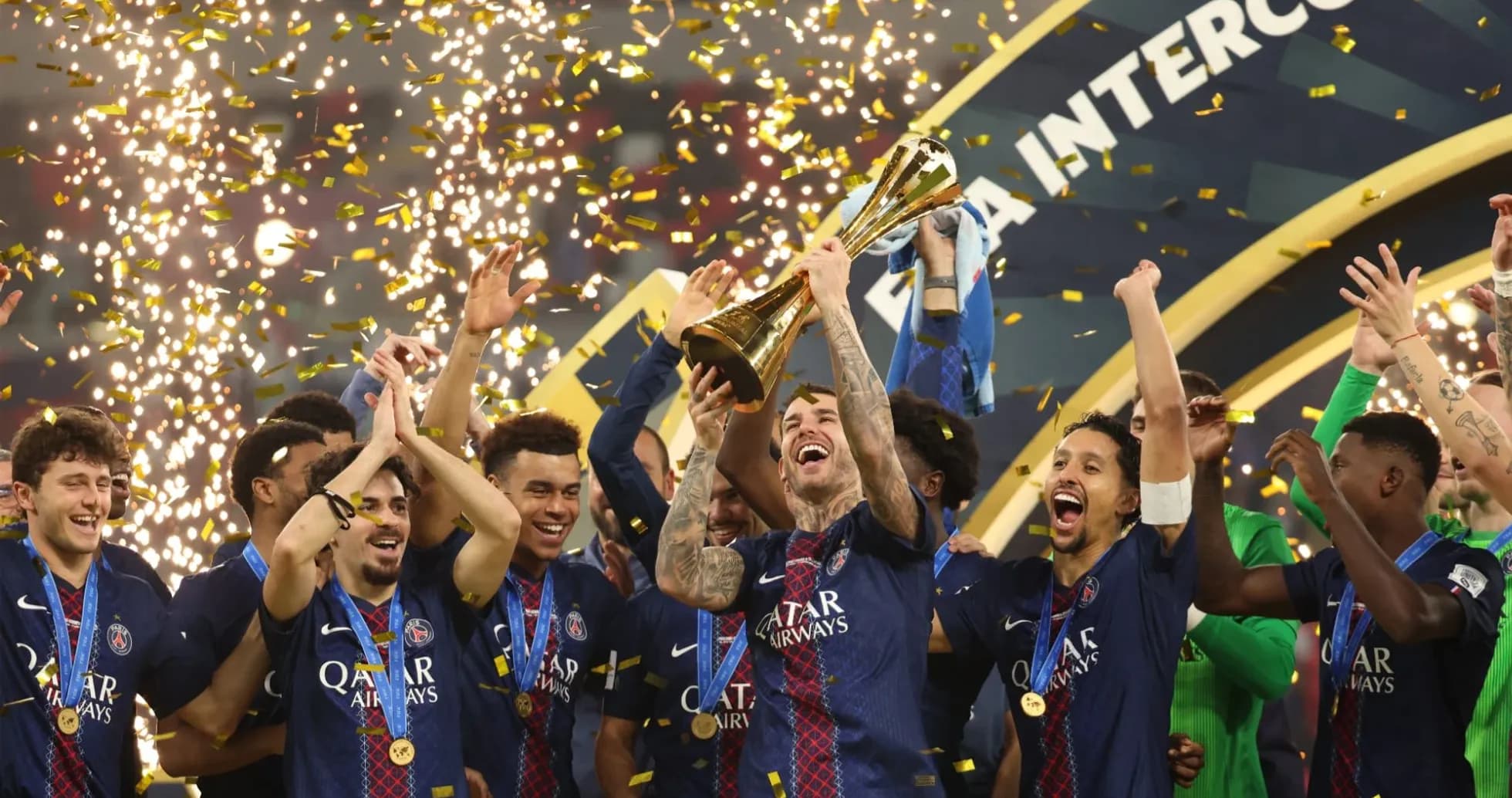
- The Final – Waiting there, as European champions and defending Intercontinental Cup holders, are Paris Saint-Germain. They go straight into the final again after retaining the UEFA Champions League against Arsenal on penalties in Budapest. No warm-up. No rehearsal. Straight into the spotlight.
Five of the six places are already locked in. Only South America’s representative remains a mystery, a gap on the bracket that will shape the tone of the entire competition.
The cast of champions
Every club arriving in 2026 has already come through a storm.
Al-Ahli booked their ticket by winning the AFC Champions League Elite, beating Machida Zelvia in Jeddah to underline Asia’s growing muscle in the global game.
Mamelodi Sundowns, serial contenders in Africa, earned their place by winning the CAF Champions League final against AS FAR. They bring swagger, structure and a fanbase that now expects them to mix it with the world’s elite, not just the continent’s best.
Auckland FC, long a familiar name in intercontinental competition, claimed Oceania’s berth by lifting the inaugural OFC Professional League. For them, this is another chance to punch above their financial weight and test themselves against clubs built on far bigger budgets.
Toluca arrive with penalty scars and steel. Their shootout victory over Tigres in the CONCACAF Champions Cup was a reminder that Mexican clubs still know how to navigate knockout chaos when the margins are razor-thin.
And then there is PSG. Champions of Europe again, Intercontinental Cup holders, and the team everyone else quietly measures themselves against. Their penalty triumph over Arsenal in Budapest not only secured back-to-back Champions League titles, it guaranteed them another direct route to the final – and another shot at global supremacy.
South America’s identity in this drama is still unknown, but the stakes are clear. Whoever wins the 2026 Copa Libertadores will not just carry a trophy; they will carry a continent’s expectation into the Derby of the Americas.
Tickets, demand and the scramble to get in
The football is elite. The scramble for seats will be just as intense.
Official 2026 ticket prices are not yet on the table, but the pattern from 2025 in Qatar offers a strong hint. FIFA’s own general sale started at QAR 20 – roughly 5 US dollars – for the early rounds, a deliberately low barrier to fill the stands and build noise. Once demand spiked and resale markets kicked in, prices stretched far higher.
For the final, recent editions have seen the cheapest seats sit at around 82 US dollars, with mid-range tickets averaging roughly 217 US dollars. The closer you get to the trophy lift, the heavier the hit on the wallet.
The most accessible way into the tournament has typically come through the African-Asian-Pacific Cup and the Derby of the Americas, where prices tend to be more forgiving. The FIFA Challenger Cup and the final itself carry a clear premium – the kind of markup that comes with knockout jeopardy and a global audience.
Once fixtures and venues are confirmed, Ticombo will be one of the key marketplaces fans turn to. The platform lists verified tickets for football fixtures worldwide, with buyer protection and secure payment built into every order. Fans can sift through categories and seat locations side by side, weighing price against proximity to the action before checking out in a few clicks.
The catch? Speed. Listings go up as soon as dates and venues drop, and past editions have sold out quickly. Anyone serious about being there when the world’s champions collide will need to move fast once the window opens.
A trophy that means exactly what it says
For all the modern branding, the essence of this competition is brutally old-school: champions only.
No wildcards. No expanded invitations. Just the best club from each confederation, funneled into a bracket that leaves no room for excuses. Win and you move. Lose and you watch the rest on television.
PSG will arrive as favourites, insulated in the final and armed with the experience of having lifted this trophy before. But history in this format is thin, and the margins are thin with it. A Libertadores powerhouse, a fired-up Toluca, a fearless Mamelodi Sundowns or a disciplined Al-Ahli could all derail the script in a single night.
By the time South America crowns its champion and the bracket is complete, one question will hang over the 2026 Intercontinental Cup: is this the year Europe’s grip loosens, or will PSG turn a new competition into their personal empire?