2030 World Cup Final: Morocco vs Spain Showdown
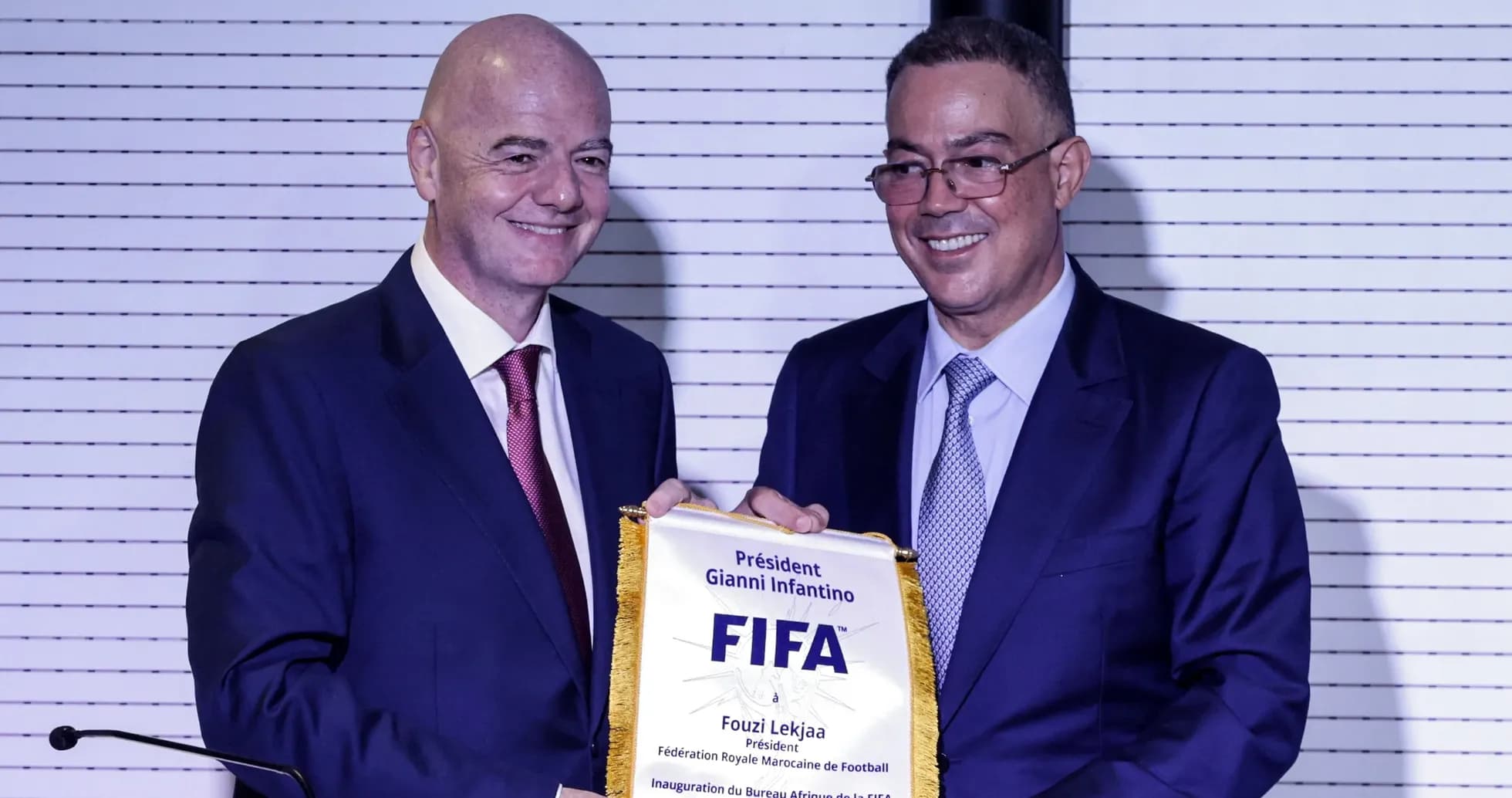
The battle for the 2030 World Cup final has burst out of the boardroom and into the political arena in Morocco, with Prime Minister Aziz Akhannouch publicly rebuking Royal Moroccan Football Federation president Fouzi Lekjaa over bold promises that Casablanca will host the showpiece.
The tournament, marking 100 years of the World Cup, is due to be shared by Morocco, Spain and Portugal, with opening matches staged in South America as a nod to the competition’s origins. Where the final itself will be played, though, remains unresolved — and fiercely contested.
Prime Minister steps in
Lekjaa lit the fuse at a political party event when he declared that Morocco’s planned new stadium in Casablanca would have the “honour” of staging the final. It was a statement that went far beyond what FIFA has confirmed and, crucially, beyond what Morocco’s co-hosts had agreed.
Akhannouch moved quickly to put the brakes on.
Speaking at a rally, he addressed Lekjaa directly and in no uncertain terms: “Do not offer to host the big final game in Morocco while we still have not discussed the matter with our allies, Spain and Portugal. There should be some respect, brothers. Stop using electoral promises to pull the rug out from under us. These are huge matters. Deciding where the final will be held is a major issue.”
The message was unmistakable. Cool the rhetoric. Don’t risk a diplomatic flare-up with Madrid and Lisbon over a match that has not yet been assigned.
For Morocco’s government, the stakes are bigger than a stadium announcement. They are trying to balance domestic excitement about a historic World Cup on African soil with the delicate politics of a three-nation bid that still has to convince FIFA it can work smoothly.
FIFA keeps its cards close
On Zurich’s side, there is silence. FIFA has not committed to any city or country for the 2030 final, saying only that “a decision will be made in due course.”
That vagueness has created a vacuum. Morocco has rushed to fill it with ambition. Spain has responded with certainty of its own.
Both believe they have the strongest case. Both are acting like favourites.
Spain makes its pitch
In Spain, the expectation is barely disguised. Rafael Louzan, president of the RFEF, has been open about his conviction that the final belongs on Spanish soil.
“Even though no decision has been taken, I believe Spain is the place because it cannot be any other way,” he told Cadena SER radio. “As you know, we are currently world champions. I believe Spain’s organisational capacity for major events is beyond question and that is why reality dictates that the grand final cannot and must not be held anywhere other than in Spain.”
Spain’s argument leans on recent glory and proven infrastructure. Their men’s national team, fresh from beating Argentina to claim a second World Cup title this past summer, gives the country a champion’s aura. The Santiago Bernabeu has been transformed into a multi-purpose, state-of-the-art arena. Spotify Camp Nou is being expanded into an even bigger cathedral of the game.
From Madrid’s perspective, the country already has what the final needs: stadiums, transport, hotels, a track record of staging huge events. No need for promises, just proof.
Morocco’s grand vision
Morocco is answering with scale.
The country has embarked on the construction of a colossal 115,000-seat stadium, designed to be the largest football-specific venue in the world once complete. The project is meant as a statement: Africa can not only host the World Cup; it can host its biggest night in a venue to rival — or surpass — the legendary grounds of Spain.
For Moroccan fans, the idea of the final in Casablanca is intoxicating. It would be the first World Cup final on African soil since Johannesburg in 2010, and only the second in the continent’s history. Lekjaa’s words tapped directly into that dream.
That is precisely why Akhannouch stepped in. The government wants to avoid a situation where expectations at home soar while negotiations with Spain and Portugal are still in their early stages. Public promises now could turn into public embarrassment later.
A long game, with recent precedent
There is time. The 2030 World Cup is still four years beyond the 2026 edition in North America, and even that tournament’s final venue was only confirmed relatively late. New Jersey’s MetLife Stadium did not get the nod as host of the 2026 final until early 2024.
The message from that precedent is clear: FIFA moves on its own schedule. Host nations can lobby, build, and position themselves, but they cannot declare victory unilaterally.
For now, Morocco is trying to walk a tightrope: project ambition, build the infrastructure, and campaign for the final — while keeping relations with Spain and Portugal intact and avoiding public splits inside its own leadership.
The stadiums will rise. The lobbying will intensify. At some point, FIFA will choose between Casablanca, Madrid, or another Iberian option.
When that decision finally comes, it will not just crown a host city. It will show which vision of this centenary World Cup carried the most weight: Spain’s claim of inevitability, or Morocco’s bid to bring the game’s biggest night back to Africa.