AFA Crisis: Claudio Tapia and the Future of Argentine Football
The Argentine Football Association is living through the most volatile stretch of its modern history, and this time the crisis is coming from every direction at once.
At the centre stands Claudio Tapia. The AFA president is locked in a high-stakes legal fight over serious money-laundering allegations, a case that has dragged the federation into the courts and thrown a harsh spotlight on its inner workings. What might once have been brushed off as background noise now feels like the main event, with the administrative core of Argentine football under sustained scrutiny.
The impact is already visible in the small details that usually run like clockwork. The national team’s next friendlies – against Burkina Faso, Bolivia and Benin – were only confirmed yesterday, after weeks of delay that laid bare how clogged the federation’s day-to-day machinery has become. For a reigning world champion to be scrambling to finalise modest opponents for a simple international window is a jarring image.
Money lies at the heart of the tension. According to La Gazzetta dello Sport, the World Cup bonuses promised to the players remain unpaid. Not delayed by a few days. Still not paid. For a group that delivered the 2022 World Cup, back-to-back Copa América titles and another run to this summer’s World Cup final, the sense of disrespect cuts deep. Trust, so carefully built between the dressing room and the executive offices, has eroded as each week passes without the agreed rewards landing in the players’ accounts.
The fallout reaches all the way to Lionel Messi. The captain has already stepped away from international football, yet the AFA is desperate to script a grand farewell worthy of his status. Ideas have been floated, ceremonies imagined, tributes drafted. Messi, reports suggest, remains unconvinced. The proposals on the table have not persuaded him to sign off on a final bow, and in this fraught climate even a celebration risks feeling hollow.
That mood is seeping into preparations for the upcoming friendlies. With the atmosphere around the national team turning heavy, motivation among the senior stars is evaporating. Trips back to South America to face lower-ranked opposition suddenly look more like a chore than an honour. Inside the camp, there is growing acceptance that a sweeping refresh of the squad may be needed for the next international break, if only to shield the established core from a situation they no longer recognise.
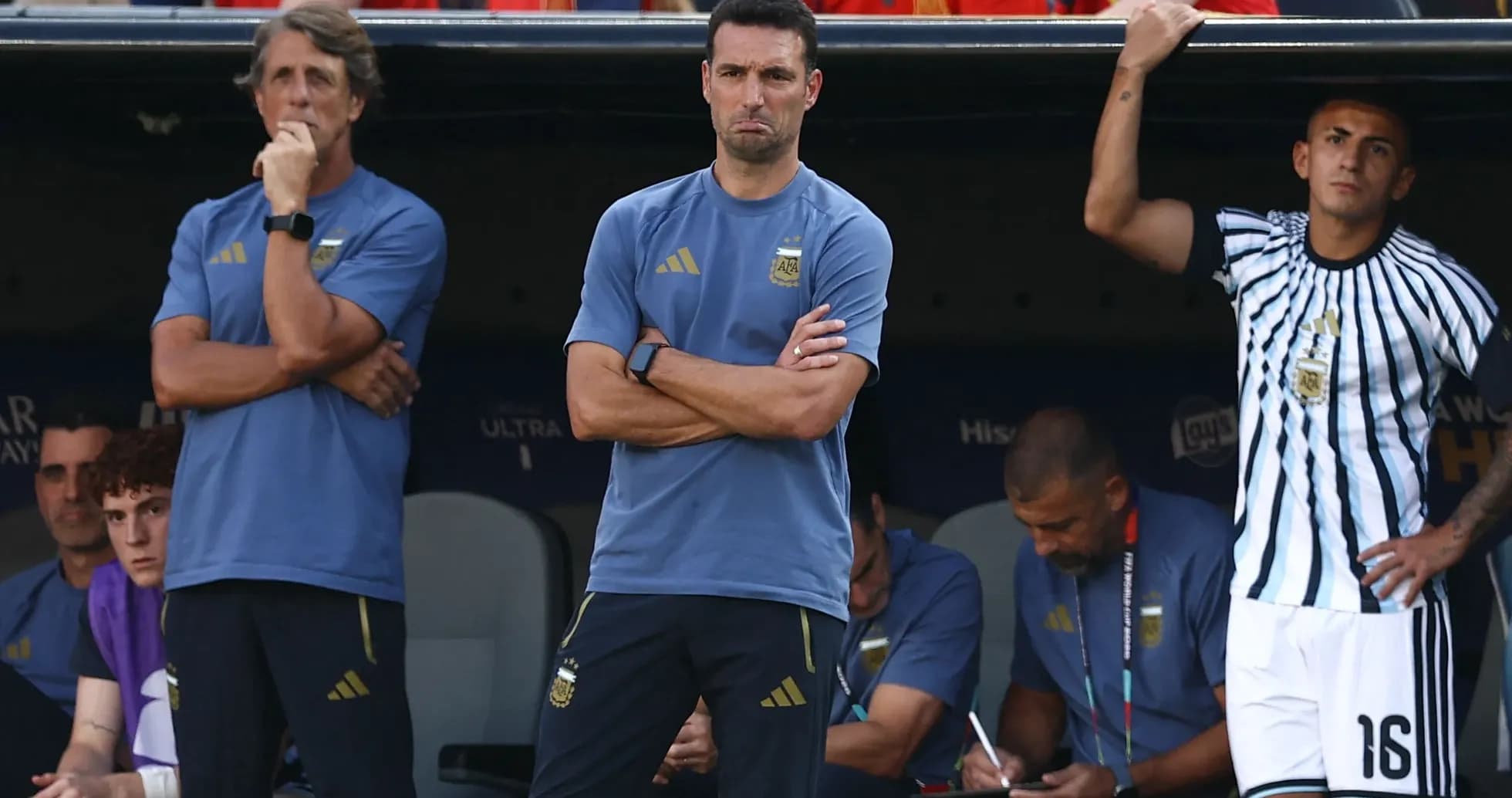
The most seismic tremor, though, concerns the man who rebuilt Argentina from the touchline. Lionel Scaloni, the architect of this glittering era, is widely believed to feel that his cycle is nearing its end. The coach who restored belief, recalibrated the team’s identity and delivered the trophies that had eluded a generation is now, according to reports, resolved not to extend his contract beyond December 2026. For a country that has lived every moment of this journey with him, the idea of a fixed end date to his reign lands like a cold splash of reality.
Scaloni is not alone in that thinking. Much of his trusted staff, the tight-knit group that supported him through the early doubts and the later glory, appear ready to walk the same path. Walter Samuel, the former Inter and Roma defender who has become a key figure on the bench, is among those understood to be preparing to depart alongside the head coach. The possibility that this entire technical team could exit together only sharpens the sense that an era is winding down, whether Argentina likes it or not.
Against this backdrop, the marquee names in the squad are understandably reluctant to jump on a long-haul flight for low-profile friendlies. The opponents lack glamour, the environment feels unsettled, and the off-field noise is deafening. Scaloni may have little choice but to leave several of his biggest stars in Europe and turn instead to fringe players and hopefuls eager to seize a rare opening.
Those matches, on paper mere tune-ups against Burkina Faso, Bolivia and Benin, could now become something else entirely: a glimpse of a future Argentina forced to confront life after its most successful generation, while the institution that should be protecting it fights to hold itself together.