
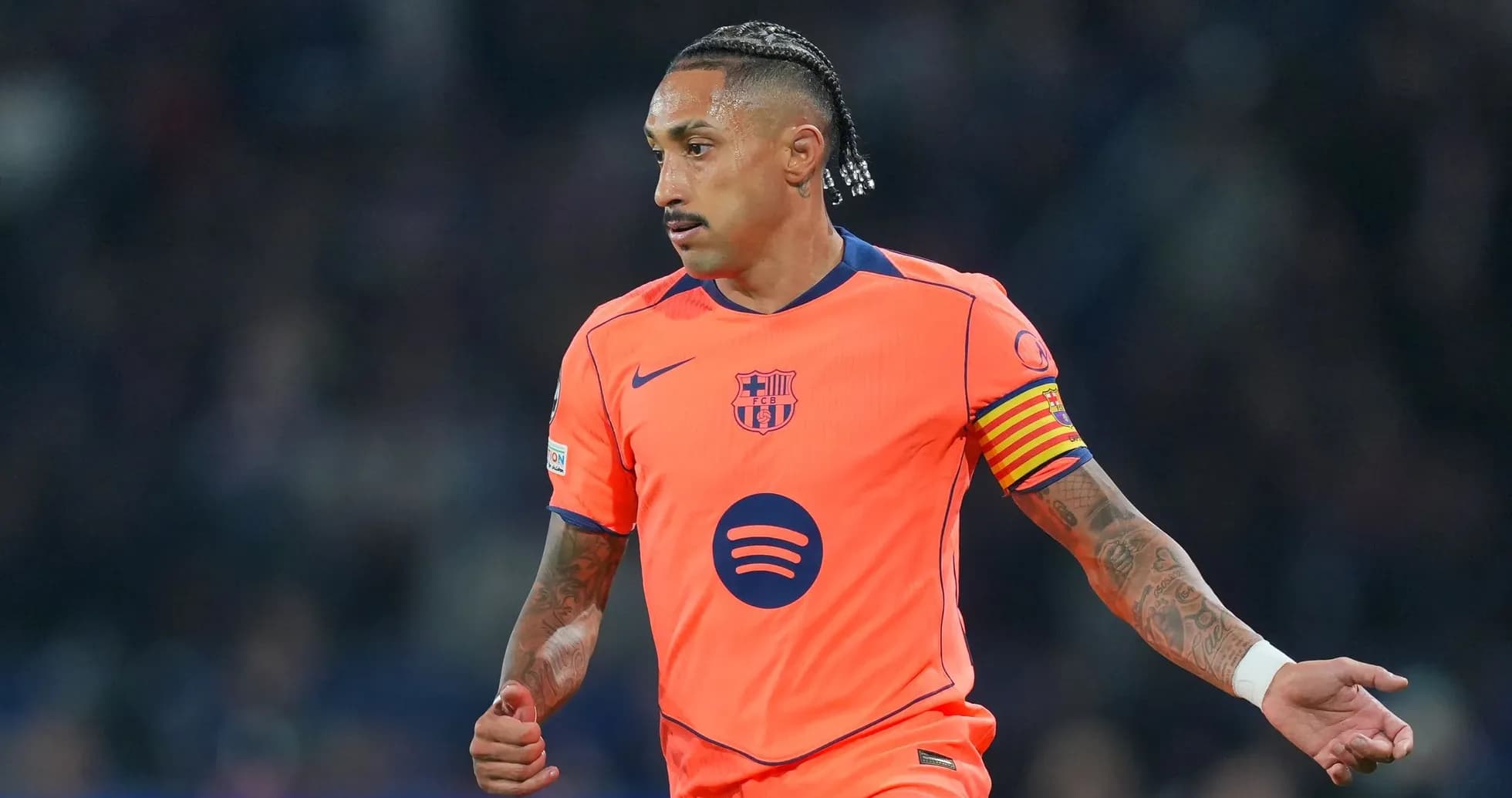
Ancelotti Stands Firm on Raphinha's Brazil Call-Up
Carlo Ancelotti has drawn a clear line in the sand. Raphinha is going to Asia with Brazil, and no complaint from Barcelona is going to change that.
Ancelotti vs Laporta: No concessions
Joan Laporta’s irritation has been building for weeks. Raphinha only just returned from a muscular injury picked up on Brazil duty in Australia, and now he is being asked to cross the globe again — a near 22,000-kilometre round trip to Singapore for friendlies against Japan and the hosts.
From Barcelona’s point of view, it feels reckless. From Ancelotti’s, it is non-negotiable.
Speaking at CBF headquarters in Rio de Janeiro, the Brazil coach made it plain that the national team call-up stands, regardless of what is said in the corridors of the Spotify Camp Nou.
“We maintain good relations with Brazilian clubs and with European clubs, with whom we share information about the players. In general, this relationship is good,” he said, as quoted by SPORT.
The message sat between the lines: dialogue is welcome, decisions are his.
Laporta has argued publicly that clubs are punished by an overloaded international calendar. Ancelotti listened, but he did not bend. The 29-year-old forward is part of his squad for Singapore, and that is that.
Country first, always
Once the topic shifted to pressure from European clubs, Ancelotti’s tone hardened.
This is a Brazil side trying to rebuild after underwhelming major tournaments. Every FIFA window, in his eyes, is a small piece of a much larger puzzle. He will not give those pieces away lightly.
“We have no particular requests, nor do we need them. In the FIFA dates, we will call the players that we consider important for the Brazilian national team,” he stated.
National duty comes first. Club needs fall in behind.
There has been a touch of pragmatism at home. With Flamengo and Palmeiras locked in a fierce title race, Ancelotti has opted not to call any of their players this time, and he has limited himself to one player per Brazilian club in what he openly called “a sensitive moment”.
“This is a sensitive moment, that's why we've only called up one player per team and decided not to bring anyone from Flamengo or Palmeiras because they are fighting for the title.”
That leniency, though, stops at Brazil’s borders. European clubs, Barcelona included, will not get the same treatment. Ancelotti insists his “spine” must stay intact, and Raphinha is part of that core.
Raphinha as a pillar of a new cycle
Behind the selection row lies a broader project. Ancelotti is not simply filling a squad for a couple of friendlies; he is sketching out Brazil’s next World Cup cycle.
“We have started a renewal project and now is the ideal time to do it. In September, we started evaluating younger players and now we continue doing so with these players who can be the future of the Selecao,” he explained.
The numbers back him up. This squad includes nine players of Olympic age and up to fifteen under 23. Youth is being pushed to the front of the stage, but not left alone under the spotlight.
“We have made a balanced call-up, but in which there are nine players of Olympic age and up to fifteen under 23 years old,” Ancelotti said.
To guide them, he has ring-fenced five experienced figures from the last World Cup: Marquinhos, Gabriel Magalhaes, Bruno Guimaraes, Vinícius Junior and Raphinha. Those five, in his view, will anchor Brazil through the Copa America and into the next World Cup.
“We've chosen five players who were at the last World Cup and who will be important for this new cycle in which we'll compete in the Copa America and another World Cup. These players are Marquinhos, Gabriel Magalhaes, Bruno Guimaraes, Vinícius Junior, and Raphinha.”
That is where Laporta’s frustration collides with Ancelotti’s vision. For Barcelona, Raphinha is a valuable asset recovering from injury. For Brazil, he is a pillar around which the future is being built.
A different Raphinha, same importance
There is also a tactical subplot. Raphinha is not quite the same player he was when he first broke into the Selecao.
Under Hansi Flick at Barcelona, he has often been used centrally, as a roaming number nine rather than a classic winger. It is an experiment that has changed how opponents prepare for him and how he reads the game.
Asked whether he would mirror that role with Brazil, Ancelotti kept his cards close to his chest. The shape, though, will not change.
“We have versatile forwards who can occupy various positions. I focus on what we can do and not on the quality of our opponents. We will continue playing with three midfielders and three forwards,” he remarked.
Three midfielders. Three forwards. Within that framework, Raphinha can slide across the front line, offering width, pressing from the middle, or stretching defences with runs in behind. His versatility only strengthens Ancelotti’s conviction that he must be there, even at the risk of upsetting Barcelona.
For Laporta, the mileage and the muscle risk feel like an avoidable gamble. For Ancelotti, they are the price of forging a team capable of carrying Brazil back to the top of world football.
The next few weeks will show whether that price is worth paying — and whether club presidents in Europe are ready to accept that, when Brazil calls, some battles are already lost before they begin.





