Angel Reese and Caitlin Clark: Evolving Rivalry for Team USA
For a heartbeat, it looked like the rivalry might flare again.
Angel Reese was mid-answer, locked in with a TV reporter, when Caitlin Clark unknowingly drifted straight through the shot. Clark cut between camera and subject, realized it, and snapped out a quick “sorry.” No eye roll from Reese. No cold shoulder. Just a casual extension of her hand. Clark met it with a light, familiar high five.
It lasted seconds. It said everything.
Two players once cast as opposites — hero and villain, darling and disruptor — now share the same jersey and the same mission: win gold for Team USA.
A rivalry years in the making
Their story didn’t start with sold-out WNBA arenas or primetime debate shows dissecting every glance. It started in overheated gyms on the AAU circuit, where the only cameras belonged to parents and college scouts.
Back in 2019 at the Nike EYBL championship game, they were already trading blows on a big stage. Angel Reese powered Team Takeover with 18 points and 11 rebounds. Caitlin Clark answered with 22 points and seven assists for All Iowa Attack. Different styles, same edge. Neither backed down. Everyone in those gyms knew they were watching something that would last.
College only poured gasoline on it.
They crossed paths when Reese was at Maryland and Clark at Iowa, but the rivalry truly detonated in the 2023 NCAA championship game. LSU 102, Iowa 85. The final score became a footnote to one image: Reese tracking Clark in the closing seconds, flashing the “you can’t see me” gesture and then pointing to her ring finger.
The clip went everywhere. Reese was branded the villain. Clark, the wronged star. A few seconds of trash talk between two ultra-competitive players turned into a national referendum on sportsmanship, race, gender, and who gets to celebrate.
Clark refused to play that part.
“I don’t think Angel should be criticized at all,” she said afterward, reminding everyone she’d used the same gesture earlier in the tournament. Trash talk, she argued, was part of what made basketball fun. It was a line in the box score of their relationship that too many people ignored.
One apiece on college basketball’s biggest stage
The sequel came a year later, in the 2024 Elite Eight. This time, Clark grabbed the script and ripped it up.
She unloaded 41 points and 12 assists as Iowa outgunned LSU 94-87. Reese fought back with 17 points and 20 rebounds, dragging in everything around the rim, but it wasn’t enough. The two left college basketball’s brightest stage with one iconic win each, a rivalry split down the middle.
By then, their names had become inseparable. Say one, and the other followed.
That carried straight into the pros.
From viral clips to “basketball plays”
The Indiana Fever made Clark the No. 1 pick in the 2024 WNBA draft. Reese went seventh. Different cities, different systems, same magnetism. Whenever their schedules aligned, the league revolved around them.
Every foul was slowed down and replayed. Every stare was clipped and shared. Every interaction became supposed proof that they couldn’t stand each other.
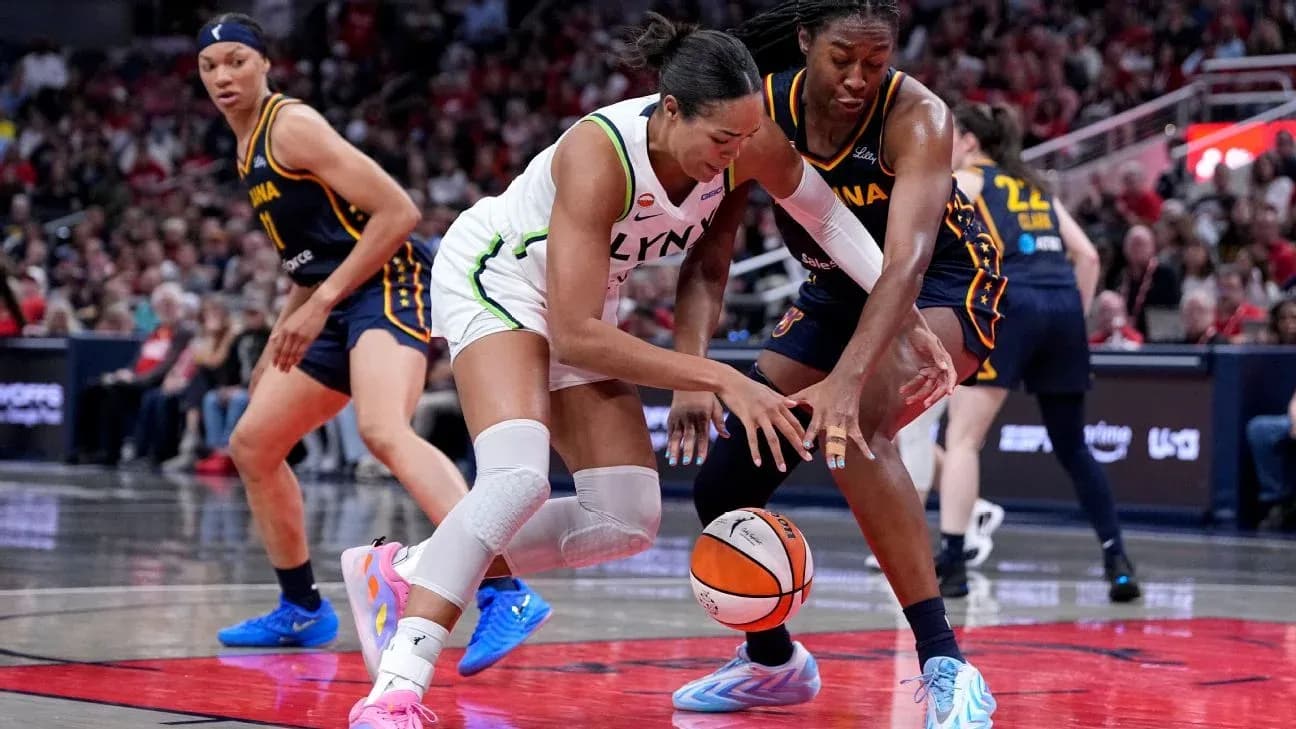
In their second WNBA meeting, Reese caught Clark in the head on a block attempt and drew a flagrant. The moment instantly turned into a talking point. Clark refused to feed it, calling it “just part of basketball.” Reese echoed that, labeling it a basketball play while knowing the replay would run on loop for days.
Then, for the first time, the basketball world got a glimpse of something else: what they might look like on the same side.
All-Star truce, opening act for Team USA
At the 2024 WNBA All-Star Game, they finally lined up as teammates. No split fan bases. No college colors. Just two rookies sharing the floor for Team WNBA against the U.S. Olympic squad.
They didn’t just coexist. They clicked.
Clark piled up 10 assists, spraying passes all over the floor. Reese became the first rookie ever to notch a double-double in an All-Star Game, finishing with 12 points and 11 rebounds. At one point, Clark threaded a pass inside, Reese finished at the rim, and the two slapped hands on the way back up the court.
It felt like a preview.
The truce didn’t last long.
On opening night of the 2025 WNBA season, Clark delivered a hard foul on Reese that was upgraded to a flagrant 1. Reese stepped toward her. Tension rose. Aliyah Boston stepped in. The clip exploded online, dissected frame by frame. Again.
Again, both players tried to pull the temperature down. Clark said there was no malice in the foul. Reese boiled it down to two words: “Basketball play.”
That’s the contradiction at the core of their story. They compete like enemies, then insist it’s never personal. Reese has said she loves that they can go at each other and “still be cool after.” Clark has been blunt: they’re not best friends, but they respect each other.
Now, on the senior national team, that respect has room to breathe.
Learning how to win together
The first signs came quietly, far from the noise of the WNBA season. During the World Cup qualifying tournament in Puerto Rico, Clark slipped a pass to Reese at the rim. Simple play. Guard to big. Bucket.
For them, it meant more. It was proof that their games, so often pitted against each other, could actually fit.
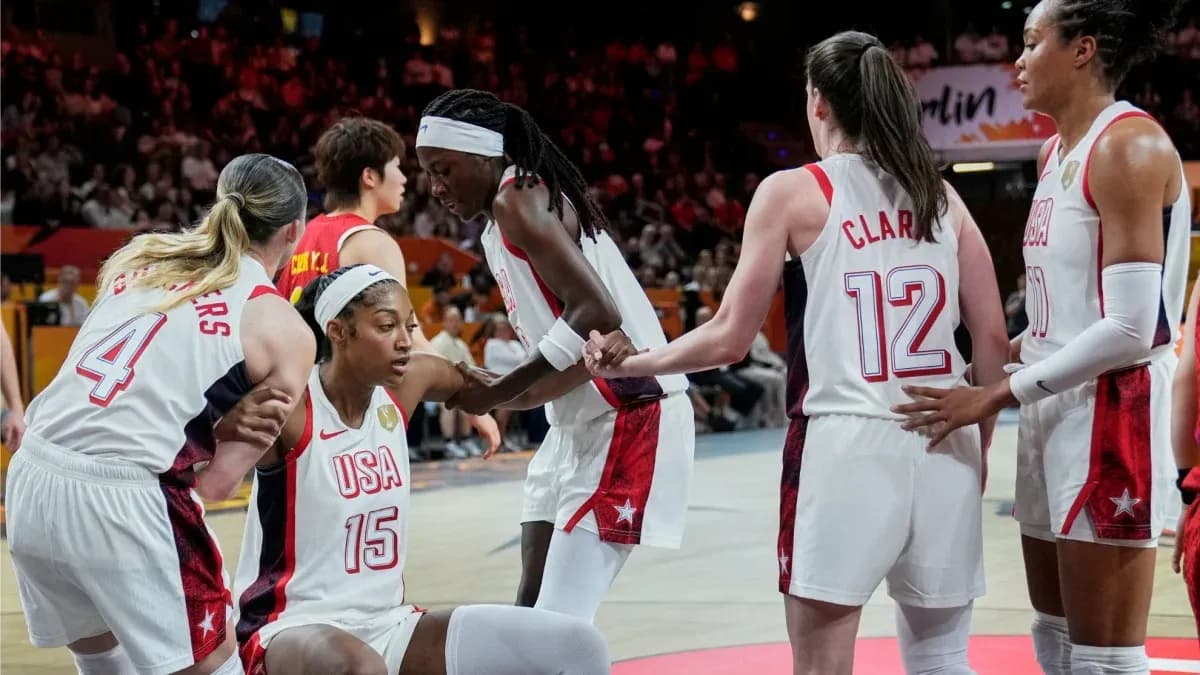
In Berlin at the World Cup, that fit has started to shape Team USA’s unbeaten run.
Clark opened the tournament by carving up China’s defense, posting 14 points and 11 assists. Reese, undersized against a bigger frontcourt, dug in on the glass and pulled down nine rebounds, battling in the paint while Clark orchestrated on the perimeter.
Against Czechia, the roles stayed clear and complementary. Reese powered her way to 13 points, owning space inside. Clark added nine points and seven assists in a 105-64 rout, shifting seamlessly between scorer and playmaker.
It’s not a buddy comedy. It’s not a made-for-TV reconciliation. It’s something more familiar to anyone who’s ever been in a locker room with another alpha: two players who don’t need to like each other to understand how much they can win together.
And so, in that fleeting moment during a sideline interview — an accidental photobomb, a quick apology, a quiet high five — the rivalry that once split the country looked like something else entirely.
Not finished. Not softened.
Just evolving, on the way to a gold medal that might end up defining them far more than any gesture ever did.