Anthony Davis: From Lakers Star to Celtics Target
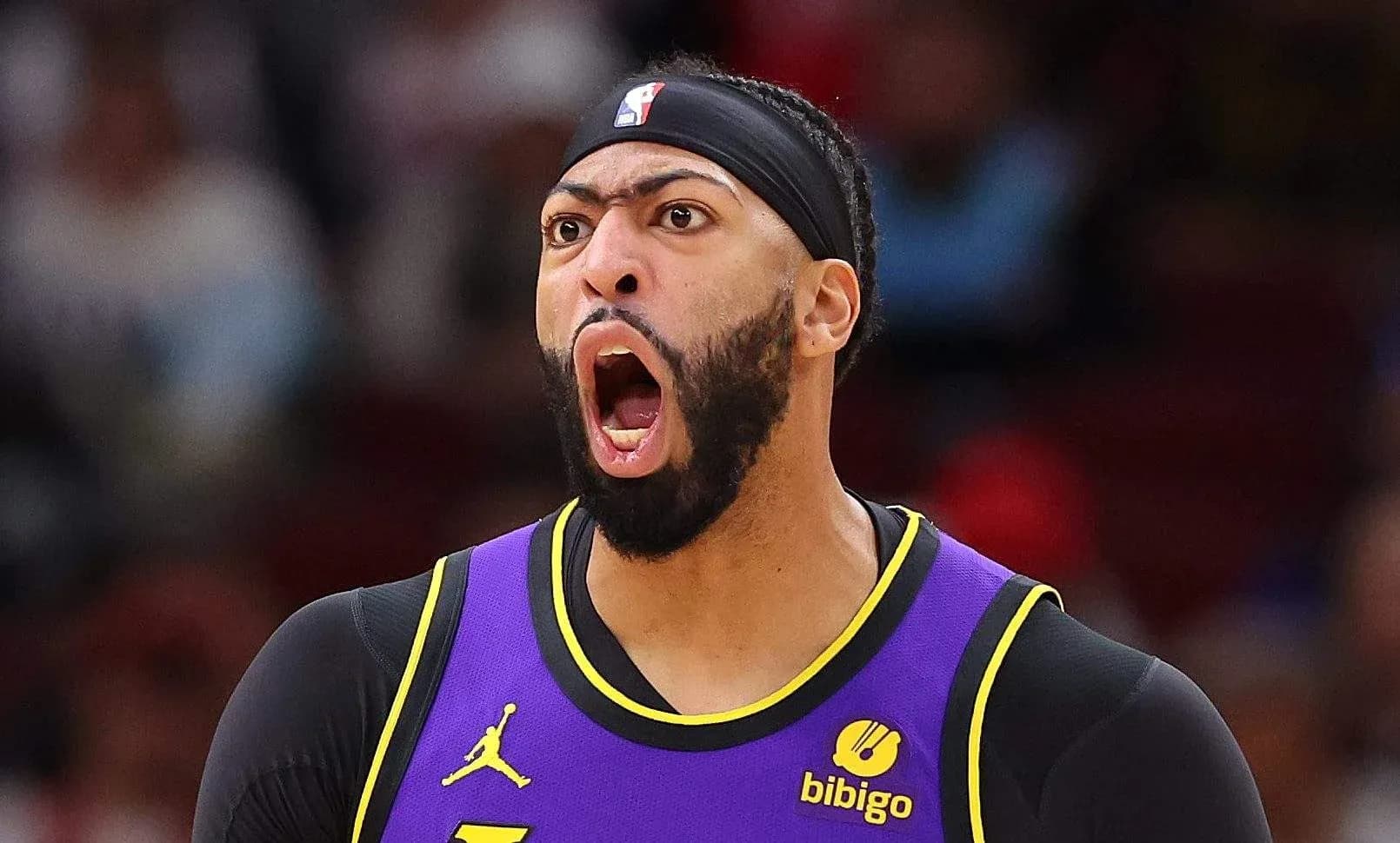
Seven years ago, Anthony Davis was supposed to be the heir.
The Lakers had their bridge from LeBron James to the future: a 26-year-old force of nature, still shy of his prime, projected to drag the franchise’s banners and expectations on his back for a decade. The vision was bold and simple. Davis would age into a top-10 Laker in points and rebounds, the next immortal in purple and gold.
That future never quite arrived.
Today, Davis is a Washington Wizard, his time as a Laker already feeling like a completed chapter. It has been nearly 19 months since he left Los Angeles, and even longer since Laker fans truly believed he might finish as one of the five greatest players ever to wear their colors. The franchise moved on. So did the league.
Now his career could be on the verge of another sharp turn.
A Blockbuster on Paper: Davis to Boston
Davis’ NBA life changed violently in February 2025, when the Lakers stunned the league by sending him to the Dallas Mavericks in the deal that brought Luka Doncic to Los Angeles. For a player once seen as untouchable, that was the first clear sign that the league no longer viewed him as the inevitable future.
Now in Washington, he’s the centerpiece of a roster headed in the opposite direction of contention. The Wizards are rebuilding, counting cap space and draft picks, not rings. A 33-year-old big man with a long injury history and a looming price tag near $300 million does not fit that timeline.
So the trade machine whirs again.
The hypothetical: Anthony Davis to the Boston Celtics.
The framework is stark:
- Wizards receive: Paul George, Jordan Walsh, Baylor Scheierman and a 2030 second-round pick (via CHA)
- Celtics receive: Anthony Davis
From Washington’s side, the logic is cold but clear. By moving Davis, they avoid the risk of tying their future to a player who has missed chunks of seasons and will command a massive, long-term deal. In return, they gain two young, emerging pieces in Scheierman and Walsh, plus the financial flexibility that comes when Paul George’s contract comes off the books in two years.
That’s potentially over $100 million cleared, and a cleaner runway for a franchise trying to claw its way back to relevance. Not a splashy return, but a practical one.
Boston’s calculus is different. The Celtics are in win-now mode and thinner in the frontcourt than a contender of their ambition would like, especially after the surprise decision to move Jaylen Brown to the rival Philadelphia 76ers. Losing Brown’s two-way punch left a hole in both scoring and identity.
Davis, when upright, detonates those concerns.
He is still a superstar talent. A five-time All-NBA selection. A three-time single-season blocks leader. A 10-time All-Star with a skill set that can tilt a playoff series on either end of the floor. The Celtics would be betting that in their system, with their medical staff and their depth, he could string together a couple of mostly healthy seasons.
Imagine Jayson Tatum finally sharing the floor with a true mega frontcourt star, not just a solid big, but a player capable of anchoring a defense and punishing mismatches at will. If Davis stays on the court in Boston, the Celtics would be adding one of the league’s top players at what might look like a relative bargain in the current star market.
It’s a gamble. But for a franchise chasing banners, not balance sheets, it’s the type of gamble that tempts you.
The Laker Years: A Peak, Not a Promise
Any discussion of Davis’ future always circles back to what he was in Los Angeles.
The end may have been jarring, but the body of work was substantial. Across 5½ seasons as LeBron’s co-star, Davis averaged 24.8 points, 11 rebounds, 3.2 assists and 2.2 blocks per game. Those aren’t empty numbers. They’re the stat line of a player who controlled games on both ends.
He made four All-Star teams in L.A., earned two All-NBA selections, and twice landed on the All-Defensive First Team. At his apex, he didn’t just fit next to LeBron — he amplified him. Opponents had to solve James’ playmaking and Davis’ length, touch and defensive terror in the same 48 minutes. Many couldn’t.
And there’s the ring.
The 2020 NBA championship run inside the bubble will always be the defining snapshot of Davis as a Laker. That postseason, he was a nightmare matchup, stretching the floor, punishing switches, erasing mistakes at the rim. For that stretch, he looked every bit like the player who had once been projected as the league’s next standard-bearer.
Perhaps that’s the truth of the Anthony Davis era in Los Angeles: the Lakers didn’t get the decade-long dynasty piece they imagined, but they did get the best of him. They caught his peak, harnessed it, and cashed it in for a title. For a franchise measured only in championships, that’s no small return.
The question now is no longer what he was supposed to be. It’s what he has left to give — and whether a team like Boston is willing to stake its future on the answer.