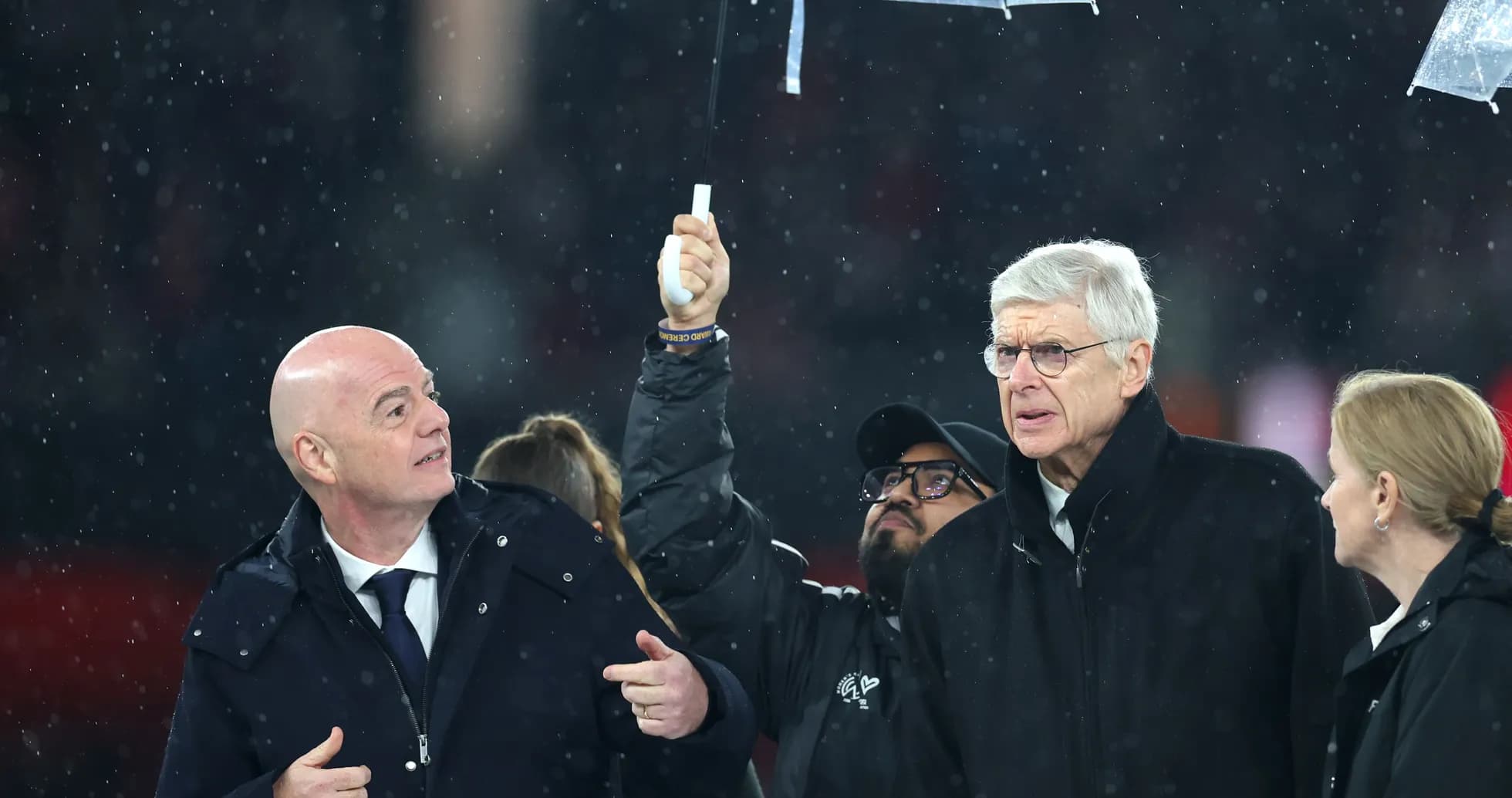
Arsène Wenger Considers FIFA Presidency Challenge Against Infantino
Arsène Wenger is weighing up the boldest move of his football life.
The former Arsenal manager, now 77 and serving as FIFA’s chief of global football development, is seriously considering a run at the presidency of world football’s governing body – a direct challenge to Gianni Infantino at a moment of deep unease inside Zurich and across Europe.
For weeks, senior powerbrokers around UEFA have quietly lobbied the Frenchman, urging him to stand. Now, with Infantino under intense pressure over his failed attempt to sell commercial stakes in the World Cup to private investors, Wenger is listening.
The timing is no coincidence. The backlash to the so‑called “strikers’ project” has left Infantino bruised and on the defensive, his judgement questioned and his methods under scrutiny.
Europe’s figurehead against FIFA’s incumbent
Infantino still holds firm backing in South America, Africa and Asia. He insists he enjoys the support of the “overwhelming majority” of the football world as he chases a fourth and final term in next year’s election.
That claim would be tested like never before if Wenger steps into the race.
UEFA, which has led the resistance to Infantino’s leadership and his World Cup stake‑sale plan, would line up behind its long-time adversary’s own global football chief. Wenger’s reputation stretches far beyond his Arsenal years: he carries weight in boardrooms and dressing rooms, on television panels and in technical committees.
Crucially, he is not just a European figure. His long-standing advocacy for African talent and his support for expanding the World Cup to 48 teams earned him goodwill across a continent Infantino has aggressively courted. In Africa, where Infantino recently secured the public backing of all 54 member associations by promising increased funding, Wenger would not be dismissed as a foreign imposition. He would be a familiar face.
His age, though, is impossible to ignore. At 77, how long could he realistically lead FIFA? Some of his European backers have already made their peace with that question. They would gladly accept a shorter presidency, even a partial term, if it ushers in a transitional phase and loosens Infantino’s grip on the organisation.
For now, those close to Wenger insist he has not made up his mind. They also say he still views Infantino as favourite to win again. That, in itself, underlines the scale of the task.
A race that’s already moving
The election may not take place until March, but the contest is no longer hypothetical. The field is forming.
Candidates have until 18 November to formally declare their intention to stand against Infantino. The first to break cover was Ramon Vega, the former Tottenham defender, who announced his candidacy in October. Kozo Tashima, honorary president of the Japan Football Association, has also signalled he will run.
Wenger would instantly overshadow both. He would turn a simmering political dispute into a heavyweight confrontation over the future direction of the sport.
Inside FIFA, the temperature has already risen. This month, the organisation told members of its council that “key documents” relating to Infantino’s World Cup stake-sale plan would finally be made available. The offer came with a catch: officials would have to travel to FIFA’s headquarters in Zurich, where access would be tightly controlled under “strict protocols”.
The gesture felt less like transparency and more like damage limitation.
The ‘strikers’ project’ and a public rebuke
UEFA’s patience snapped last month. The European body handed FIFA a deadline of 2 November to explain the controversial “FIFA Forward” (FFE) proposal and to clarify how such a seismic commercial plan had been developed and advanced.
The demand followed a tense council meeting in which Infantino apologised for the abandoned club-sale scheme but declined to spell out who had driven it or how it had reached such an advanced stage. He asked that questions be submitted in writing.
In that storm, Wenger made a decisive move of his own. Long seen as loyal to Infantino inside FIFA, he stepped away from the project and did so publicly.
“I was not involved in this strategic plan, and I first learned of the project through media reports,” he said at the time.
He went further, endorsing the U-turn in unambiguous terms: “The decision to withdraw the project was absolutely necessary and indisputable, because I firmly believe in an independent FIFA that serves our sport with commitment, transparency and integrity.”
For a man of Wenger’s standing, those words landed hard. They drew a line between his own vision of governance and the approach that has plunged Infantino into crisis.
A complicated standard-bearer
Wenger would not enter this race as a spotless reformer. His time at FIFA has been contentious. He has pushed for radical change: a World Cup every two years, a reworked “clear” offside law, a broader rethink of the calendar. Many of those ideas have sparked fierce debate and, in some quarters, outright hostility.
Yet that same willingness to challenge orthodoxy is what makes him a compelling alternative. He is no ceremonial figurehead. He is a thinker, a strategist, and a man who has never been afraid to absorb criticism if he believes in the bigger picture.
His global reach is undeniable. Infantino has invested years building alliances, especially in Africa, where his funding promises secured that block of 54 votes. But Wenger’s history on the continent runs deeper than handshakes and pledges.
At Arsenal, he championed African players when Europe’s elite clubs were still hesitating. He trusted them, built around them, and watched them become global stars. That legacy still resonates. It gives him an authenticity in African football circles that no campaign brochure can manufacture.
If he runs, the election stops being a procession and becomes a contest of ideas, personalities and power bases. Infantino, armed with incumbency and entrenched support, would still start as favourite. Yet a Wenger candidacy would force every confederation, every association, to ask a harder question.
Do they want four more years of the current regime, or a turbulent but potentially transformative handover to one of the game’s most respected minds?