Atlantic Division Preview: Knicks, Celtics, Nets, Sixers, Raptors
The Atlantic Division has never been quiet. This year, it’s deafening.
A blockbuster swap between Boston and Philadelphia, LeBron James walking into the Wells Fargo Center, the defending champion Knicks suddenly the hunted, not the hunters. Brooklyn loading up around a fragile star. Toronto betting on its own kids to grow up fast.
Training camp hasn’t even opened, and the East’s most volatile division already feels like the league’s epicenter.
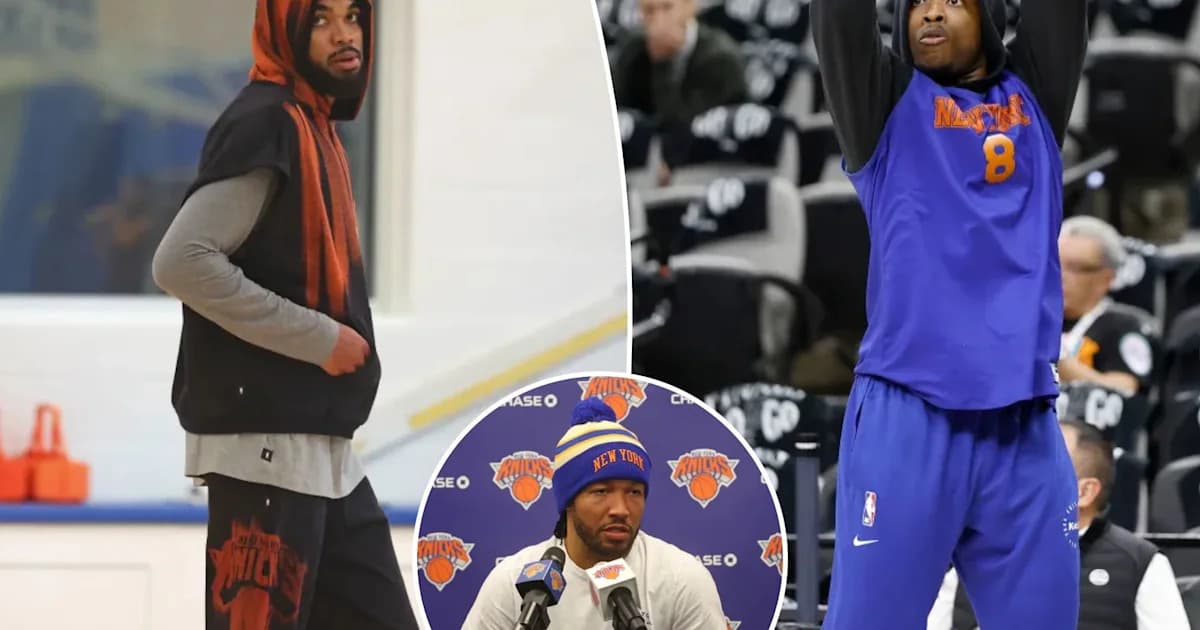
New York Knicks: From catharsis to expectation
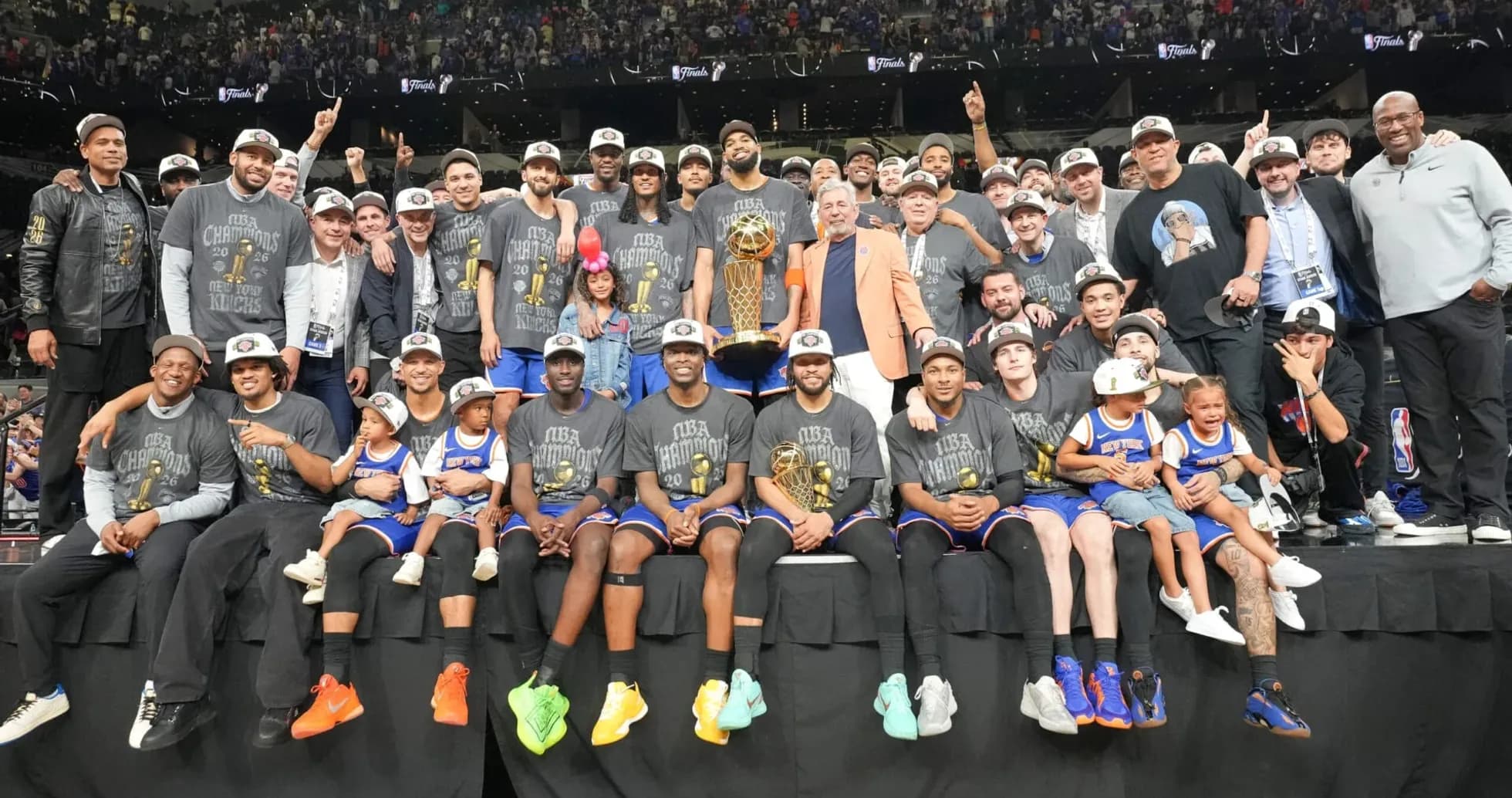
The parade finally rolled down the Canyon of Heroes. Fifty-three years of frustration, false dawns, and “maybe next year” washed away by a 53-29 season and an NBA championship that felt as much like a civic event as a basketball achievement.
Now comes the tricky part: what follows the miracle.
The Knicks didn’t tear up the blueprint. They barely touched it. Mitchell Robinson, the most notable departure from the title run, chased his payday to Boston, a hard but familiar reality for a capped-out champion. New York responded with something closer to a patch than a reinvention, bringing in Andre Drummond as insurance behind Karl-Anthony Towns, plus guards Jack Kayil and Tyler Nickel to fill out the back end of the roster.
That’s it. No splashy blockbuster. No dramatic retool.
They don’t need one.
Tom Thibodeau still leans on a spine that terrifies opponents in May: Towns stretching the floor, OG Anunoby smothering wings, Josh Hart doing everything in between, and 2026 Finals MVP Jalen Brunson controlling games with the calm of a man who just rewrote a franchise’s history.
There’s no demand in New York to repeat or bust. Not after half a century of waiting. But this group is too competitive, too battle-hardened, to treat last spring as a one-off. The Knicks enter the season with the rarest commodity in that city: time. And yet, with this core, the gap between titles might now be measured in months, not decades.
Boston Celtics: Life after Jaylen
Boston rode an MVP-level season from Jaylen Brown to a 56-26 record while Jayson Tatum limped through the year, healthy only in time for the final weeks. Then the Celtics crashed out in the first round, and the front office detonated the core.
Brown is gone, sent to Philadelphia in a move that will echo through the division for years. In his place, Boston has opted for depth, experience, and a different kind of star power.
Mitchell Robinson arrives to anchor the paint. Paul George, still capable of All-Star stretches when healthy, joins the wing rotation. Mike Conley brings veteran stewardship at the point. Young forwards Chris Cenac Jr. and Dillon Mitchell add length and energy to a roster that suddenly looks deeper, if less explosive at the very top.
The burden now drops squarely onto Tatum’s shoulders. He’s no stranger to that role. If he returns to full health and form, Boston has a clear path back to the postseason. A rejuvenated George, a steady Derrick White, and Robinson’s rim protection give the Celtics the tools to remain a problem, even without Brown’s shot creation.
This is no longer the Tatum-and-Brown era. It’s the Tatum era, full stop. How far that can go, in a division where his former running mate now shares the floor with LeBron James, will define Boston’s season.
Brooklyn Nets: No more hiding behind the future
Last year, Brooklyn leaned into the rebuild. Five first-round picks. Heavy minutes for a young core. The predictable result: 20-62 and a fifth-place finish in the division.
The message this summer was different. Enough stockpiling. Time to help Michael Porter Jr. before his back and his patience give out.
The Nets swung for Julius Randle, a former All-NBA forward who knows New York pressure as well as anyone. His best years came across the river with the Knicks, where he shouldered an offense and thrived in the spotlight. Now he joins Porter to form a bruising, shot-making frontcourt that finally gives Brooklyn some adult muscle.
They didn’t stop there. At No. 6 in the draft, the Nets grabbed Mikel Brown Jr., a Louisville product with combo-guard versatility and the polish to step into the rotation immediately. Teams in transition offer opportunity; Brown is well-placed to grab it. The Randle trade also delivered the No. 28 pick, used on Joshua Jefferson, another long forward to plug into the pipeline.
Nic Claxton and Ziaire Williams exit, collateral in a pivot from pure development to something more competitive.
There’s urgency now. Brooklyn doesn’t control its own first-round pick next season; Houston owns swap rights. The Nets can’t simply shrug off another 20-win campaign. With Randle beside Porter and a deeper guard rotation, improvement isn’t a luxury. It’s a necessity.
Philadelphia 76ers: The superteam gamble
For years, the 76ers teased contention, only to watch Joel Embiid’s body betray them at the worst moments. Last season followed the script: another injury-hit campaign for their MVP center, a 45-37 record, and a run that stopped in the conference semifinals.
So they tore up the script.
Jaylen Brown arrived from Boston, a move that would’ve been headline enough. Then LeBron James chose Philadelphia over a host of suitors, turning a big offseason into a seismic one.
Suddenly, the Sixers are something else entirely.
LeBron and Brown join Embiid, All-NBA guard Tyrese Maxey, and All-Rookie guard VJ Edgecombe in a starting five that can credibly claim to be the best in the league. Kentavious Caldwell-Pope adds championship-tested perimeter defense and shooting. Ariel Hukporti, Labaron Philon Jr., Anfernee Simons, and Dean Wade round out a rotation built to attack from everywhere.
The cost: Paul George, Kelly Oubre Jr., Quentin Grimes, Andre Drummond, Dalen Terry, Trendon Watford, and Johni Broome all move on. Philadelphia has traded depth and flexibility for star power and urgency.
The equation is brutally simple. If LeBron’s age doesn’t finally catch up to him, and if Embiid’s body holds when it matters, this team has the talent to end a title drought stretching back to 1983. The expectations are enormous, the spotlight unforgiving. Every night will feel like a referendum.
In a division this loaded, the Sixers haven’t just raised the stakes. They’ve shoved their entire stack into the middle of the table.
Toronto Raptors: Building the hard way
Toronto took the East’s No. 5 seed last season and pushed its first-round series to a Game 7. In a summer of chaos around them, the Raptors chose a quieter path.
They tinkered, not overhauled.
Kyle Anderson arrives to bring his familiar dose of playmaking, size, and defensive savvy. Rookie guard Jaden Bradley and forward Allen Graves join the developmental conveyor belt. Sandro Mamukelashvili departs, but the core remains intact.
The bet is on internal growth. It’s a sensible one.
Few offenses in the league are as balanced as Toronto’s. On any given night, three, sometimes four players can drop 20. That scoring spread, paired with a handful of capable defenders, gives the Raptors a versatility that wears on opponents over a seven-game series.
The optimism starts with Collin Murray-Boyles. His rookie season unfolded steadily, then surged in the postseason, where he flashed polished post moves and a soft touch around the rim. Guards Ja’Kobe Walter and Jamal Shead appear to be on a similar upward curve, adding backcourt dynamism to a roster already anchored by Scottie Barnes and RJ Barrett.
This is not a team chasing a quick fix. It’s a club layering talent around Barnes and trusting its development pipeline to keep producing. In a division where rivals are mortgaging futures and reshaping identities, Toronto’s approach is almost defiant.
The East is better. The Atlantic is brutal. The Raptors still look ready to walk straight back into the postseason.
One division. A defending champion. A superteam in the making. A wounded giant retooled, a rebuilding project accelerating, and a patient contender betting on its own.
Someone in the Atlantic is going to be disappointed. The only question is which heavyweight hits the canvas first.