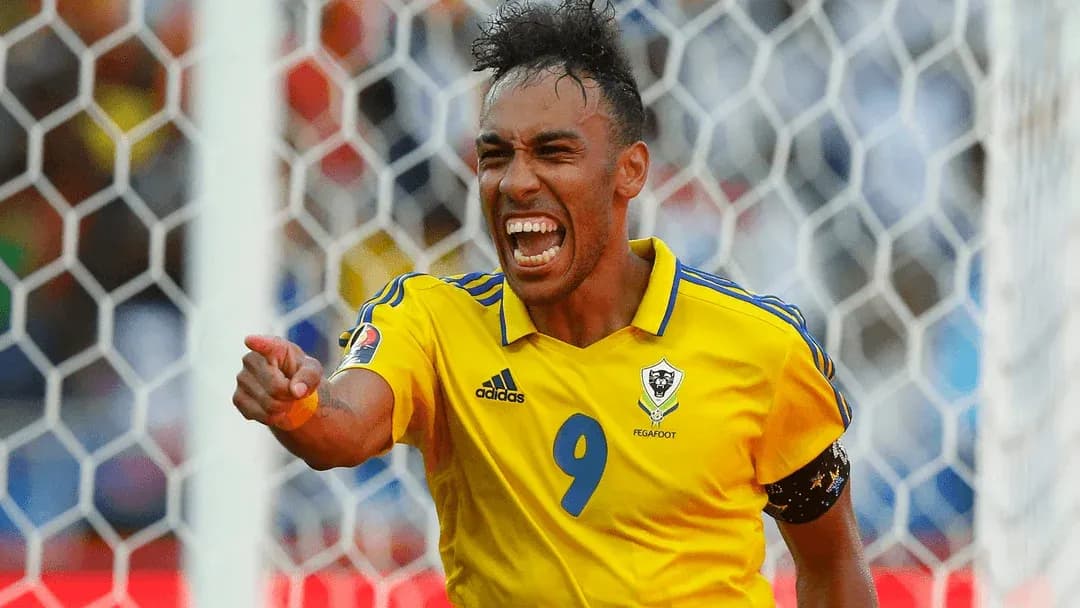
Aubameyang Retires from Gabon National Team After AFCON Fallout
Pierre-Emerick Aubameyang was never supposed to leave like this. Not in anger. Not in accusation. Not with the feeling that his own country had turned on him.
At 37, Gabon’s all-time leading scorer has announced his international retirement, drawing a hard line under a turbulent end to a career that once carried the hopes of an entire nation. The trigger was not the Africa Cup of Nations itself, but what followed.
“They humiliated me and tarnished my image when I had played at AFCON while injured,” the Deportivo striker said in a television interview, his words carrying the weight of a man who felt betrayed rather than simply disappointed. “It was the last straw and I’d rather leave it here.”
AFCON collapse lights the fuse
The storm began in Morocco, where Gabon endured a disastrous 2025 Africa Cup of Nations. Three games, three defeats, and an early exit in the group stage. Their campaign ended with a 3-2 loss to Ivory Coast, a scoreline that flattered them more than it reflected any control.
The reaction back home went far beyond the usual post-tournament inquest. It became a national crisis. Gabonese president Brice Clotaire Oligui Nguema publicly lamented that “a part of the national identity” had been weakened by the failure, a line that set the tone for what followed.
The authorities moved with a severity rarely seen in African football. The entire coaching staff was dissolved. The national team itself was suspended until further notice. And, pointedly, two names were cut from the squad: Pierre-Emerick Aubameyang and Bruno Ecuele Manga.
The decision to single out two of the country’s most experienced players ignited outrage among many supporters, who saw scapegoats rather than solutions. For Aubameyang, it cut even deeper.
Scapegoated and done
Aubameyang has never hidden from criticism, but this time he felt targeted as a symbol of failure in a crisis he believes stretches far beyond any one player.
“I think the national team’s problems run much deeper than the little part that I represent,” he said, calmly but firmly outlining his stance.
What stung most was the context. By his account, he had played at AFCON while carrying an injury, pushing through pain in an attempt to help a team already under pressure. To then be dropped and publicly associated with the collapse felt, to him, like a brutal rewriting of the story.
The pressure finally told. Even when he was later reinstated to the national team setup, the damage was irreparable. Trust had gone. The bond between star and federation, built over years of service and goals, had been fractured beyond repair.
So he walked away.
End of an era for the Panthers
Aubameyang’s departure leaves new head coach Sébastien Migné facing a daunting task: rebuilding a side stripped not only of results and confidence, but now of its most recognisable attacking figure.
For more than a decade, Aubameyang stood as the face of Gabonese football, the player who dragged the Panthers onto the global radar and carried the armband for a generation that looked to him for inspiration. He leaves as Gabon’s all-time leading scorer, a status that will frame his legacy long after this bitter final chapter is forgotten.
Yet the manner of his exit is impossible to ignore. There is no farewell lap of honour, no testimonial atmosphere, no emotional send-off in front of a packed stadium. Instead, one of Gabon’s greatest players ends his international career feeling humiliated, unfairly blamed and convinced that the problems he leaves behind are far bigger than the man walking away.
Gabon must now decide what to learn from that.