
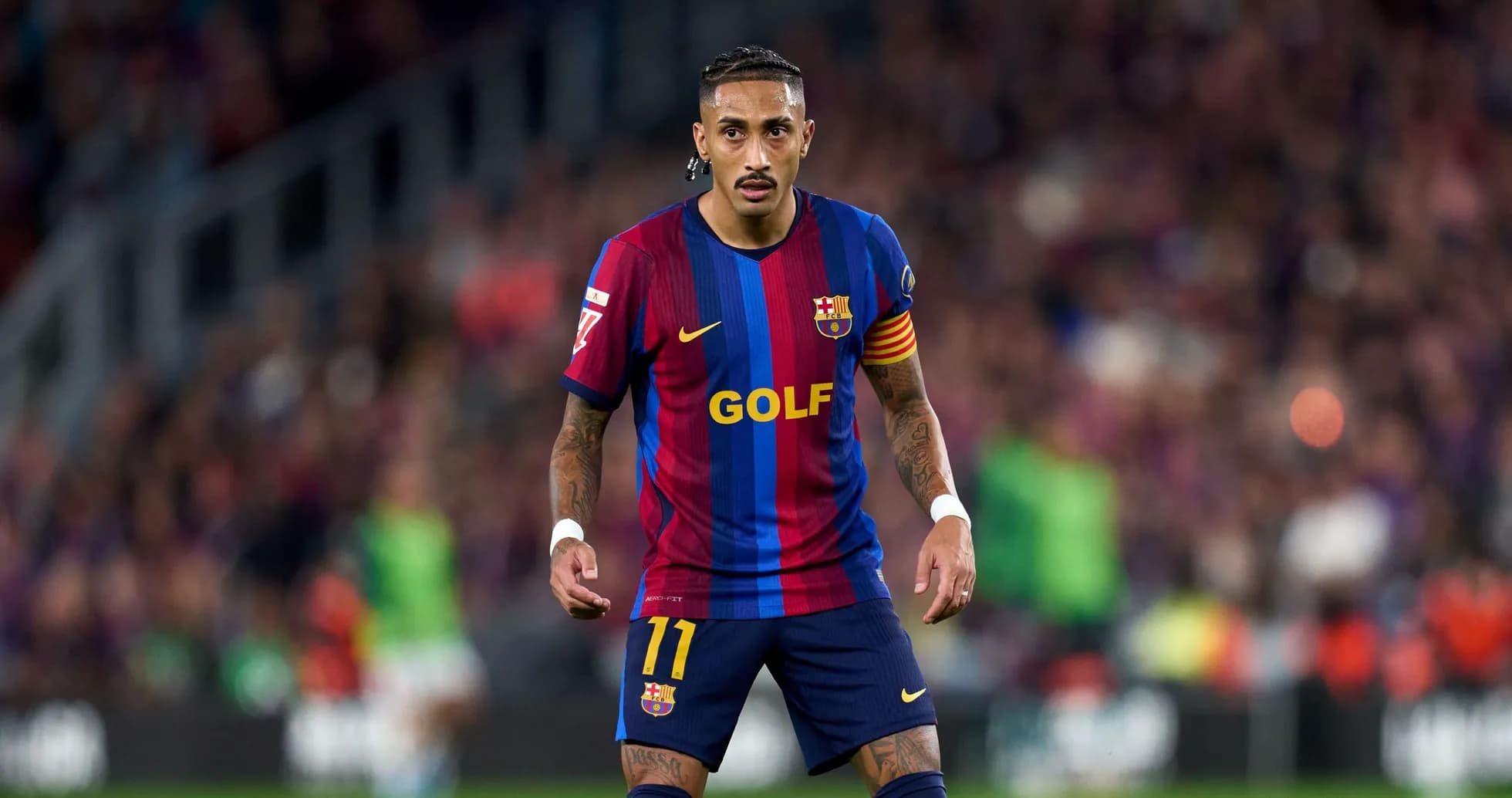
Barcelona's Winter Transfer Strategy: Necessity Over Luxury
Barcelona are preparing for a winter window in which necessity, not luxury, will dictate every move.
The Catalan club know they need a centre-back. They also know they are walking a tightrope with financial fair play. That tension is driving a very specific kind of market strategy: targeted, opportunistic, and built on creative accounting rather than big cheques.
Raphinha renewal unlocks room to manoeuvre
The key to that strategy is already inside the dressing room. As reported by Spanish daily Sport, the renewal of Raphinha’s contract until 2030 has given Barcelona vital breathing space in their budget.
The extension is not just about tying down a starter. It restructures his wages. His salary drops for the remainder of this season and is then spread over the following campaigns, easing the immediate pressure on the club’s financial fair play calculations.
Vice-president Ferran Olivé laid out the reality in an interview with the programme "Que t'hi jugues!" on Cadena SER. Barcelona, he said, have a surplus of just €3–4 million to work with. That is their margin. Nothing more.
Once the new terms with Raphinha fully kick in, that margin should grow, though not enough to plunge into the market for a marquee defender on a huge fee and salary. It will, however, open the door to deals that fit a more modest profile.
Loans, not galácticos
That is why Barcelona are again looking at the kind of move that brought João Cancelo to the club last winter. A loan, with a manageable wage structure and the possibility of a longer stay if all parties are satisfied.
The Cancelo operation, initially a temporary fix, ended with a permanent three-year contract last summer. It is now a template. Barcelona cannot outspend Europe’s elite, but they can out-think them in specific situations.
This winter, the same formula is back on the table.
Lisandro Martínez on the radar
Among the names that fit the plan, Lisandro Martínez stands out.
The Argentine centre-back is under contract with Manchester United until 30 June 2027. From January, he will be free to negotiate with other clubs for his next move, and reports of a breakdown in his relationship with coach Michael Carrick have only fuelled the sense that his time at Old Trafford could be winding down.
In that context, United are unlikely to be in a strong position to demand a huge transfer fee. Barcelona, aware of that leverage, see an opening: a defender of proven quality, potentially available on terms that fit their financial reality.
A deal could be structured along the same lines as Raphinha’s renewal. Martínez might arrive on a relatively low salary at first, with the promise of improved terms later, once the club’s accounts are in better shape. For Barcelona, it is the only way to bring in a player of that calibre without breaking their own rules.
Injuries force Barcelona’s hand
All of this is driven by need, not whim.
A spate of injuries has stripped Hansi Flick of depth at the heart of his defence. Jules Koundé, Eric García and Andreas Christensen are edging towards full fitness, but the recent crisis has underlined just how thin Barcelona are at centre-back.
Flick, charged with competing on every front, cannot afford to gamble on a fragile back line. Every game, every rotation, every tactical tweak comes with the risk of overloading the few defenders he fully trusts.
The message is clear: reinforcements are not a luxury, they are a requirement.
Barcelona’s winter, then, will not be about fireworks. It will be about precision. A narrow financial corridor, a defined positional need, and a market that sometimes punishes the desperate but occasionally rewards the patient.
If they navigate it correctly, a reshaped wage packet for Raphinha could end up delivering something far more valuable than a line on a balance sheet: a new leader at the heart of Flick’s defence, and a squad finally built to withstand the grind of a long season.





