Battle for the 2030 World Cup Final: Morocco vs Spain
The battle for the 2030 World Cup final has burst into the open – and it is no longer just a football story, but a political one.
Morocco told to cool final talk
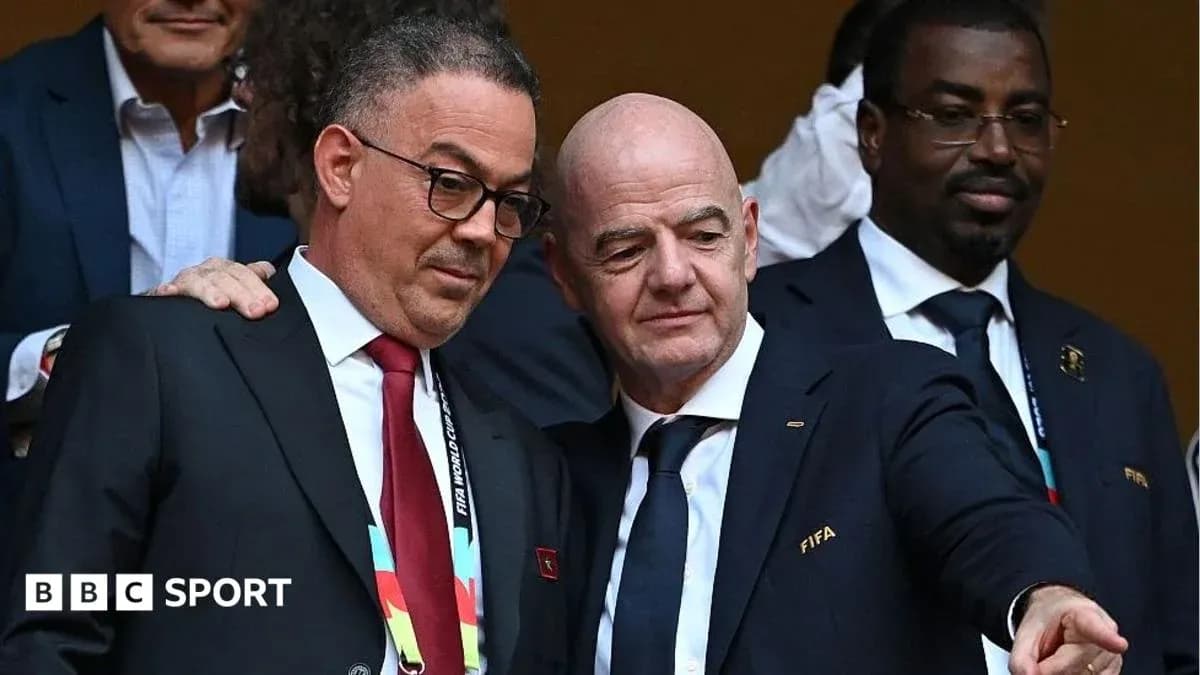
Morocco’s prime minister Aziz Akhannouch has publicly rebuked Fouzi Lekjaa, the powerful president of the Moroccan football federation (RMFF), over bold claims that Casablanca would have the “honour” of hosting the 2030 World Cup final.
Lekjaa made the declaration at a political party event, leaning into the national excitement around the tournament, which Morocco will co-host with Spain and Portugal. The problem? Nothing has been agreed.
On stage at a rally, Akhannouch cut through the euphoria.
“Do not offer to host the big final game in Morocco while we still have not discussed the matter with our allies, Spain and Portugal,” he warned, before pointedly adding: “There should be some respect, brothers. Stop using electoral promises to pull the rug out from under us. These are huge matters. Deciding where the final will be held is a major issue.”
It was a rare, very public slapdown of one of the country’s most influential sporting figures, and a reminder that World Cup politics run far deeper than stadium blueprints and glossy bid videos.
Spain push their claim
While Morocco wrestles with internal messaging, Spain has been far more direct.
Rafael Louzan, president of the Spanish football federation (RFEF), has already said he expects the final to be played on Spanish soil – and believes recent history strengthens that stance.
“Even though no decision has been taken, I believe Spain is the place because it cannot be any other way,” he told Cadena SER. “As you know, we are currently world champions.
“I believe Spain’s organisational capacity for major events is beyond question and that is why reality dictates that the grand final cannot and must not be held anywhere other than in Spain.”
Spain’s men won the World Cup for the second time this summer, beating Argentina in July, and Louzan has wasted no time in tying that triumph to the country’s hosting ambitions.
The message is clear: champions host the showpiece.
Fifa keeps its distance
For now, Fifa is staying above the fray. World football’s governing body has confirmed only that “a decision will be made in due course” on the host city for the final.
The 2030 tournament will be unique. Officially co-hosted by Morocco, Spain and Portugal, it will also nod to the competition’s roots, with the opening three matches staged in Uruguay, Argentina and Paraguay to mark the World Cup’s 100th anniversary.
A proposed list of host stadiums is already on the table, but the final line-up – and, crucially, the venue for the showpiece – remains unresolved. Recent precedent shows how long that can drag on: New Jersey was not confirmed as the host for the 2026 World Cup final until February 2024, just two years before the tournament.
Stadiums, scale and symbolism
Behind the political positioning lies a more tangible contest: concrete, steel and capacity.
Morocco is pressing ahead with plans for a vast 115,000-seat stadium, which would become the largest football arena in the world. The symbolism is obvious. A record-breaking venue on African soil, hosting the biggest game in football, would be a landmark moment for the continent and for Moroccan sport.
Spain counters with history, infrastructure and modernisation. Real Madrid’s Santiago Bernabéu has undergone a sweeping renovation and now holds around 83,000, wrapped in a futuristic shell designed for global events. Barcelona’s Spotify Camp Nou, once its overhaul is complete, will seat 105,000 and remain one of the game’s great cathedrals.
Each country can sell a different story. Morocco offers a giant new arena and the emotional pull of a World Cup final in Africa. Spain leans on proven organisational strength, upgraded super-stadiums and the status of reigning world champions.
Allies, rivals, co-hosts
This is a joint bid, but the last match can only be played in one place. That tension now sits at the heart of the 2030 project.
Akhannouch’s intervention underlines the delicate diplomacy required between Rabat, Madrid and Lisbon. Lekjaa’s promise to Casablanca may play well domestically, but it risks unsettling the alliance just as Spain’s federation sharpens its own public case.
The political temperature is rising long before a ball is kicked. And somewhere inside Fifa’s corridors, a decision on where the world will turn its eyes in July 2030 is edging closer, even if nobody is ready to say it out loud yet.