Battles Beyond the Battlefield: Stories of Resistance and Resilience
Some battles are fought with rifles and tanks. Others play out under fluorescent lights in courtrooms, in the noise of social media, in a ring under harsh spotlights — or on a single surfboard cutting through cold water.
Episode 25 of ALL CAPS, ynet Global’s weekly current affairs show, moved across all of those arenas in under an hour. The panel jumped from the U.S. Senate to Latin America, from Hollywood activism to a kickboxing world champion, from legal traps for soldiers abroad to a one-armed surfer chasing a world medal. Different stories, same thread: people who refuse to back away from a fight, whatever form it takes.
Washington’s hearing, and an empty chair
The show opened in Washington, where Sen. Ted Cruz chaired a U.S. Senate hearing on the Muslim Brotherhood and its alleged network of influence in the United States. One image framed the discussion: Republicans in their seats, Democratic senators absent.
The panel dug into that choice. Not just as a partisan gesture, but as a symptom of something deeper — a Western political climate so polarized that even confronting extremist movements becomes another front in a culture war. If one side leads the charge, the other side stays home.
From there, the camera lens pulled back.
Colombia’s turn away from Israel
The conversation shifted south, to Colombia, where a change of leadership has reshaped the country’s relationship with Israel. A partner that once looked reliably aligned with Jerusalem now feels far less certain.
The panel treated Colombia as a warning label. Alliances, they argued, are not fixed assets. Governments fall, coalitions change, and foreign policy turns on a single election night. A state that seemed to be drifting away from Israel can swing back; a friendly capital can cool overnight.
Colombia became a case study in how Israel’s position in Latin America may be entering a new phase, with regional political shifts threatening a broader realignment. The message: nothing is guaranteed, not even long-standing diplomatic habits.
Hollywood, Barghouti and the battle over memory
From Bogotá, the show moved to Hollywood.
There, a campaign by actors has pushed for the release of Marwan Barghouti, the imprisoned Palestinian leader. Supporters cast him as a Palestinian Nelson Mandela, a political prisoner turned symbol of resistance.
The panel pushed back hard.
They pointed to Barghouti’s convictions in Israel for involvement in attacks that killed civilians and challenged the attempt to recast him as a champion of nonviolent struggle. For them, this was not just about one man, but about the language used to frame the conflict — who becomes a “freedom fighter,” who is remembered as a “terrorist,” and how celebrity endorsements can tilt that balance.
“Read the indictment, read the verdict, see who you're dealing with,” host Nitsana Darshan-Leitner said, accusing the campaign of trying to “whitewash terrorism with stardust.”
In their view, the fight over Barghouti’s image is part of a larger struggle over historical memory, where a hashtag and a red-carpet statement can outweigh a court file.
Nili Block: a champion who refuses to shrink
Then the show left geopolitics for something more intimate.
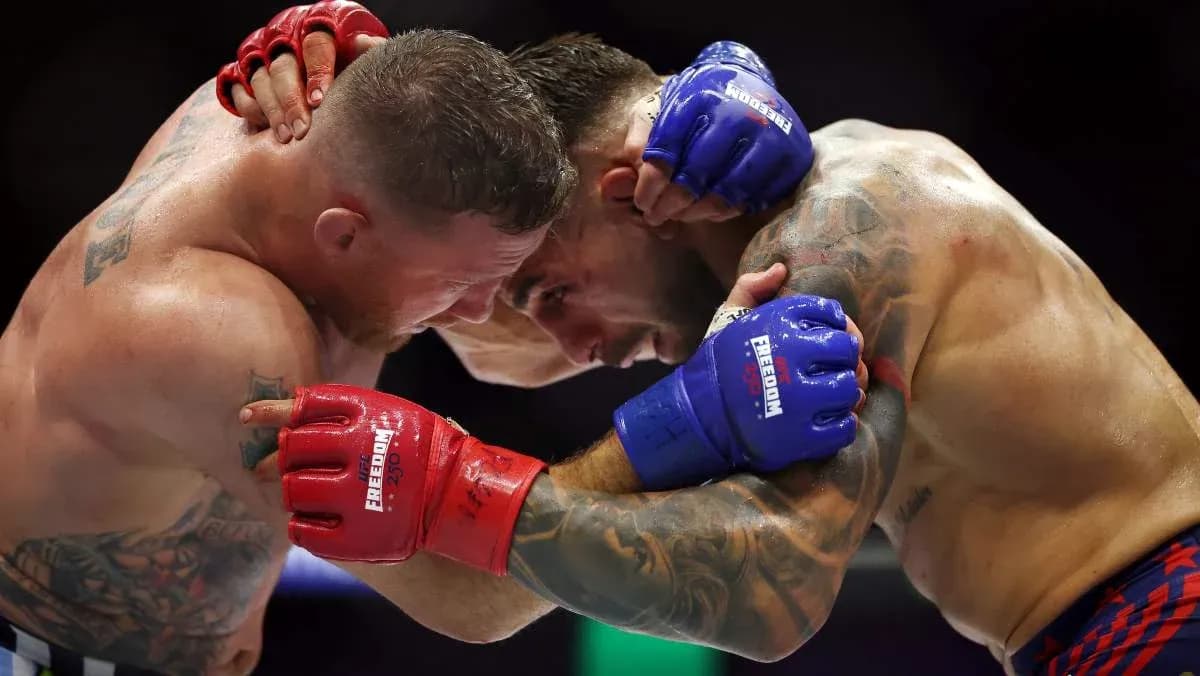
Nili Block, world champion in kickboxing and Muay Thai, joined the panel. For years she has walked into arenas around the globe with an Israeli flag on her shoulders and an opponent in front of her.
Block started martial arts at 10. As a child, she wanted to be a professional athlete; becoming a multiple-time world champion was beyond the horizon. She got there anyway.
Her story, though, was never just about belts and medals. She talked about entering a sport still widely seen as a man’s domain, hearing the doubts, feeling the dismissals, and turning all of it into fuel.
“You say I can't do it, I'm going to prove you wrong,” Block said.
That defiance did not stay in the ring. It followed her into every tournament where the Israeli flag can draw as much attention as a spinning kick.
In recent years, representing Israel abroad has meant walking into arenas shadowed by protests and hostility. Block recalled French Jews approaching her, thanking her simply for standing tall as an Israeli in public. For communities dealing with antisemitism in daily life, she said, an athlete who refuses to hide her identity can become a quiet act of resistance.
“They were scared,” she remembered. “Me coming out there and just standing strong, I think it gave them a lot of hope.”
The titles matter. But Block made it clear they do not give her a license to stop working, stop learning or stop treating people with respect. Being a champion, as she framed it, is a starting point, not a finish line.
A new front line for IDF soldiers
From the ring, the show pivoted back to a different kind of fight.
Since October 7, Israeli soldiers and reservists traveling overseas have found themselves exposed to a new threat: legal complaints, investigations and attempts to detain them under universal-jurisdiction laws in foreign courts.
The episode spotlighted organizations that track Israeli soldiers through social media, log their movements and try to trigger legal action against them abroad. A post, a tagged photo, a boarding pass — all potential breadcrumbs.
In response, Shurat HaDin has launched Shakpatz, described on the show as a “legal flak jacket” for Israeli soldiers. The idea is blunt and practical. Before reservists and veterans get on a plane, they receive country-specific guidance, legal alerts and clear instructions on what to do if someone stops them at passport control.
Behind that digital shield sits a network of lawyers ready to step in when an Israeli faces detention, questioning or possible arrest.
The logic mirrors their army service. On the battlefield, soldiers wore physical protection. Back in civilian life, they may now need legal armor.
“You protected us. Now we are protecting you,” the segment declared — a line that captured what the panel called a new reality for Israeli servicemen and women. Ending a tour of duty no longer guarantees the end of the fight.
From Jabalia to the waves
The final story stripped the politics away and left one man, one wound, one choice.
Tamir Dudi, 26, an IDF officer, was seriously wounded in Jabalia. He survived 17 surgeries. He lost his right arm.
For most people, that would be the moment that defines everything that follows.
Dudi refused to let it be the last word. He went back to surfing.
Today he is training for the World Adaptive Surfing Championship in California, chasing a goal that sounds almost simple when he says it: he wants to stand on the podium and win a medal.
The panel watched footage of him in the water, balancing, paddling, controlling a board with one arm in a sport that punishes even the smallest technical flaw. Their reaction said enough: this was not a feel-good clip, but a stark display of willpower.
It was a fitting way to close what they called an “episode of champions.”
Across the hour, the show had threaded together very different fronts: Nili Block fighting in the ring and in the court of public opinion, IDF reservists navigating a legal minefield every time they cross a border, and Tamir Dudi carving his own path back from a battlefield in Gaza to a lineup of waves off California.
For Dudi, the answer to what comes after war is clear. You get back on the board — and you aim for the podium.