Bayern Miss Out on Barcola and Gordon as Liverpool Capitalize
Bayern Munich went hunting for wingers this summer. They came back with a balance sheet instead.
Vincent Kompany’s first major rebuild in Bavaria was supposed to include a statement signing out wide, and Bayern pushed hard. Bradley Barcola and Anthony Gordon were both explored, both admired, both discussed at length in the corridors of power at Säbener Straße.
Neither arrived. The numbers crushed the dream.
Barcola: from Bayern target to Salah’s heir
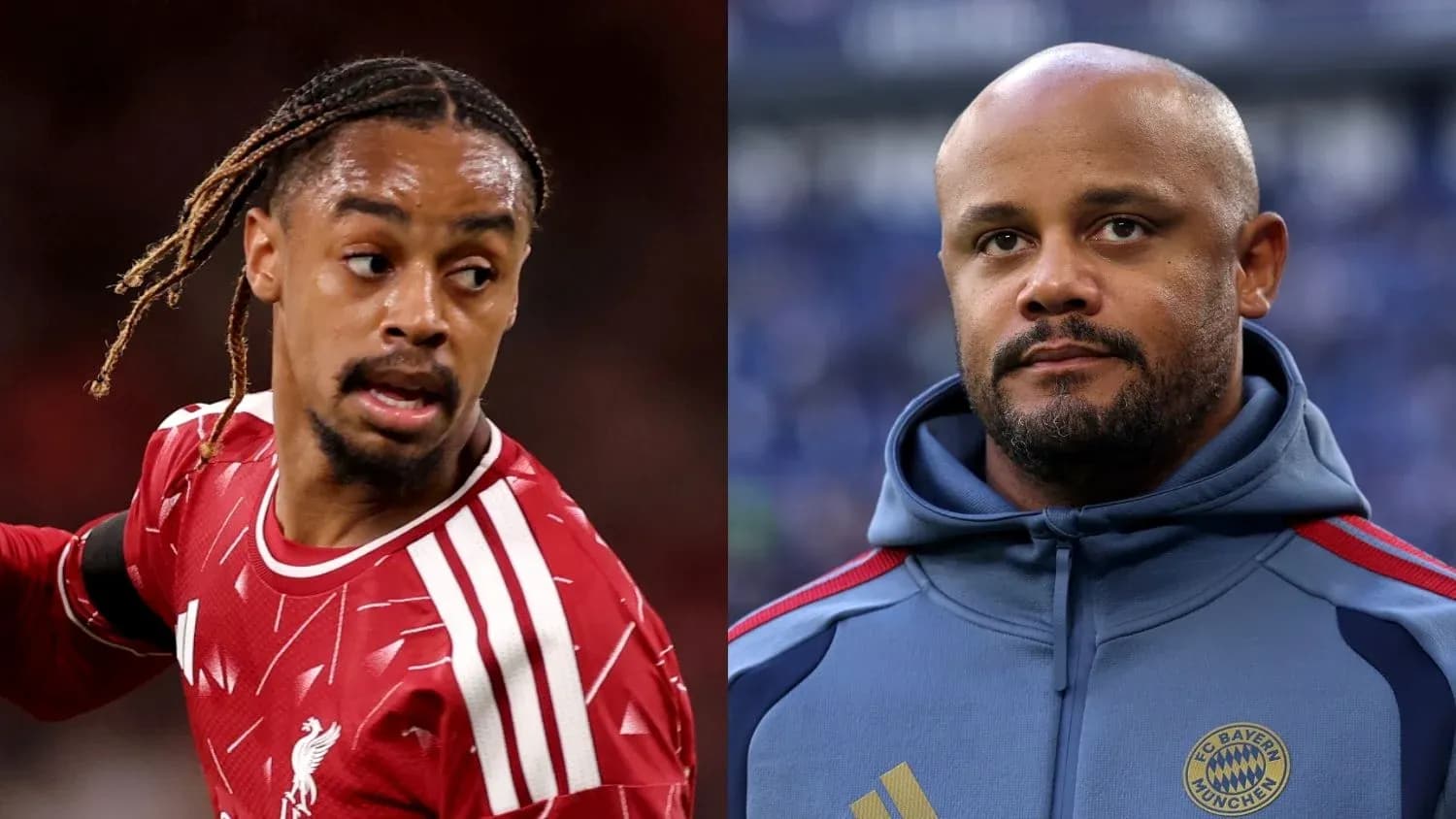
Bradley Barcola was the one that got away – and for Max Eberl, he was never just another name on a shortlist.
“To be honest, I already know Bradley from my time at Leipzig. I wanted to bring him to Leipzig,” the Bayern sporting director told Sport Bild. Those early conversations laid the groundwork for Bayern’s renewed interest. “We sat down together and discussed it back then. That’s how I developed a closer relationship with Bradley. So there was always interest there. Of course, we also looked into him at Bayern.”
The interest was real. The price was brutal.
Liverpool, staring at the void left by Mohamed Salah after a glittering nine-year spell at Anfield, chose to go all in. They paid £123 million to prise Barcola away, installing the former Paris Saint-Germain winger as the man to carry their right flank into a new era.
When that figure landed in Munich, it ended the chase.
“When you hear about sums like that, it was too much for us,” Eberl admitted. Bayern had already committed heavily to Luis Diaz, a decision he described as “also costly, but on a different scale than Bradley.” The market had moved into a bracket Bayern were unwilling to follow.
Liverpool did not hesitate. Barcola wanted the move, and that intent mattered. With Arsenal lurking, the Frenchman’s eagerness to join Andoni Iraola’s project helped the Reds close the deal and secure their priority target. The fee makes him the second-most expensive signing in Liverpool’s history, behind only club-record arrival Alexander Isak.
For Bayern, admiration turned into acceptance. For Liverpool, it was the price of replacing a legend.
Gordon: another deal Bayern walk away from
If Barcola was the right-wing fantasy, Anthony Gordon was the answer for the left.
“It’s no secret that we were interested in Anthony Gordon for the left wing,” Eberl conceded. Bayern saw the Newcastle forward as another high-impact wide option who could stretch defences and inject pace into Kompany’s system.
The pattern repeated. Talks, interest, then the cold reality of the market.
“We decided we were not doing that because he was simply too expensive,” Eberl said. Barcelona, prepared to push harder, stepped into the gap and struck a £69m deal with Newcastle. Gordon headed for the Camp Nou; Bayern again watched a target disappear into a different financial orbit.
Two wingers, two big moves, and one club choosing restraint.
Bayern reshape while Liverpool reload
Missing out on Barcola and Gordon didn’t just close doors for Bayern. It forced them to redraw the blueprint.
Without a blockbuster winger signing, the German champions pivoted towards a broader reshaping of the squad. Ismael Saibari and Nathaniel Brown arrived, fresh legs for Kompany’s new cycle, but the real story was the exodus designed to steady the accounts.
- Joao Palhinha left.
- So did Alexander Nubel and Daniel Peretz.
- Young prospects Noel Aseko, Jonah Kusi-Asare, Maurice Krattenmacher, and Lovro Zvornarek also moved on from the Allianz Arena.
The message was clear: Bayern would refresh, but they would not be dragged into an arms race they did not control.
Liverpool moved in the opposite direction. They had a specific hole and filled it with a specific player at an eye-watering price. Salah’s departure demanded more than a stop-gap; it demanded a statement. Barcola, a two-time Champions League winner with PSG, arrived with pedigree and expectation in equal measure.
Barcola’s first steps at Anfield
Big fees bring heavy scrutiny. Barcola has already started to answer it.
His first taste of English football came off the bench, a 60th-minute introduction in a 2-0 away win at Ipswich, replacing fellow new signing Victor Munoz. It was a gentle entry, a chance to feel the pace, the tackles, the noise.
The next step came under the European lights that shaped his career. Handed his first start in Liverpool’s 2-1 Champions League victory over Diego Simeone’s Atletico Madrid, Barcola offered flashes of why Liverpool pushed so hard. Direct running. Sharp movement. Little moments that hint at a player ready to grow into a central role.
He did not finish the game. Cramp forced his withdrawal shortly after Alexis Mac Allister struck the decisive second-half goal, a reminder that adaptation to the Premier League’s demands is never instant. Iraola will need to manage him carefully in the coming weeks, balancing the urge to unleash a £123m signing with the reality of his physical limits.
Liverpool, though, have their man. Bayern do not.
In one summer window, two wingers redrew the attacking lines at Anfield and the Camp Nou, while in Munich a new era under Kompany begins without the marquee wide forward they once imagined. The question now is simple: did Bayern dodge a financial bullet, or step aside just as the next generation of elite wingers changed the landscape?