
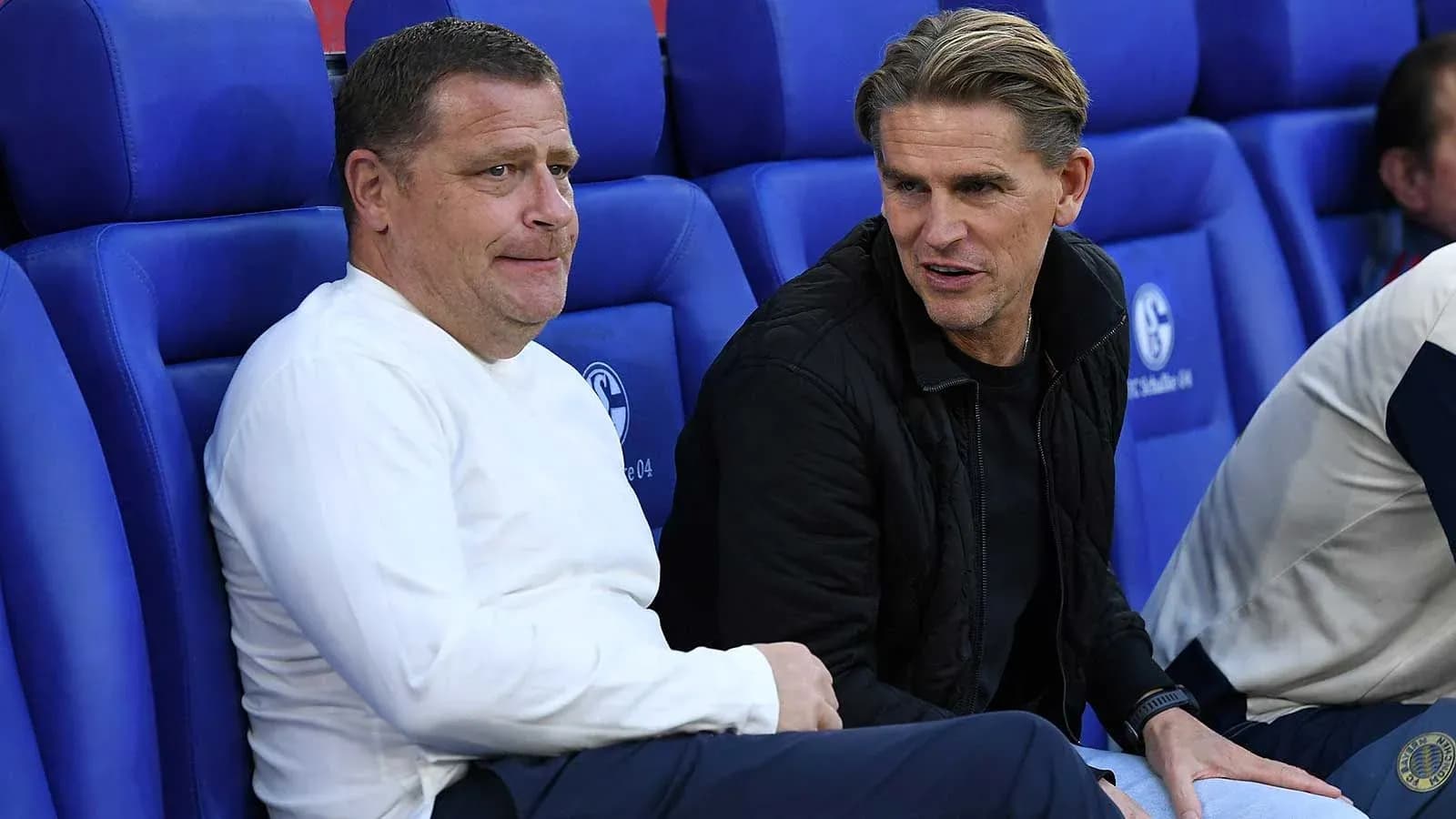
Bayern Munich's Power Struggle: The Search for a New Sporting Director
The corridors at Säbener Straße are rarely quiet, but right now Bayern Munich’s power axis is humming louder than usual.
Christoph Freund, the sporting director hired to modernise Bayern’s squad building, has been working on one of the club’s most sensitive dossiers: finding a successor to Timon Paul Schmadtke in a key backroom role. According to reports from tz and the Münchner Merkur, Freund had already settled on his preferred candidate – Christopher Vivell.
A 39-year-old from Karlsruhe, Vivell carries a heavyweight CV in the data-driven, networked world of modern recruitment. He made his name as chief scout at RB Salzburg, then as squad planner at RB Leipzig, before stepping into the role of technical director at Chelsea. He now oversees scouting at Manchester United, where the operation has been widely viewed as underwhelming.
Freund and Vivell know each other well from their Salzburg days. On paper, it looked like a natural reunion: an architect of the Red Bull model joining forces again with one of its most successful practitioners at a club desperate to sharpen its squad planning.
But the trail has gone cold.
A Red Bull fault line
The cooling of interest in Vivell, tz and the Münchner Merkur report, stems from higher up the Bayern hierarchy. Max Eberl, the club’s board member for sport and Freund’s nominal superior, is said to harbour doubts about placing yet another figure from the RB cosmos into a central role at Bayern.
It is a striking stance, not least because Eberl himself carries RB baggage.
After leaving Borussia Mönchengladbach in early 2022, officially for health reasons, Eberl re-emerged at RB Leipzig as managing director for sport. The move detonated his relationship with large sections of the Gladbach fanbase, who had long admired him but felt betrayed by the switch to the Red Bull project.
His time in Leipzig ended abruptly. After just a year and a half, the club and Eberl split amid controversy, with RB Leipzig citing a “lack of commitment”. By then, Bayern’s board member for sport position had been vacant since Hasan Salihamidzic’s exit in May 2023, and Eberl’s name had been repeatedly linked with Munich. The separation with Leipzig at the end of September 2023 only intensified the noise.
Bayern finally made their move in March 2024. Eberl took over as board member for sport, while Freund, who had arrived from RB Salzburg in the summer of 2023, had already been shaping the squad almost single-handedly.
Two powerful figures. One department. One ball to share.
Forced marriage or functional duo?
In recent months, German media have painted the relationship between Eberl and Freund as tense. The word “strained” has appeared more than once. kicker went further, describing a “forced marriage” in April 2026 and highlighting several points of friction between the two.
Freund publicly pushed back. Asked about reports of internal rifts at a press conference last summer, he admitted he had been “surprised” by the stories and insisted: “It’s enjoyable working together. What matters is how things work internally, and they work very, very well.”
On the pitch, the evidence has largely supported him. The collaboration between Eberl, Freund and head coach Vincent Kompany has delivered results, enough for Bayern to extend the contracts of both Eberl and Freund in recent months.
Yet the Vivell episode underlines a deeper question: who truly sets the course in Bayern’s sporting department? And how many RB alumni can one traditional powerhouse tolerate before its own identity starts to feel compromised?
Schmadtke exit leaves Eberl exposed
Into this already delicate balance comes the departure of Timon Paul Schmadtke – and with it, a potential blow to Eberl’s internal power.
Eberl had brought Schmadtke, the son of his close friend Jörg Schmadtke, to Munich in October 2024. Inside the club, the board member for sport strongly backed him and helped secure an extension of his appointment through to summer 2027. Schmadtke became one of Eberl’s key allies in the daily grind of squad and structural planning.
That protection has now evaporated.
For months, Schmadtke’s position had been under heavy internal fire. Criticism of his work grew louder, and the decision has now been taken to part ways early, at the end of January 2027. Alongside performance concerns, rumours circulated that he had leaked internal information from Bayern to the media – a toxic accusation in a club obsessed with control and discretion.
Schmadtke hit back on Thursday evening in a detailed statement on LinkedIn.
“I have never passed confidential information to the media. Not in Munich and not anywhere else. I have never put down people under my responsibility,” he wrote. “I am demanding, and sometimes uncomfortable when it comes to quality. I am not disrespectful. And none of what was written had even the slightest connection to my departure from Bayern Munich. I do not speak publicly about internal matters. I have not done so at any of my previous posts, and that remains the case now.”
The message was clear: he rejects the role of scapegoat.
Inside Bayern, though, his exit carries a different kind of symbolism. One of Eberl’s closest confidants is gone. The man he championed, extended, and shielded has been ushered out. In the power geometry of a club like Bayern, that matters.
Who really wins this tug of war?
So where does this leave Max Eberl?
Publicly, his position appears secure. His contract has been extended, the team under Kompany has responded, and Bayern still project unity when the cameras roll. But the combination of a blocked move for Vivell and the early end to Schmadtke’s tenure hints at shifting currents behind the scenes.
Freund, the man entrusted with squad building before Eberl’s arrival, now steers the search for Schmadtke’s successor. His initial favourite has been questioned from above, reportedly on cultural grounds tied to the RB network that shaped both his and Eberl’s careers.
That irony will not be lost on anyone inside the club.
Bayern have long thrived on internal competition – players, coaches, executives all pushing, all jostling. The line between productive tension and destabilising conflict is thin. With Schmadtke gone and the Vivell plan stalled, that line feels a little sharper around Eberl’s desk.
The next appointment in Bayern’s sporting structure will not just fill a vacancy. It will reveal who truly holds the reins in Munich’s most contested department – and whose vision defines the club’s future.





