How Arsenal Capitalized on Bayern Munich’s Waning Intensity for a Thrilling 2-2 Draw
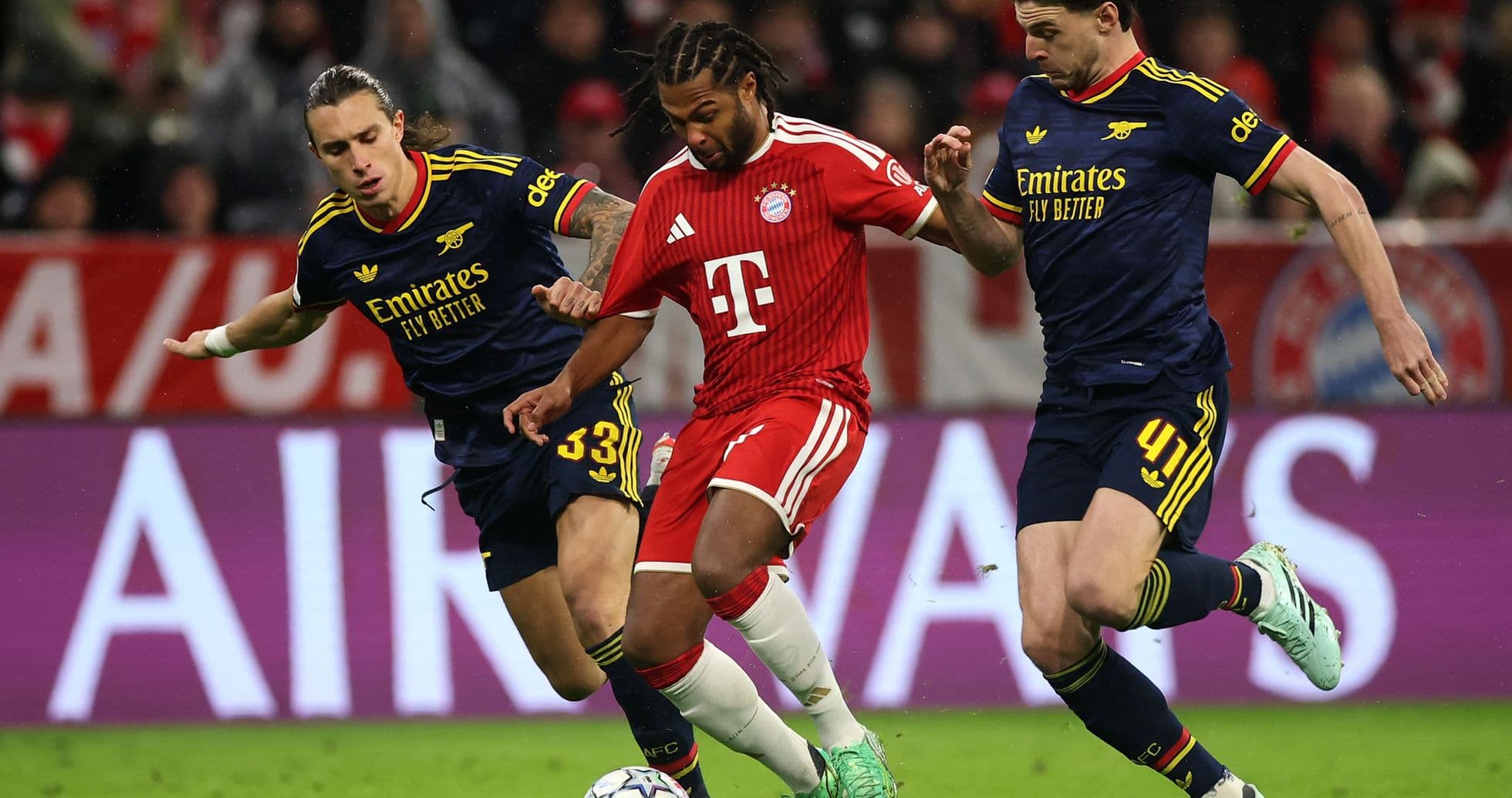
The Champions League clash between Bayern Munich and Arsenal ended in a 2-2 draw at the Allianz Arena, showcasing a fierce battle of tactics and moments of individual brilliance. Despite Bayern holding the advantage in expected goals, Arsenal’s resilience and halftime changes ensured they left Bavaria with a valuable point.
This encounter highlighted contrasting styles: Bayern sought to dominate with aggressive vertical play and Harry Kane’s deep-lying creativity, while Arsenal emphasized defensive structure and controlled tempo through rotations. The match unfolded as a contest over space and transitions, with both sides pushing to exploit gaps between the lines.
Bayern Munich’s Tactical Setup
Bayern started in a flexible 4-2-3-1 formation that often shifted into a 3-2-5 during build-up. Their strategy was clear: use Kane as a deep playmaker to pull Arsenal’s centre-backs out of position. A perfect example came in the 35th minute when Kane dropped into midfield to thread a precise throughball to Alphonso Davies for an equalizer. By vacating the striker spot, Kane opened channels for Bayern’s wingers and advancing full-backs against Arsenal’s high defensive line.
Defensively, Bayern pressed aggressively in a mid-block, focusing on disrupting Arsenal’s lateral passes through triggers aimed at their centre-backs. Aleksandar Pavlovic marked Martin Ødegaard closely to neutralize Arsenal’s main creative outlet. If the press was bypassed, Dayot Upamecano’s pace was relied on to sweep behind the high line, tallying 14 defensive actions. Bayern’s patient build-up frequently involved goalkeeper Manuel Neuer dropping into defence to create overloads against Arsenal’s front three, but their biggest threat came from quick transitions exploiting half-spaces.
Arsenal’s Tactical Approach
Mikel Arteta deployed his usual 4-3-3, adjusting for Bukayo Saka’s early injury by bringing on Eberechi Eze, who operated more centrally rather than hugging the touchline like Saka. This shift allowed Arsenal to exploit pockets of space between Bayern’s midfield and defence. It paid off in the 25th minute when Eze collected a long ball from Ødegaard to open the scoring, capitalizing on Bayern’s rare positional error.
Arsenal’s pressing was cautious, often retreating into a 4-4-2 shape to limit central space for Bayern. Declan Rice was pivotal in this system, covering large areas to plug gaps and eventually scoring the crucial second equalizer. On the right flank, Arsenal overloaded with Noni Madueke to pressure Bayern’s full-backs, forcing them back. Although Arsenal held 54% possession, much of it was circulated patiently in front of Bayern’s block, avoiding risky forward passes to prevent exposure to counter-attacks.
Tactical Duel in Zone 14
The key battle centered around the dangerous Zone 14 area. Bayern aimed to occupy this space with Kane and Ismael Saibari to create chances, reflected in their 2.51 expected goals. Arsenal’s centre-back duo Gabriel Magalhães and Ezri Konsa remained disciplined, refusing to be pulled out of position. A pivotal moment came in the 61st minute when Kane’s movement led Jurrien Timber to block a shot, resulting in a handball and penalty, giving Bayern a temporary lead.
Yet Arsenal’s superior fitness in the final 20 minutes turned the tide. As Bayern’s intensity faded, Arsenal increased midfield rotations. Rice’s equalizer at 82 minutes emerged from an overload on the left where Bayern’s Konrad Laimer was isolated against two runners. Arteta’s insistence on keeping full-backs high, even when trailing, eventually exposed Bayern’s weakened resolve.
In-Game Adjustments
- Arsenal: Replacing Ødegaard with Mikel Merino at 85 minutes strengthened midfield defensively to secure the draw.
- Introducing Viktor Gyökeres for Kai Havertz gave Arsenal a traditional focal point up front, distracting Upamecano and freeing Rice to score.
- Bayern: At halftime, Kim Min-Jae was swapped for Jonathan Tah to counter Arsenal’s aerial set-piece threat.
- Later, Luis Díaz and Lennart Karl replaced Saibari and Gnabry to refresh wide positions and maintain pressing intensity. Though Díaz sparked some energy, the substitutions disrupted rhythm, allowing Arsenal their best spell leading to the equalizer.
- Bara Sapoko Ndiaye’s 90th-minute appearance signaled Bayern’s shift to protect the point as Arsenal finished stronger.
Match Summary
The outcome hinged on how well players executed their roles within rigid systems. Bayern’s plan to leverage Kane’s multifaceted role nearly delivered victory. Still, Arsenal adapted well despite losing Saka early, finding a vital second goal through Rice’s late run. Bayern’s 2.51 xG indicated greater danger created, yet Arsenal’s 55 duels won compared to Bayern’s 31 showed their physical and structural determination to nullify Bayern’s edge. Both sides effectively canceled each other’s strengths, making a draw a fitting result.