Bernardo Silva Becomes Portugal's New Captain After Ronaldo's Departure
The Cristiano Ronaldo chapter with Portugal is officially closed. On Thursday, the country’s all‑time great called time on his international career, leaving behind a mountain of goals, memories, and a vacant captain’s armband that had been his for years.
Jorge Jesus has wasted no time deciding who wears it next.
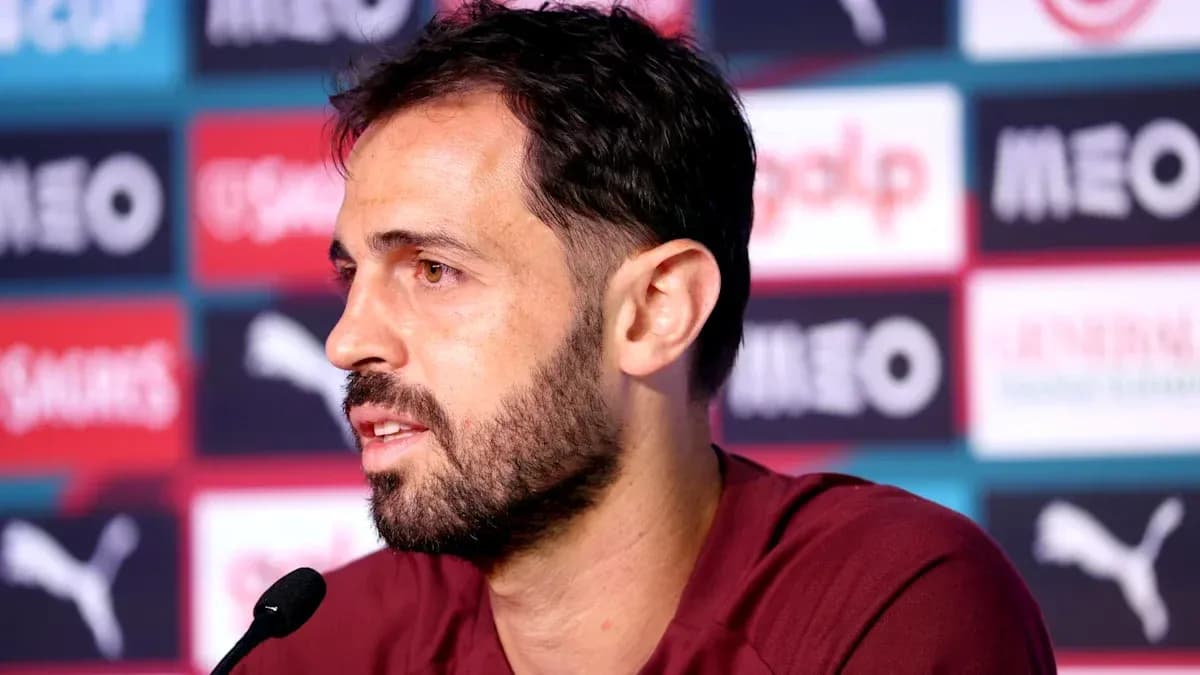
The Portugal manager confirmed that Real Madrid midfielder Bernardo Silva will be the new captain of the national team, a symbolic passing of the torch to one of the side’s most experienced and influential figures.
From Ronaldo’s shadow to the front of the line
Ronaldo’s retirement did not come in isolation. It followed a public falling out with Jesus during the last international break, a rupture that made his exit feel more abrupt than anyone had imagined a few years ago. With the long‑time leader gone, Portugal suddenly needed a new hierarchy.
Jesus turned to a simple rule.
“In the national team, captains are chosen based on their international appearances. Currently, there are five players with the most international caps. Interestingly, all of them were my players at the clubs I managed,” he said, as quoted by AS.
The pressure of succession often invites debate. This time, the numbers did the talking.
“The logic will remain the same. The player with the most international caps after Cristiano Ronaldo is Bernardo Silva,” Jesus confirmed.
At 32, the Real Madrid midfielder now stands as Portugal’s most‑capped active player with 115 appearances. Behind him, a core of established names forms the leadership group: Bruno Fernandes on 97 caps, Ruben Dias with 84, Joao Cancelo on 77, and Ruben Neves with 73.
“Then there’s Ruben Dias, Joao Cancelo, Ruben Neves, and Bruno Fernandes. Not in any particular order, but these are the five who will be captains,” Jesus added, outlining a shared leadership model around Bernardo’s new status.
A new voice for a new cycle
Bernardo has been named in the squad for the upcoming UEFA Nations League fixtures against Denmark and Wales. This is where the new era begins in earnest. When Portugal walk out, it will be Bernardo leading them, not Ronaldo.
The change is more than ceremonial. For years, Bernardo operated as the elegant lieutenant in Portugal’s midfield, the creative connector between lines, often overshadowed by the gravitational pull of Ronaldo’s presence. Now, he becomes the reference point — on the pitch and in the dressing room.
His style is different. Less thunder, more control. Less about individual spectacle, more about collective rhythm. That contrast may well define how this Portugal side evolves without its most iconic figure.
Rising stature in Madrid
Bernardo’s elevation with the national team mirrors his growing weight at club level.
Real Madrid picked him up on a free transfer in the summer after his contract at Manchester City ran down. On paper, it looked like a shrewd move: a seasoned, technically gifted midfielder arriving at the Santiago Bernabeu without a fee, fresh from years under Pep Guardiola.
The reality took time.
Under Jose Mourinho, Bernardo’s start in Madrid was slow. He did not feature regularly, often watching from the bench as others carried the load. For a player of his pedigree, it was a quiet, almost muted introduction to life in white.
Then came the shift.
An impressive display in the 2-1 win over Barcelona in El Clasico marked a turning point. Bernardo’s intelligence between the lines, his ability to keep the ball under pressure and choose the right tempo, suddenly felt indispensable. Since then, his influence has grown week by week.
So far this season, he has made 12 appearances for Los Blancos in all competitions, scoring once and providing one assist. The numbers are modest, but the impact goes beyond raw statistics. His presence has started to shape games, not just decorate them.
A captain at the crossroads of club and country
Now, as he assumes the Portugal captaincy, Bernardo stands at a fascinating crossroads.
At Madrid, he is transforming from useful signing to central figure. With Portugal, he moves from senior player to standard‑bearer, entrusted with guiding a squad stacked with talent but now stripped of its long‑time talisman.
Ronaldo’s shadow will linger over Portuguese football for years. That is inevitable. But the armband no longer belongs to the past. It sits on Bernardo Silva’s arm, heading into a new Nations League campaign and, beyond that, the next phase of Portugal’s identity.
How he carries it will help define what this team becomes without the man who dominated its story for a generation.