Bournemouth's European Journey: From -17 to Victory in San Sebastián
“From -17 to Europe,” declared the banner in the away end at the Anoeta. It wasn’t just a slogan. It was a timeline, a reminder, a challenge to anyone who had forgotten where Bournemouth came from.
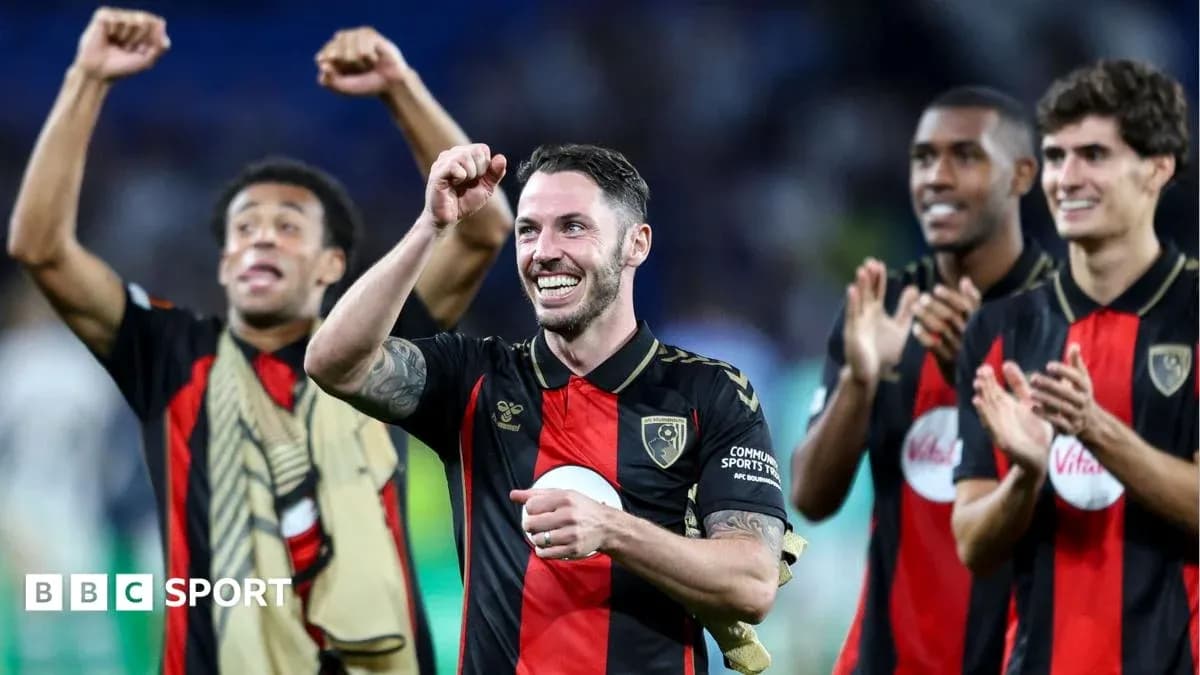
On their first night in major European competition in 127 years of existence, Bournemouth didn’t just turn up. They went to San Sebastián, outplayed Real Sociedad for long stretches, and walked away with a 2-1 win in their Europa League opener. A proper European away performance, from a club that once wondered if it would even stay in the Football League.
For a whole generation of Bournemouth fans, the Premier League is all they’ve really known. Eleven years in the top flight has done that. To them, Europe might feel like the natural next step for an ambitious, well-run club.
To the older heads in that away end, it felt like something else entirely. It felt like a dream being dragged into reality.
From administration to Anoeta
Eighteen years ago, Bournemouth were staring into the abyss. Administration brought a 10-point deduction and relegation to League Two. Survival, not Sevilla, was the conversation.
Even then, the punishment didn’t stop. To be allowed to compete in the 2008-09 season, the club accepted a brutal 17-point deduction and agreed not to appeal, after failing to secure a Company Voluntary Arrangement. The price of simply staying alive was starting the campaign already buried at the bottom.
“From -17 to Europe” isn’t clever wordplay. It’s a lived experience.
Back then, the idea of a £100m-rated midfielder threading passes to a Brazil winger to win a European tie for Bournemouth belonged in fantasy. On Thursday, it was the script.
Alex Scott, all poise and purpose, strolled around San Sebastián like he’d been waiting his whole life for nights like this. Every touch underlined why the Premier League’s elite are circling. Ahead of him, Rayan once again showed why Bournemouth can name a reported £130m release clause with a straight face. This is no longer a plucky survival story. It is a club with assets the giants covet.
“It’s a brilliant win in our first European game. It’s brilliant for the club and the 2,000 fans from Bournemouth,” manager Marco Rose told TNT Sports. That away end knew it. They sang like they’d never stop.
A statement in San Sebastián
This was no soft landing into Europe. Real Sociedad arrived armed with pedigree, a Copa del Rey title last season after beating Atletico Madrid, and a World Cup winner in Mikel Oyarzabal leading the line. The Anoeta can suffocate visiting sides when the noise rises and the tempo spikes.
For 45 minutes, Bournemouth silenced it.
Rose’s team hunted in packs, snapping into duels, stealing the ball high and refusing to let Sociedad breathe. Time and again, they won it back in advanced areas, then showed the composure and quality to turn pressure into chances, even against a set defence.
They didn’t just survive the occasion; they owned it.
The Basque side were always going to respond. There is steel in that team, and their first-half display had been poor by their standards. After the break, the volume rose, the challenges bit harder, and Bournemouth’s adrenaline-fuelled first-half surge started to take a toll.
Rose could see it.
“It was very intense and tough,” he said. “Brilliant first half in everything. The way we won balls and the possession high up. In the second half, we needed to suffer because we were not so sharp.”
Suffer they did. But they did not fold.
Bournemouth are not renowned for defensive resilience. This season’s early Premier League games, with leads slipping away in each of the first four, had left scars. As Sociedad poured forward and the clock slowed to a crawl, old fears could easily have resurfaced.
This time, the door stayed shut. Djordje Petrovic, sharp and decisive, anchored the resistance in goal. Blocks, clearances, last-ditch interventions – Bournemouth found a way. When the whistle went, it wasn’t just a win. It was a statement that this team can manage a different kind of game on a different kind of stage.
Former Cherries full-back Charlie Daniels, on BBC Radio Solent, captured the scale of it: “It is a big occasion. A big moment for the club, and they should be applauded for it.”
Howe’s legacy, Smith’s moment
You can trace the line from that -17 season to this night through one name: Eddie Howe.
Appointed in January 2009, a rookie manager with his club on its knees, Howe dragged Bournemouth to safety despite the 17-point handicap, finishing nine points clear of the drop. Six and a half years later, in his second spell, he had taken them all the way to the Premier League.
The football changed, the expectations changed, the stadium changed. The story never did. It remained one of defiance and acceleration.
So it felt fitting that on this historic European debut, the team was led out by a player who bridges those eras. Adam Smith first arrived on loan in 2010-11, came back permanently in 2014 and has been there ever since, closing in on 400 league appearances.
“Adam has been with the club for so long,” Daniels said. “Dedicated himself to the club, and it’s such a proud moment, not only for him, but for his family, his team-mates and old team-mates to see how he’s grown – not only as a player but as a man as well. To lead out the Cherries on this historical night is fantastic.”
Smith made his own little piece of history too. At 35 years and 141 days, he became the oldest English outfielder to debut in major European competition since Ipswich’s Reginald Pickett in 1962. Numbers that say as much about endurance as they do about opportunity.
No one in red and black will have appreciated the significance of the evening more than their captain.
Holding on to the good times
Bournemouth’s rise has never been smooth, even after the Premier League breakthrough. Relegation in 2020 was a brutal jolt. The years since have brought promotion, consolidation, and a familiar frustration: every summer, key players targeted and plucked by bigger clubs across Europe.
Even the manager who guided them into Europe, Andoni Iraola, didn’t stay to enjoy it. He returns to the Vitality Stadium on Sunday with Liverpool, another reminder of the food chain Bournemouth operate in.
That pattern is unlikely to change. When you develop talents like Scott and Rayan, the giants come calling. When you prove you can compete in Europe, the spotlight only grows stronger.
But nights like this shift the perspective. They say that Bournemouth are not just a stepping stone, not just a survival story, but a club capable of writing its own chapters on the continental stage.
Those 2,000 away fans in San Sebastián have lived the other side. They remember the points deductions, the fear, the uncertainty. They know, perhaps better than anyone, what these nights mean.
They also know something else.
These are the good times. The only real question now is how far this journey, from -17 to Europe, can still go.