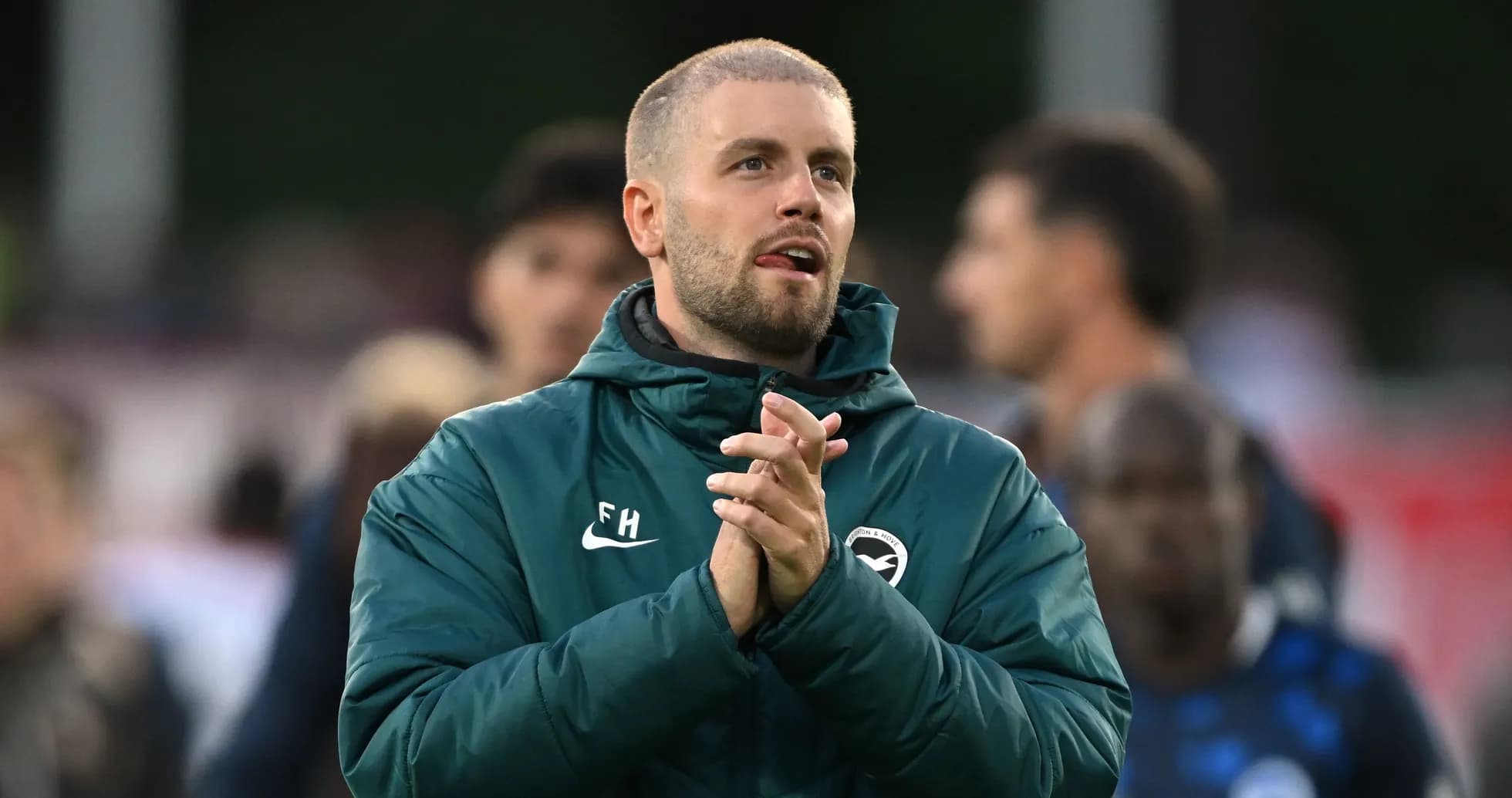
Brighton’s 3-0 Triumph: Hürzeler’s Tactical Masterclass Against Arsenal
Back in early March, Fabian Hürzeler walked into a press room and lit a fuse.
"There was only one team today that tried to play football," he snapped after Brighton’s narrow 1-0 defeat to Arsenal. His side had dominated the ball, the chances, the territory. The only thing they didn’t dominate was the scoreboard, undone by a single flash of Bukayo Saka brilliance and a costly mistake from Bart Verbruggen.
It wasn’t just a lament. It was a challenge. To Arsenal. To Mikel Arteta. To the idea of what a Premier League leader should look like.
"I will never be a coach who tries to win like that," Hürzeler said that day, drawing a hard line in the sand. If Arsenal went on to be champions, he argued, nobody would care how they did it – but he cared. He even turned on the room: how many had actually enjoyed what they’d seen? Maybe one Arsenal diehard, he suggested. Nobody else.
That was the sound of a young coach planting his flag.
Last weekend, the football finally caught up with the rhetoric.
The Blueprint Takes Shape
Brighton took a gamble when they handed a five-year deal to a 33-year-old coach in the summer of 2024. They knew it would take time. At the start, the flaws were obvious: a back line that creaked under pressure, heavy defeats against technically superior sides, a team still learning the angles and distances of a demanding style.
The principles, though, were there from the beginning. High pressing. Brave build-up. Aggression without the ball, ambition with it. Gradually, the chaos turned into structure.
Against Arsenal at the Falmer Stadium, that structure became a weapon.
Brighton didn’t just beat the previously unbeaten league leaders 3-0. They dismantled them. Tactically. Physically. Psychologically.
From the first whistle, the Seagulls hunted in packs. Arsenal, so often the team that pins opponents back, found themselves suffocated. Brighton’s front line chased defenders into their own box, cutting off the simple passes, forcing the ball into crowded central zones where blue-and-white shirts swarmed.
David Raya felt it most. In the opening 15 minutes, he misplaced three of his seven passes, harried into hurried decisions as Brighton overloaded the middle of the pitch. His options narrowed to risky balls into tightly marked full-backs Jurrien Timber and Riccardo Calafiori, or hopeful punts towards the centre circle.
Those punts became Brighton’s invitations.
The result: nine regains in the final third, the highest tally any Arsenal opponent has managed since Liverpool hit the same number in December 2023. Across the season, Brighton now sit on 35 final-third regains – eight more than their nearest Premier League rival, Everton. This is not a one-off. It’s a pattern.
Hürzeler knew exactly why it worked.
"What was decisive was that every player, when he went into a duel, always had the feeling that one of his team-mates was behind him," he said afterwards. If one was beaten, the next stepped in. The questions he rattled off told you everything about his standards: Can you rely on each other? Do you trust each other? Does everyone know their role at set-pieces? Are you fully there in every moment?
Against Arsenal, the answers were yes, yes, and yes again.
Goals Flow, Defence Tightens
Brighton now boast the best attack in the league. Five games, 16 goals. In Premier League history, only Manchester City’s 2022/23 juggernaut has scored more at this stage, with 19.
The numbers at the other end are just as striking. Eight competitive matches. Five clean sheets. Last season, Brighton needed twice as many games to reach that mark. Hürzeler’s verdict was simple: "The most important thing is not to concede any goals at the back."
Arteta could hardly argue. He admitted that "from the very first throw-in" he felt Brighton’s extreme pressing. Arsenal’s technical errors in their own half, he said, stemmed from failing to follow the basic principles needed to escape man-for-man pressure. "We were constantly defending."
For a side that prides itself on control, that is a brutal confession.
The Players Built for the Press
This Brighton is no accident. It has been assembled, window by window, to serve a clear idea.
Chema Andres, signed late from VfB Stuttgart, is a prime example. Just under two metres tall, rugged in the challenge, but quick enough to cover the space behind the press, he is built for exactly the kind of game Brighton played against Arsenal. When long balls came out of Arsenal’s defensive desperation, Chema was there to win them and restart the attack.
Luka Vuskovic, a €55 million arrival from Tottenham Hotspur, has wasted no time becoming a fixture at the back. Strong, composed, and comfortable stepping into midfield, he fits the high line and aggressive positioning Hürzeler demands.
And then there is Pascal Groß.
Pascal Groß, Vintage and Vital
A year ago, Groß looked to be drifting out of the picture at Borussia Dortmund. Now, at 35, he is the face of Hürzeler’s Brighton.
He leads the Premier League scoring charts after five matchdays with three goals and four assists, ahead of stars like Erling Haaland and Florian Wirtz. Against Arsenal, he set the tone again: the opener on 31 minutes, the assist for Chema’s clincher on 57.
Groß himself has a simple explanation. He feels good. Fit. Experienced. Crucially, he feels understood. In his words, Hürzeler is a coach who uses him in a way that lets his strengths come to the fore. With more freedom in the final third and license to interpret his role higher up the pitch, he has become Brighton’s metronome and their dagger.
"We had our pressing and the resulting high regains to thank for some of the goals," he noted, pointing directly to the team’s identity. Brighton create chances because they win the ball where it hurts.
Hürzeler’s praise went beyond numbers. "He is like good wine. The older he gets, the better he becomes," the coach said. But the compliment that really matters is the one you can’t measure: Groß’s ability to knit together a dressing room full of different nationalities, to read the social dynamics and keep the group aligned with the plan.
On the pitch, he links play. Off it, he links people. For a coach trying to install a complex, collective game, that is gold.
Respect Replaces Needle
This time, there was no firestorm from Hürzeler after the final whistle. Brighton’s 3-0 win, their third league victory, lifted them to third in the table and spoke loudly enough. Arsenal had walked straight into his game plan and never found a way out.
The talking belonged to Arteta.
Months after brushing off Hürzeler’s earlier comments with sarcasm and a hint of mockery, the Spaniard changed his tune. He drew a line under the so-called dispute and held his hands up.
"I am here to give my opinion, to stand up for my club and to get the best out of my players. What happened is over. That is in the past," he said, before offering something far more revealing: "I have enormous respect for Fabian and for what he has achieved. What Brighton as a club are doing under him is simply remarkable."
From a grudging rival to an admirer, Arteta’s shift tells its own story.
Brighton have moved from being the side that "played the better football but lost 1-0" to the side that dictates, dominates, and decides big games on their own terms. The ideas Hürzeler once defended in a heated press conference are now etched on the league table.
The question now is not whether people enjoy watching his football.
It’s how far this version of Brighton can push the Premier League’s established order.