Brighton & Hove Albion: From Survival to European Powerhouse
There was a time when Brighton & Hove Albion were fighting not for trophies, but for oxygen.
Around the turn of the century, the club’s very existence hung in the balance. The Goldstone Ground was gone, the money was tight, and the future looked like a long, bleak stretch of lower-league football – if there was a future at all. Brighton became nomads, decamping first to Gillingham, then to the makeshift surroundings of the Withdean Stadium, an athletics track dressed up as a football ground.
From that backdrop, the current picture feels almost implausible. European football. A gleaming stadium. A club used as a model, not a cautionary tale.
From marches to a modern powerhouse
Mark McGhee saw the hard miles up close. The Scot, who managed Brighton through part of that turbulent era, has been back in the city as the club marks its 125th anniversary with the “Brighton & Hove Albion: Stand or Fall” gallery. For him, the new exhibition is not just nostalgia; it’s a reminder of how fragile the story once was.
He recalls the fight just to secure planning permission for a new ground – a battle led by then-chairman Dick Knight and an army of supporters who took their protest to the seafront. McGhee was out there too, speaking at lectures, making the case that Brighton needed a home, and needed the authorities to say yes.
They finally got that yes. Then hit another wall.
Permission in hand, but no realistic way to build. The dream existed on paper and nowhere else. That was the moment Tony Bloom stepped in.
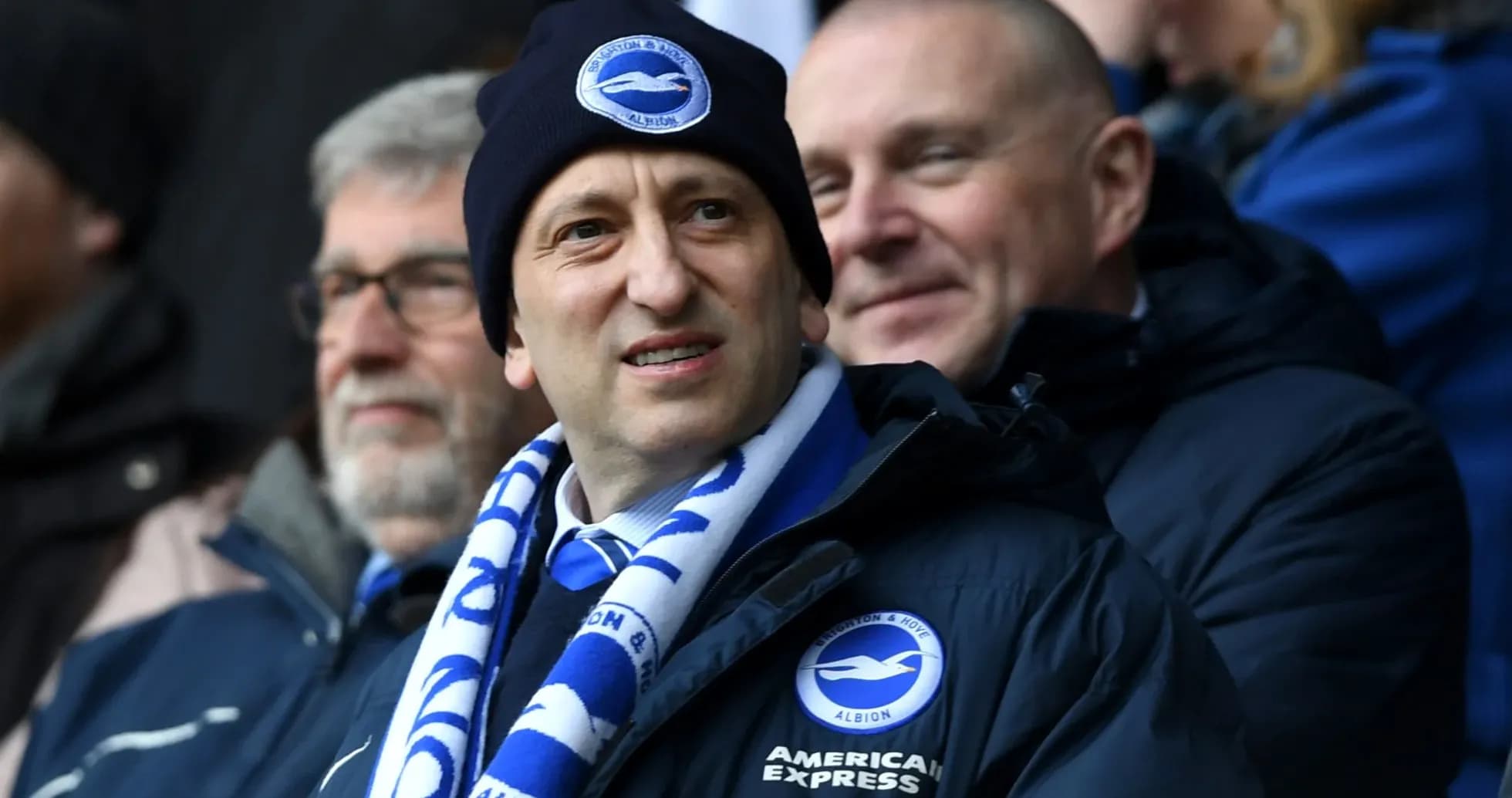
At first, many assumed Bloom’s role would be straightforward: pay for a stadium, give the club a permanent base, steady the ship. That alone would have made him a pivotal figure in Brighton’s history.
They misread the scale of his ambition.
Bloom, a lifelong supporter, brought more than a chequebook. He brought a vision that stretched far beyond the Amex. Training facilities. Infrastructure. A structure that could lift Brighton from League One to the Premier League and keep them there. The ascent from the third tier to the top flight in seven seasons was not an accident; it was a plan executed with ruthless clarity.
Nine years on from their promotion, Brighton are no longer guests at the Premier League table. They are part of the furniture.
The Bloom legacy: family, numbers, and a club reborn
McGhee’s perspective on Bloom is coloured by memories that pre-date the Amex and Premier League survival battles. He remembers Friday lunches at Topolino’s in Brighton with Dick Knight and Ray Bloom, Tony’s uncle and a club director at the time. Ray would talk about his nephew, a mathematical prodigy, a sports gambler and poker player with a remarkable brain for numbers and risk.
Back then, Tony Bloom was a story told over pasta, not the man reshaping a football club.
That family thread runs deep. The Harry Bloom lounge at the Amex – named after Tony’s grandfather – underlines how far back the connection goes. Directors, supporters, generations tied to the same crest. When McGhee looks at what Brighton have become, he sees not just a business project, but a family legacy brought to life.
Bloom has turned his own dream into something tens of thousands now share every week. This is not a distant billionaire dropping in from nowhere; it is a fan who grew up with the club and chose to drag it upwards.
From survival to silverware
Brighton’s honours list is modest but meaningful. Titles in the third and fourth tiers. A Community Shield. The near miss of the 1983 FA Cup final. Those achievements once felt like peaks. Now they look more like foundations.
The club is back in Europe, qualifying for the Conference League and stepping into a competition that has already delivered glory for English clubs such as West Ham, and deep runs for the likes of Chelsea and Crystal Palace. Brighton, once scrambling for transfer funds and stadium plans, now walk into European nights as a serious proposition.
McGhee is clear about Bloom’s motivation. This is not philanthropy for its own sake. Bloom wants to win.
He has put in place the conditions for a team that can challenge – not for the Premier League title, McGhee stresses, but for the cups that shape a club’s folklore. With the right draw, the right momentum, Brighton can see themselves in an FA Cup final, or going all the way in the League Cup. They have already come close. The next step, in McGhee’s eyes, feels like a matter of time rather than fantasy.
A club that stands, not falls
The new permanent gallery at Brighton Museum & Art Gallery, opened on August 15, captures that journey. It is not just a roll call of famous goals and shirts behind glass. The exhibition pulls together memorabilia, archive material, film and personal stories to chart 125 years of a club that has refused to disappear, however hard the push.
Visitors walk through triumphs and relegations, protests and promotions, all the way to a modern Brighton that has become embedded in the life of the city. The phrase “one of English football’s most resilient clubs” is not marketing spin; it is a line written in near-collapse, exile and slow, stubborn rebuilding.
On the pitch, the tests keep coming. A Carabao Cup third-round tie against Manchester United offers an early shot at a domestic statement. In Europe, group-stage meetings with Panathinaikos and Getafe will examine Brighton’s ability to carry their slick, progressive football onto unfamiliar stages.
From Withdean’s temporary stands to European away ends in Athens and Madrid suburbs, the contrast could hardly be sharper.
Brighton once marched for the right to exist. Now they march into competitions where silverware is a realistic target. Under Tony Bloom’s watch, the question has shifted completely: not whether the club can survive, but when this long, improbable rise will finally be crowned with a major trophy.