Bruno Fernandes Contract Standoff Ahead of Pochettino's Anfield Debut
Manchester United have a new manager on the way, a season already on the brink, and now a captain who has twice said no.
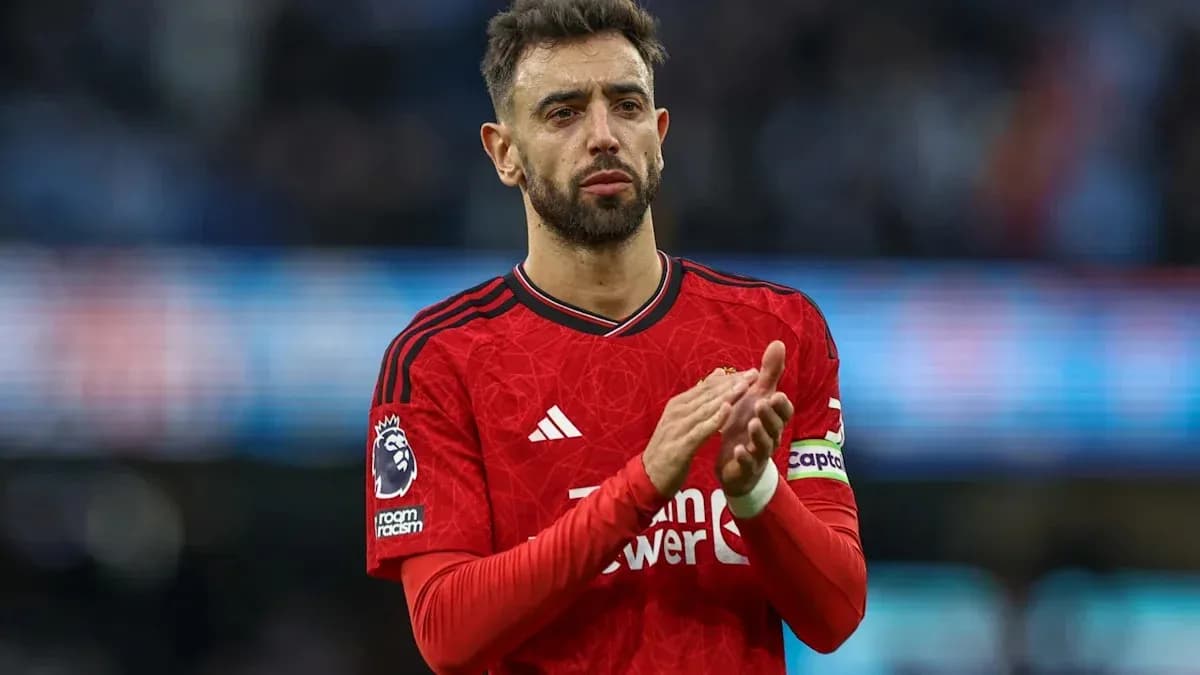
Bruno Fernandes has rejected a second contract offer from the club, with Mauricio Pochettino yet to take charge of a single game. United are in the relegation zone after their worst domestic start in 40 years, Michael Carrick has been sacked, and the first act of the Pochettino era will be a trip to Anfield to face Liverpool on 22 November.
He walks into a storm, and the captain sits right at the eye of it.
Contract Talks That Refuse to Move
United thought a new deal for their 32-year-old captain might steady the mood during a bleak international break. Instead, negotiations have hardened into a stand-off.
Talks began in the summer, off the back of a season in which Fernandes was named Men's PFA Player of the Year and shattered the Premier League assists record. The first proposal went in and was knocked back. The second, with improved terms, has now been turned down as well.
Nobody at the club is rushing to say exactly when Fernandes gave his latest answer, and with the dugout changing hands, nobody expects a quick resolution either.
On paper, United still hold a strong hand. Fernandes is under contract until June 2027, and the club have an option to extend that by a further 12 months to 2028. If no fresh agreement is struck, it is virtually guaranteed they will trigger that option before 1 January, protecting his value and preventing him from entering the final six months of his deal free to sign a pre-contract with foreign clubs.
Talks over salary and the length of any new contract will continue. United want him to stay. Fernandes, who had previously told Carrick he was committed, wants to compete for the biggest trophies and will want to see what Pochettino can build before tying himself down again.
The tension is not just about money. It is about belief.
Como, Criticism and a Captain Under the Microscope
The relationship between Fernandes and the club’s hierarchy shifted in tone last month on a difficult European night.
After the Champions League defeat at Como, the captain did what he rarely does: he tore into the tactical plan in public.
"It's a decision from the staff to not press man-to-man and sometimes leave a little space in behind and try to get the ball in the first moment, to wait for them, to give them the ball," he said, explaining his frustration at the game plan.
"But sometimes when you give too much the ball to these teams they get confident, they have so many bodies behind the ball that make you run a lot, make people get frustrated, and then obviously when you recover the ball the legs are, and the brain, much more difficult to make it work."
That was not a throwaway remark. It was a captain questioning the approach of his coaches.
Gary Neville did not hold back in his response. "If that's your captain saying that, imagine what they're saying in the dressing room behind closed doors when no one's listening. That's horrific," he said, urging Fernandes to "read the room" and branding him an "excuse merchant" on his podcast.
The fallout was swift. Fernandes was left on the bench for the Premier League defeat to Bournemouth, then restored to the starting XI against Chelsea the following matchday. Carrick, under intense pressure, had refused to rule out dropping his captain and delivered an emotional address around the decision.
After a dramatic comeback win against Roma, Fernandes pushed back at the narrative that he had been punished for speaking out.
"The club needed that win. The players needed that win. It is something we needed as a group of players and staff," he said. "We have been working so hard to get out of this situation together. It has been tough. There has been a lot of speculation in the media.
"A lot of lies around many things that have happened at this club, between me and the manager, like that we have cleared the air. Nothing like that happened.
"The manager took a decision of making myself on the bench because I wasn't performing. And that's fair.
"Everyone felt like that was a punishment for the words that I had [after Como]. And if it was, it was right.
"The manager makes the decisions. I have to accept it. I have to go forward with that. It doesn't change the belief I have in the manager, the staff and every player at this club.
"And it doesn't change my aim to win every f***ing game that I have ahead of me."
The words were raw, defiant and revealing. A captain insisting he still believes, while the club weigh how far to go for him.
Form, Risk and a Club Scalded by Big Deals
On the surface, this is a standard contract negotiation: player tests his value, club protects its budget. Underneath, there is more calculation.
Fernandes’ form has dipped from the heights of last season, when he swept the major individual awards and set a new benchmark for assists in the league. This term he has six goals in 13 games – respectable, but not the same relentless production.
United have watched Liverpool wrestle with the financial strain of Mohamed Salah’s last contract and do not want to tie themselves to a massive long-term deal for a player whose level has, at least temporarily, dropped. The numbers, the age profile, the direction of the team – all of it feeds into the caution at Old Trafford.
Fernandes, for his part, is not in a hurry. He came close to joining Pochettino’s Tottenham in 2019 before signing for United six months later. He knows the Argentine’s methods, knows his reputation with creative players, and will want to see whether Pochettino can turn a fractured side into contenders again.
For both sides, the stakes are clear: commit now, or wait and gamble.
Turmoil in the Boardroom, Anfield on the Horizon
All of this plays out against a backdrop of upheaval above the dressing room.
Chief executive Omar Berrada and director of football Jason Wilcox flew to Monaco this week to meet Ineos chief Sir Jim Ratcliffe to thrash out Carrick’s future. The Glazer ownership then ratified the decision to dismiss the head coach and move for Pochettino, who arrives from his role in the United States.
The handling of Carrick’s exit has drawn fire from supporters and figures inside the club. He took two days of training at Carrington while his fate was being decided, a limbo that underlined the uncertainty running through the organisation.
Into that walks Pochettino: a manager tasked with lifting a team in the bottom three, calming a restless fanbase and persuading a demanding captain to buy into a new project.
His first competitive glimpse of this squad will come in one of the most unforgiving fixtures in English football – away at Liverpool on 22 November. By then, Fernandes will still be under contract, still the captain, still without a new deal.
United are almost certain to trigger the extension option before 1 January if talks do not suddenly accelerate. That will buy time, but not peace.
Because when Pochettino steps out at Anfield, he will not just be fighting Liverpool. He will be fighting to convince his own captain that this is a club worth committing the final prime years of his career to.