
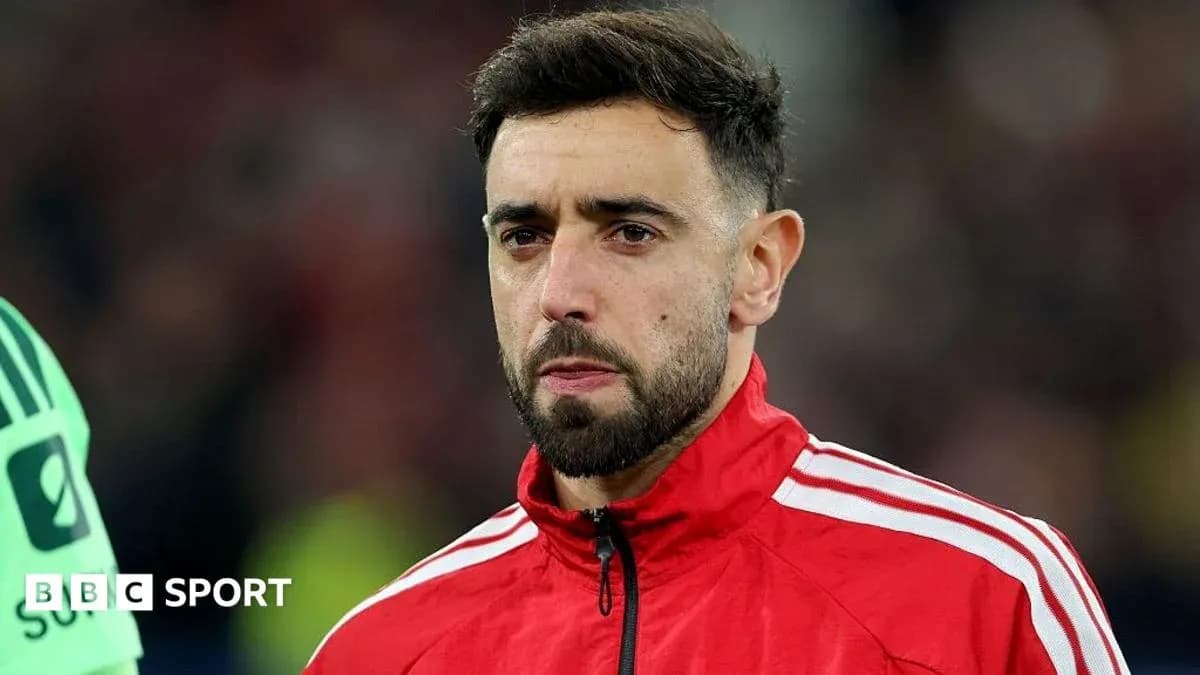
Bruno Fernandes Rejects Manchester United Contract Offer Amid Manager Change
Bruno Fernandes has turned down a second contract offer from Manchester United, sharpening the focus on one of the club’s most important – and most complicated – relationships just as another manager prepares to walk through the door.
The United captain, 32, is out of contract at the end of the season, though the club hold a 12‑month option that would keep him at Old Trafford until 2028. That clause gives United protection, but not comfort. They want a new, longer deal. He has just rejected their latest attempt to provide it.
Talks with his representatives have been ongoing for months. Two formal offers, two rejections. No agreement in sight.
If nothing changes, United are almost certain to trigger that extra year before 1 January. They can’t afford not to. Once the calendar flips, Fernandes would be inside the final six months of his deal and free to sign a pre-contract with foreign clubs. For a player of his stature, that would turn a contractual problem into a full-blown strategic crisis.
Right now, there is no sign of a breakthrough. No briefing of an imminent resolution. Only uncertainty, and a club in flux.
Carrick out, Pochettino in
The timing is brutal. Michael Carrick was sacked on Thursday after presiding over United’s worst start to a domestic campaign in 40 years. The season has barely settled and already the dugout has changed.
Mauricio Pochettino, currently in charge of the USA national team, is expected to replace him and take charge for the first time when United go to Anfield to face Liverpool on 22 November. That fixture rarely needs extra drama. This time it arrives with a new manager, an underperforming team and a captain weighing his future.
United hope Pochettino can be more than just a tactical reset. They want him to be part of the sales pitch. If anyone can convince Fernandes that his peak years won’t be wasted, it is a coach whose name has long been associated with ambitious, front-foot football.
There is history there, too. In 2019, Fernandes came close to joining Pochettino’s Tottenham. The move collapsed, and six months later he signed for United instead. Five years on, the two men may finally find themselves on the same side – if the club can convince their captain to stay.
A player in a hurry
From Fernandes’ perspective, the calculation is cold and simple. He wants to compete for the biggest prizes. He can see the clock.
These are supposed to be his defining seasons, yet United have once again failed to build on a campaign that promised more. After a year in which he broke the Premier League assists record and swept the major individual awards, the team have sagged and his own form has dipped with them.
This season he has six goals in 13 games – respectable numbers, but not the relentless output of last year. The club know it. So does he.
Eighteen months ago, the Saudi Pro League tested his resolve with strong interest. The sense then was that Fernandes preferred to stay in Europe, to keep testing himself at the sharp end of the Champions League rather than cashing in early. That ambition still shapes his thinking now.
Why United are hesitating
United, for their part, are walking a tightrope. They know Fernandes remains central to their identity on the pitch and in the dressing room. They also know what happens when a club gets a big contract wrong.
Liverpool’s last deal for Mohamed Salah looms large in the background. A massive commitment to a superstar in his thirties became a heavy financial burden as his output fluctuated. United’s hierarchy are determined not to repeat that mistake by locking themselves into an extended, top-end contract for a player whose performance levels have already shown signs of decline from last season’s peak.
The club still have that extra year in their back pocket. It buys time, but not clarity. Triggering the option keeps Fernandes at Old Trafford longer; it doesn’t answer whether he should be the cornerstone of the next project, on the kind of money and term that would reflect that status.
Negotiations often start with a “no”
In isolation, two rejected offers are not a crisis. Elite contract negotiations are rarely settled at the first or second attempt. Players push for security and status, clubs push back on length and salary. The back-and-forth is part of the game.
What makes this stand-off different is everything swirling around it: a sacked coach, a new manager incoming, a captain whose standards have dipped, and a club still trying to work out exactly what it wants to be.
For now, Fernandes remains United’s captain, their creative reference point, and a player whose decision will say plenty about where this club is heading. Pochettino’s first task might not be on the training pitch or in the dressing room at all.
It might be across a table, looking his captain in the eye, and persuading him that Old Trafford is still the place to chase the trophies he craves.





