Canelo Álvarez Reclaims WBC Title in Riyadh
Saúl “Canelo” Álvarez walked through the smoke and noise of a tense Riyadh night and left with something he knows better than anyone in his era: a green WBC belt around his waist and a division back under his spell.
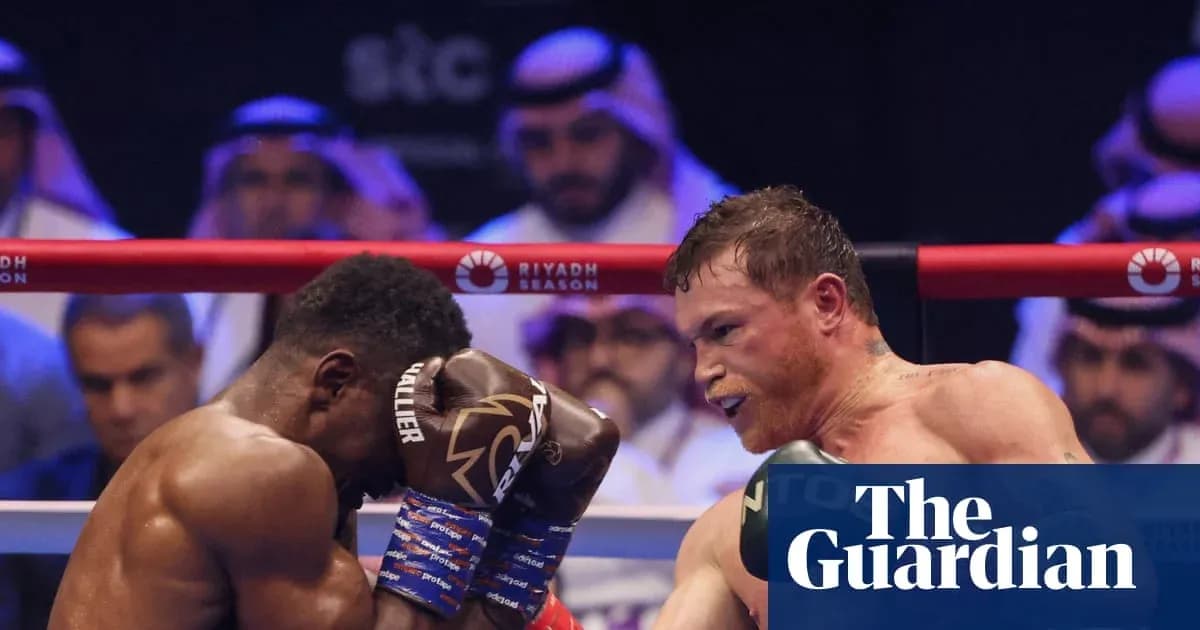
In a city on edge, he reclaimed the WBC super-middleweight title with a unanimous decision over the previously unbeaten Christian Mbilli at Kingdom Arena, reasserting his authority at 168lbs and reminding boxing that, at 36 and after a year out, he is nowhere near done.
A Fight in a City Under Threat
This was no ordinary title fight week.
In the days leading up to the bout, the Saudi-led coalition announced it had intercepted missiles and drones fired by Iran-aligned Houthi forces. A missile strike on King Khalid International Airport three weeks earlier had killed at least 12 and injured more than 300. A second projectile hit a passenger terminal the following day. Several airlines pulled flights. Other events, including the high-profile Six Kings Slam tennis exhibition, were cancelled or pushed back.
Boxing stayed. So did Canelo.
Turki al-Sheikh, the powerful chairman of Saudi Arabia’s General Entertainment Authority and the architect of the country’s boxing boom, had said Álvarez personally vowed to fight in Riyadh “no matter what happens” and that “he fears nothing.” On Saturday night, the Mexican walked to the ring as if the only threat in the building stood across from him in Mbilli’s corner.
Canelo Back in Command
Once the bell rang, the noise outside the arena faded. The old Canelo rhythms returned.
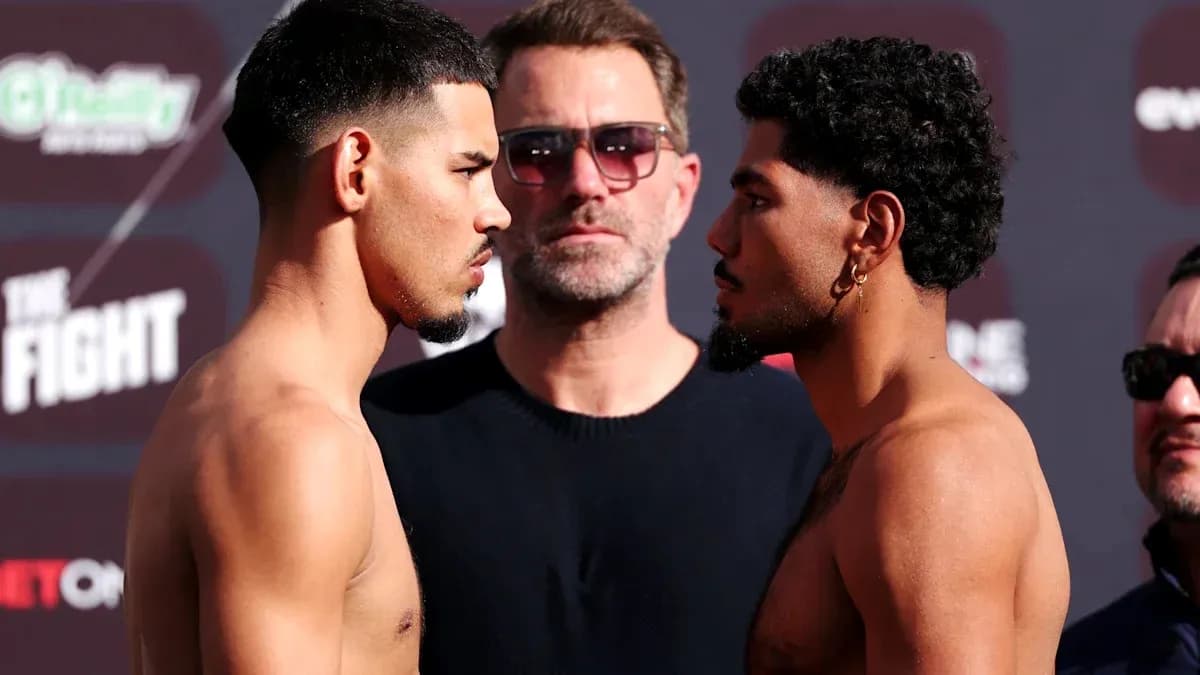
Mbilli, 31, Cameroon-born and newly elevated to full WBC champion after Terence Crawford’s exit from the division, brought exactly what his record suggested: pressure, volume, stubborn belief. He came in at 29-0-1, his lone blemish a split draw with Lester Martínez on the undercard of Álvarez–Crawford, and he tried to drown Canelo in punches.
He never quite did.
Álvarez leaned on the tools that built his legend: cold-eyed counter-punching, economical combinations, and those thudding, accurate body shots that drain ambition. The Mexican picked his moments, stood his ground, and made Mbilli pay every time the Frenchman overreached.
The turning point came in the seventh. Mbilli, still pouring forward, walked into a sharp uppercut that snapped his head back and left him staggered. It wasn’t a knockdown, but it changed the tone. The aggression that had looked like a plan began to resemble a risk.
From there, Canelo controlled the pace. He didn’t chase the knockout. He didn’t need to. He simply kept landing the cleaner, heavier blows while Mbilli tried to claw back rounds on work rate alone.
When it was over, the scorecards told the story of a clear, if hard-earned, victory: 115-112, 116-111 and 117-110 to Álvarez. The Guardian’s own tally matched the widest margin, 117-110.
A Champion Reborn After Crawford
For Álvarez, this was more than another belt.
His last major night had ended with only the third defeat of his professional career, a unanimous-decision loss to Terence Crawford in September 2025 that stripped him of his undisputed super-middleweight crown and the aura of total dominance he had built as holder of all four major titles at 168lbs.
That result opened the door for Mbilli, who moved from interim status to full WBC champion. It also sparked questions about whether Canelo’s long climb — 21 years as a professional, world titles across multiple divisions, countless big nights — had finally taken its toll.
In Riyadh, after more than a year out, he answered.
“It’s something unbelievable. It feels like my first title,” Álvarez said in English in the ring. “Now, after 21 years as a professional, 16 years ago I won my first title. Now I won that title again. I’m so proud of my team.
“I love boxing. That’s why I’m here, because I still love boxing and I enjoy it a lot.”
His record now stands at 64 wins, three defeats and two draws. Mbilli, who arrived unbeaten, leaves with the first loss of his professional career.
Family at a Distance, Politics in the Shadows
The fight unfolded under the bright lights of Saudi Arabia’s latest showcase, but the backdrop never fully disappeared.
The kingdom’s push to become a global hub for major sporting events has turned it into a dominant player in professional boxing, thanks largely to Al-Sheikh’s influence and the state’s financial muscle. The strategy has drawn some of the sport’s biggest names — and persistent criticism over human rights issues and accusations of sportswashing.
Álvarez touched that reality only lightly in his post-fight remarks. This time, his inner circle stayed away.
“I also want to thank my family, who are watching me from afar today for the first time,” he said in Spanish. “My siblings, my parents, my daughters, my son, and my wife – who also couldn’t make it due to certain circumstances.”
He did not explain those circumstances or link them directly to the security situation. The implication hung in the air, unspoken but obvious: this was a night when risk extended beyond the ropes.
The Belt Is Back. What Now?
When the final bell sounded, Mbilli’s gamble on pressure and volume had fallen short, his relentless advance blunted by a fighter who has seen just about every style and solved most of them. The Frenchman still belongs at world level, but on this stage, against this version of Canelo, he discovered the gap that separates a good champion from a great one.
Álvarez, for his part, leaves Riyadh with the WBC super-middleweight title back on his shoulder and a fresh claim to relevance at the very top of the sport.
He has rebuilt before. Now, with his belt restored and the Saudi boxing machine roaring on despite the turmoil around it, the question shifts from whether Canelo is finished to something far more familiar.
Who dares step in next with a man who, 21 years into his career, still refuses to let go of nights like this?