Canelo Alvarez Reclaims World Title in Riyadh
RIYADH – Twenty-one years into a punishing profession, with a fortune in the bank and his name already inked into boxing history, Saul “Canelo” Alvarez walked into a Saudi Arabian ring and fought like a man still chasing his first belt.
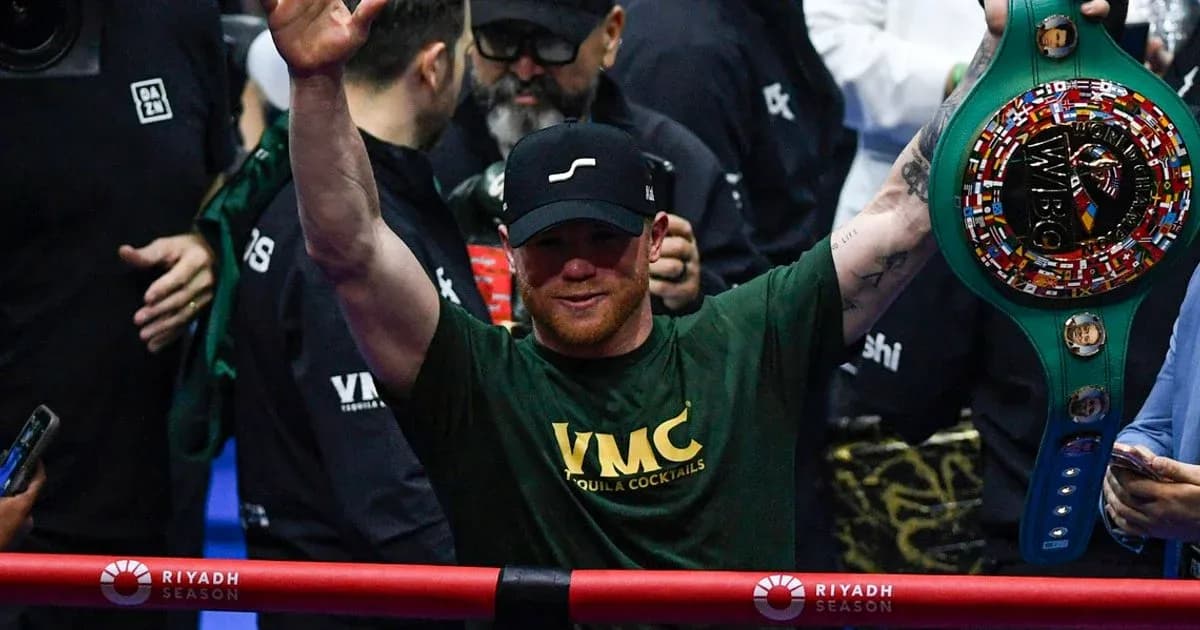
On Oct 31, under heavy security in a city on edge, the 36-year-old Mexican reclaimed a world title with a unanimous points victory over Christian Mbilli, proving that the hunger that drove a teenage prodigy out of Guadalajara has not dulled with age or wealth.
A fight in a tense city
The bout went ahead in Riyadh after a fraught week in which a Saudi-led coalition said it had intercepted Iran-aligned Houthi missiles and drones aimed at the capital. Several major events, including the Six Kings Slam tennis exhibition, were cancelled or postponed.
The boxing did not blink.
Inside those 25 square metres of canvas, Alvarez returned from more than a year out and slipped straight back into his old rhythm: tight guard, cold eyes, and the kind of counter-punching that has broken opponents’ belief for more than a decade.
The judges saw it clearly. Scorecards of 115-112, 116-111 and 117-110 underlined his control.
“It’s something unbelievable. It feels like my first title,” Alvarez said afterwards. “Now, after 21 years as a professional, 16 years ago I won my first title. Now I won that title again. I’m so proud of my team. I love boxing. That’s why I'm here, because I still love boxing and I enjoy it a lot.”
Mbilli’s storm, Canelo’s answers
Mbilli arrived with the numbers and the momentum: 29 wins, one draw, and a reputation for relentless pressure. The Cameroon-born Frenchman tried to turn the ring into a phone booth, crowding Alvarez, throwing in bunches, refusing to give him the long, patient exchanges he prefers.
For stretches, it worked. Mbilli’s engine never seemed to idle, his punch volume forcing Alvarez to work every second of every round.
But the cleaner work came from the Mexican.
Alvarez dug to the body with the precision that has become his trademark, picking his moments, making Mbilli pay whenever he overstepped the mark. The pressure finally met resistance in the seventh round, when a sharp uppercut from Alvarez snapped Mbilli’s head back and left him staggering, a rare crack in his composure.
That moment summed up the fight. Mbilli brought the storm. Alvarez brought the accuracy.
A champion restored
This win mattered for more than another line on a glittering résumé.
In September 2025, Terence Crawford had outpointed Alvarez by unanimous decision, handing him only the third defeat of his professional career and stripping him of his undisputed super-middleweight crown. The loss ended his reign as the holder of all four major titles in the division and raised the question that eventually comes for every great fighter: is this the start of the slide?
Riyadh offered his response.
Against a younger, surging opponent who had never tasted defeat, Alvarez reasserted his place among the sport’s elite. The victory improved his record to 64 wins, three defeats and two draws, while Mbilli, 31, left with the first blemish on what had been an immaculate ledger.
Mbilli had entered the night as the full WBC champion, elevated from interim status after Crawford’s departure from the division. He had earned that position on the back of 29 consecutive victories before a split draw with Lester Martinez on the undercard of the Alvarez-Crawford showdown hinted at vulnerability.
Alvarez exposed it with the ruthlessness of a man who has spent two decades at the top and has no intention of stepping aside quietly.
He did not just win a title back in Riyadh. He reclaimed the right to dictate what comes next.