Canelo Alvarez’s Return: Five Insights and Emerging Challenges from His Latest Bout
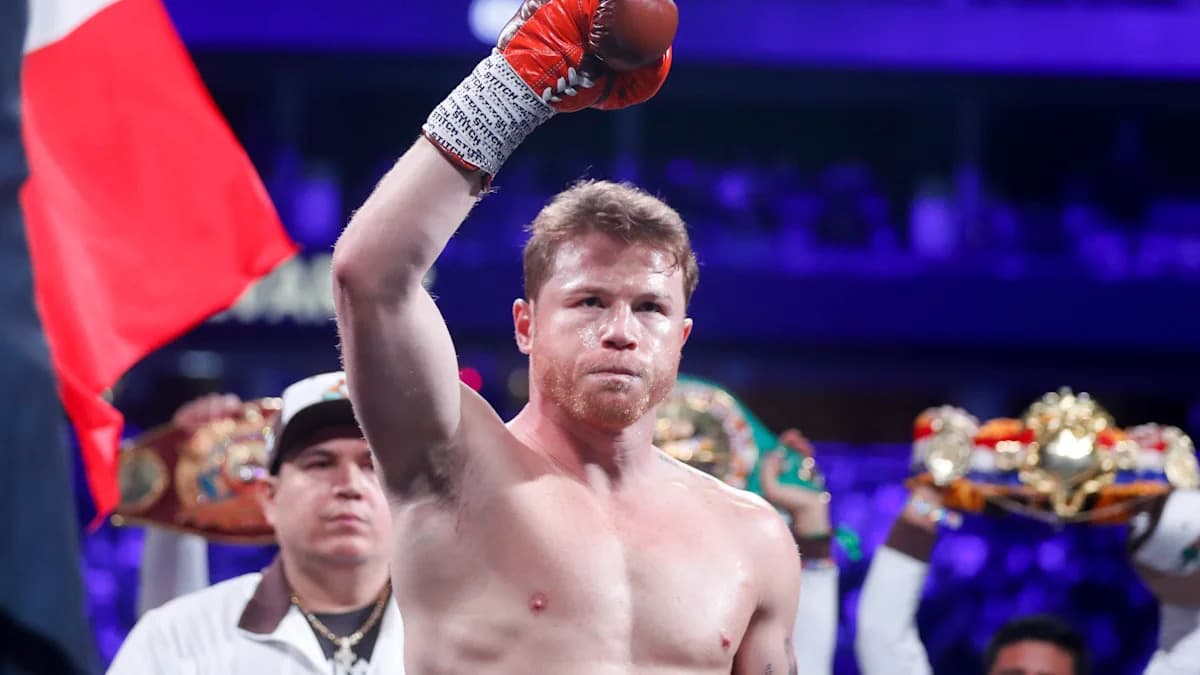
At 36 years old, Canelo Alvarez demonstrated that he remains a formidable force in boxing. His recent victory over Christian Mbilli in Riyadh confirmed he can still dominate contenders in the super middleweight category.
1. Canelo Effectively Neutralizes Mbilli’s Pressure Style
Christian Mbilli came into the fight known as a relentless pressure fighter. Yet, against Canelo, his usual high-volume attack barely landed. Statistics from Compubox reveal Mbilli threw fewer punches per round (10.6) and had a much lower accuracy (17.5%) compared to his previous bouts against Sergey Derevyanchenko and Lester Martinez, where he averaged around 21.5 to 27.3 punches with accuracy above 30%.
Interestingly, Mbilli increased his punch output in the second half of the fight, throwing 63.5 punches per round compared to 57.2 earlier, but this did not improve his success rate significantly.
Canelo’s jab, defensive positioning, and sharp counterpunching kept Mbilli from imposing his typical pace, forcing the challenger to hesitate before initiating exchanges. Even at this stage in his career, Alvarez's ring intelligence remains a major asset.
2. Jaime Munguia Contrasts Sharply with Reynoso’s Usual Defensive Approach
Eddy Reynoso, known for crafting fighters with strong defense and strategic counterpunching, manages both Alvarez and Jaime Munguia. Munguia’s style, however, is notably different. Against Nikita Zon, Munguia showed a rugged, aggressive brawling style that lacked defensive discipline.
Despite surviving a scare in the sixth round when Zon nearly overwhelmed him, Munguia held on to win by unanimous decision with scores of 117-111 twice and 116-112. His resilience and toughness were clear, but so were vulnerabilities such as susceptibility to uppercuts and getting caught in exchanges.
Munguia’s upcoming mandatory challenger, Bektemir Melikuziev, could exploit these weaknesses. Whether Melikuziev can capitalize remains uncertain.
3. The Super Middleweight Division’s Top Contenders Remain Unclear
Although Munguia holds the WBA belt, his close ties to Canelo and previous losses to him make a future matchup unlikely. Eddy Reynoso prefers Alvarez competing at 168 pounds, ruling out moves to other divisions for now.
This leaves the super middleweight division with contenders who are either untested or lack widespread recognition. Hamzah Sheeraz stands out due to his size and power but has been inconsistent recently. Lester Martinez, the interim WBC champion, holds a logical claim for a title shot but hasn't established a dominant international presence.
The IBF champion, Osleys Iglesias, may be the most dangerous threat. The southpaw boasts a powerful record, with 15 stoppages in 16 fights, including a recent knockout of an undefeated fighter. Iglesias has called for a unification bout with Canelo but lacks mainstream appeal.
Despite their potential, none of these challengers offer an immediate marquee fight for Alvarez.
4. Dana White’s Criticism of Boxing’s Broadcast Format Rings True
UFC CEO Dana White has often criticized how boxing events are produced, citing their drawn-out nature. Saturday’s Canelo-Mbilli event reinforced his point, with lengthy studio segments interrupting the flow between fights.
Rather than moving swiftly from one match to the next, viewers endured long analysis breaks, repeated interviews, and promotional material. This diluted the live-action experience and tested fans’ patience.
While commentators like Kate Abdo and Chris Mannix delivered engaging coverage, the show’s pacing was dictated by organizers, limiting flexibility especially during knockouts. Similar issues plagued Anthony Joshua’s July card, which stretched unnecessarily over ten fights.
Other combat sports like Bare Knuckle Fighting Championship offer more streamlined presentations, respecting fans' time without sacrificing excitement.
5. Hosting a Major Fight Amid Real Security Threats Is a Risky Choice
Leading up to the event, residents and visitors in Riyadh received warnings about hostile aerial threats, including missile attacks from Houthi forces. In October alone, assaults on King Khalid International Airport caused multiple casualties and injuries, prompting travel advisories against non-essential visits to Saudi Arabia.
Despite these dangers, the boxing event proceeded without incident, but the decision to hold it there highlights questionable risk tolerance. Official guidance urged avoiding crowds and public places, yet thousands gathered for the spectacle.
Early ambitions suggested Riyadh might become a major fight hub under Turki Alalshikh’s leadership. But ongoing event pacing problems and security concerns suggest Las Vegas remains the safer and more practical boxing capital.