Carabao Cup Fallout: Premier League Teams Under Pressure
The Carabao Cup has cleared out of the midweek schedule, but it leaves behind a trail of awkward questions, bruised egos and one or two clubs clinging to momentum like a life raft.
On Merseyside, Everton slipped into the quarter-finals with a win over a strangely lifeless Newcastle side. The result mattered, of course, but not as much as the name missing from the teamsheet. Jack Grealish, left out for what the club called a “breach of club discipline”, turned the night into something more than a routine cup tie. David Moyes backed the decision, kept the details locked away, and walked off with a place in the last eight and a storm quietly brewing in the background.
The twist? Everton head to Newcastle on Monday night. Same opponents, different stakes, and all eyes on whether Grealish boards the bus. Discipline rows have a habit of lingering longer than managers like. If he’s back in the squad, the story writes itself. If he’s not, the noise grows louder.
Old Trafford, though, remains the loudest theatre of all.
Manchester United stagger into the weekend still trying to digest Michael Carrick’s six-minute monologue from last Friday, a detailed defence of his project that was followed, almost on cue, by his team’s collapse at home to Bournemouth. The performance was so meek it felt like a public contradiction of everything he had just said. Yet Carrick remains in the dugout, clinging on as the mood darkens and the questions sharpen.
Next up is Chelsea away. Once, this was a fixture that decided titles and defined top-four races. Now it feels like a reunion of fallen heavyweights, still technically in the conversation for Champions League places but carrying the air of something faded. The nostalgia is real; the quality, less so. Both clubs need the points. Both clubs need a statement. Only one can have it.
Across the league, managers are juggling fitness, form and expectation as the Premier League schedule kicks back in.
At Bournemouth, Junior Kroupi is back, but not fully unleashed. Marco Rose is resisting the temptation to throw his gifted French forward straight into the fire after a foot injury wiped out the first three months of his season. Cameos against Manchester United in the league and Aston Villa in the Carabao Cup have reminded everyone what he can offer, yet Rose is adamant: this will be a slow build, not a sprint.
“We still need to build up his game time,” he said before Leeds visit on Saturday, spelling out the balance between excitement and caution.
Bournemouth will again be without Alex Scott, though the hope is that the midfielder’s thigh problem eases enough for a return next week. For now, Kroupi remains the impact option, not the centrepiece.
Brighton, meanwhile, return to the Etihad with a score to settle. Knocked out of the Carabao Cup there on penalties in midweek, they go back to Manchester City in the league with bodies returning and a point to prove. Fabian Hurzeler expects Chema Andres and Ferdi Kadioglu, both sidelined by hip injuries at Liverpool, to be available this time. Charalampos Kostoulas, rested in midweek, is also ready to go.
The timing helps. Wednesday night exposed Brighton’s depth but also underlined how much they miss their first-choice core in the biggest games. Hurzeler welcomed the comebacks of Yankuba Minteh and Mats Wieffer in the cup, yet he knows Saturday demands more. The one major absentee is summer signing Pascal Struijk, ruled out with an undisclosed knock, though the club are optimistic he will not be missing for long.
European frustration is not confined to the men’s game. At Manchester City’s Joie Stadium, the Women’s Champions League served up a familiar lesson. Dominate, fail to kill the game, and you leave the door ajar. Tara Elimbi Gilbert walked through it late on, her goal handing City a third straight draw in the league phase and leaving the English champions staring at an unwanted detour: the February play-off “punishment round” they were desperate to avoid.
Andrée Jeglertz did not hide his irritation, even if he chose his words carefully. City had enough control, enough chances, and yet not enough ruthlessness. Now they probably have to win all three of their remaining group games to dodge the extra hurdle. It is a harsh equation, but that is the Champions League: waste your dominance, pay the price.
Beyond Europe and the domestic grind, the international game is shifting again.
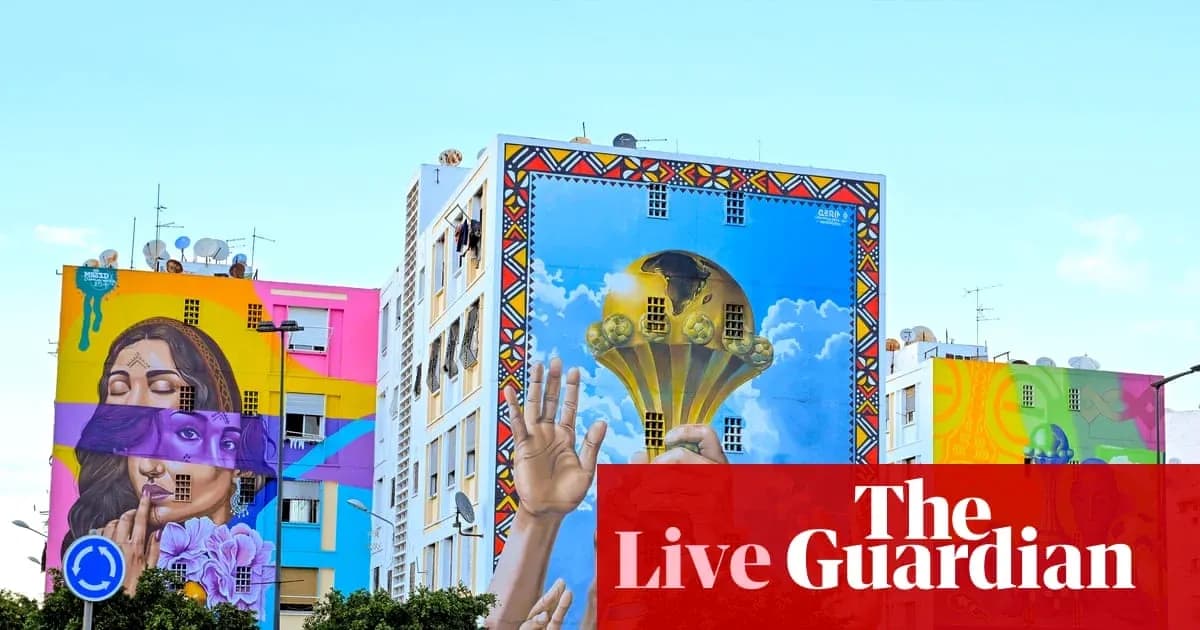
The Africa Cup of Nations, briefly nudged towards a four-year cycle, is heading back to its roots. Caf has confirmed Afcon will return to being played every two years, shelving the plan to replace it with an Africa Nations League-style competition that would have needed time and money to become viable. Patrice Motsepe, Caf’s president, made it clear: the financial and developmental weight of Afcon is too important to dilute or delay.
The decision will delight many in African football, where the tournament remains a cultural and competitive pillar, but it will not go down as smoothly in European boardrooms. Clubs now face the prospect of losing key players every two years again, not every four, at a time when fixture lists already creak. Next year’s edition, co-hosted by Kenya, Tanzania and Uganda, will be followed by tournaments in 2028, 2031 and 2033, with the three-year gap before 2031 explained by the 2030 World Cup and Fifa’s long-standing insistence that continental finals avoid World Cup years.
On the global stage, another battle continues. Fifa’s promise of equal prize money for the Women’s World Cup and the men’s equivalent will not be met in 2027. This, despite a record $15bn in revenue from the men’s tournament this year. Gianni Infantino had set equality as an “ambition” and insisted Fifa was acting, not just talking. The women’s game took that as a target, not a slogan. Now the shortfall lands like a cold reality check.
Domestic clubs, international federations, players’ unions – all of them will be watching the numbers when they drop. The rhetoric around equality has rarely been louder. The gap between words and figures remains stubborn.
And then there is South Korea, where the fallout from a dismal World Cup has turned into a full-blown institutional reckoning. Coach Hong Myung-bo has gone. KFA president Chung Mong-gyu has gone. Both have faced questions from parliament. Police have raided KFA offices. This is no routine post-tournament reset; it is an inquest.
In the middle of it all stands Son Heung-min. Or perhaps, for the first time in years, not quite at the centre. The long-undisputed leader of this divided national team suddenly finds his own status under scrutiny. The conversation is no longer about how to build around him, but whether he should start at all. That would have been unthinkable not long ago. Now it reflects a country wrestling with its football identity and its future.
Back in England, the narrative tightens. Bruno Fernandes owes Manchester United a performance. Mathys Tel has landed at Spurs and looks ready to accelerate their attack. Liverpool, quietly and steadily, are improving. Ten storylines, at least, queue up for the weekend. The Premier League rarely does quiet.
The cups have done their work, exposing flaws, reviving hopes, stirring trouble. Now the league takes centre stage again. Managers under pressure, stars under scrutiny, and a winter schedule that will show who is serious and who is simply surviving.