Michael Carrick Reflects on Ferguson's Legacy at Manchester United
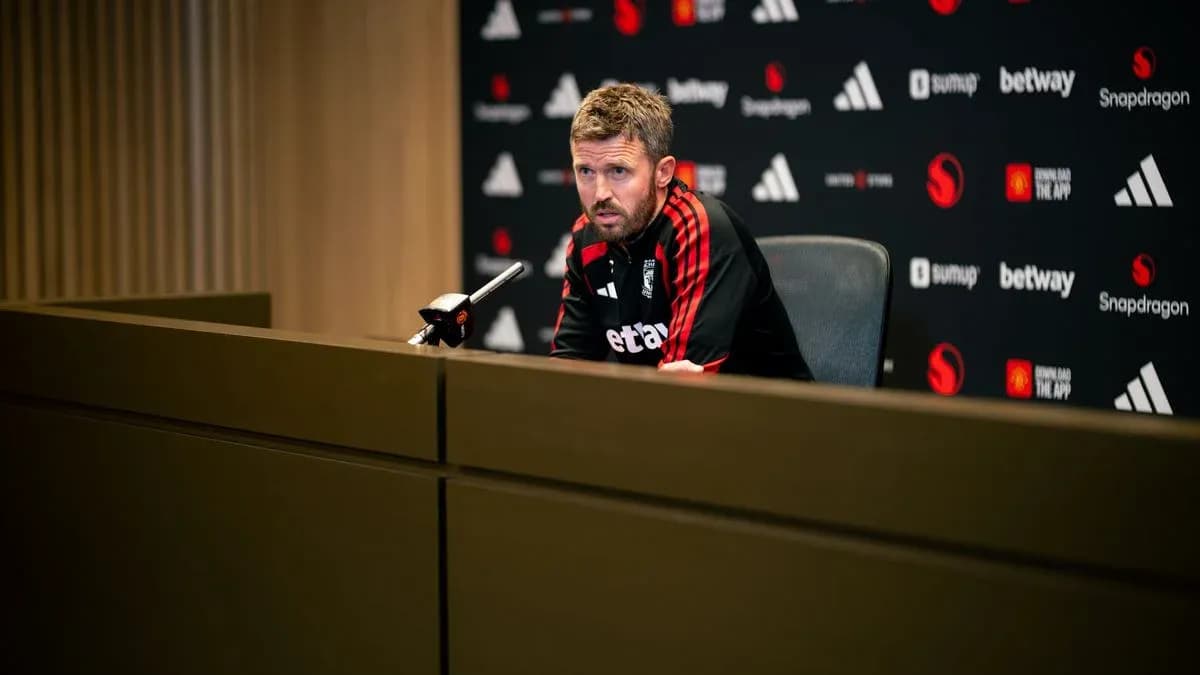
On the 40th anniversary of Sir Alex Ferguson walking through the doors at Old Trafford, Michael Carrick sat in front of the cameras and did what most in his position would not dare: he refused to rule out the idea of Manchester United ever scaling those heights again.
He also laughed.
The comparison is absurd, of course. Ferguson’s 38 trophies in 26 years – 13 Premier League titles, two Champions Leagues and a culture that defined an era – hang over every successor like a storm cloud. Yet here United are again, four decades on from the Scot’s arrival from Aberdeen, hovering just above the relegation zone on goal difference, just as they were in November 1986.
The symmetry is eerie. Carrick knows it. He just isn’t intimidated by it.
Ferguson’s shadow and Carrick’s reality
“What's not been said already?” Carrick remarked when asked about Ferguson. He called the anniversary “something worth celebrating” and spoke with the ease of a man who has long since stopped being starstruck by his old manager. “The impact and everything he drove at the football club during the time he was here are incredible. I'm probably closer to him now than I was when I was playing.”
That line tells its own story. Carrick isn’t trying to be the new Ferguson. He’s leaning on the old one.
He also knows the landscape has changed. “The game has changed. It evolves and that's how it is. We have to deal with what is front of us.” No plea for time, no romantic appeal to history – just a blunt acceptance that the modern Manchester United manager does not get the luxury of years to build what Ferguson built.
Even so, he refuses to treat the Fergie years as an unreachable myth. “You've got to build, be realistic and put things in perspective. It's not going to happen in the blink of an eye,” he said. The ambition remains enormous; the tone is measured. United, he insists, can still become a side that competes at the very top again. They just have to earn the right.
A famous night, and its limits
The comeback win over Roma in midweek offered a glimpse of what that might look like. Old Trafford roared again. The players responded. For one night, the club felt like itself.
Carrick enjoyed it. He did not romanticise it.
“It's up to us to take it forward; it was a fantastic night as a one-off night,” he said. “It was a good night for us all, but nothing has been achieved yet, and it's one moment we need to use to move forward.”
He had watched the game back. The glow of the comeback did not blind him to the flaws. “When you watch the game (Roma) back, the first half wasn't so bad. There were moments when we left ourselves short, and we need to fix them. The first half against Chelsea was very good. We're showing signs of improvement, no doubt, and we need to take that forward.”
That is the rhythm of his United so far: flickers of control, bursts of chaos, and a manager trying to stretch the former across 90 minutes while killing off the latter.
Injuries bite again: Baleba blow and Dorgu caution
Progress will have to come without Carlos Baleba for several weeks. The midfielder, who had only just begun to show why United spent £70million to prise him from Brighton, pulled up with a hamstring problem shortly after half-time against Roma, clutching the back of his leg after a driving run into the penalty area.
He had already missed the start of the season with an ankle injury suffered in pre-season. Now another spell on the sidelines awaits. “Carlos, we don't know, but it will be a number of weeks,” Carrick admitted. For a side already short of rhythm, losing that kind of power and energy in midfield stings.
There was at least a hint of good news with Pat Dorgu, though Carrick refused to rush him. “Pat has done a little bit of training, very small, we have to be patient with Pat.” No promises, no bold declarations of imminent returns. United have been burnt too many times by hurrying players back.
Spirit, standards and a restless dressing room
Carrick knows what this squad is accused of: drifting, underperforming, shrinking when the stadium demands more. He pushed back, but not with empty slogans.
“It's a positive reaction, it's not like all of a sudden we're getting carried away,” he said of the response to recent results. “I know what the players are capable of. We just haven't proved it enough lately. The boys have trained really well, I'm not just saying that for the sake of saying it.”
The message is clear. Training levels are up. Application is there. The missing piece is consistency when the whistle blows and the pressure arrives.
One of the tactical questions swirling around Carrick’s United came into focus against Roma. Their opener came from Kobbie Mainoo losing the ball, Diogo Dalot caught high on the opposite flank, and Ayden Heaven exposed as a simple pass released Matias Soule in acres of space. It was the kind of concession that had supporters wondering about the balance of the system and whether Carrick’s adventurous use of his full-backs leaves them too vulnerable.
He has not publicly scrapped that idea, but he has acknowledged the issue: “There were moments when we left ourselves short, and we need to fix them.” The dilemma is obvious – chase the front foot, or shore up the back line – and it will define how this United side looks over the next few months.
Mainoo, Rashford and England’s cold verdict
Beyond Carrington, another verdict landed. The latest England squad arrived without Kobbie Mainoo and Marcus Rashford.
Thomas Tuchel, explaining Mainoo’s omission, pointed to fitness and competition in midfield. “I think Kobbie had a difficult spell now with his team & missed a lot of matches. In the meantime, it was Jobe who impressed. The door is always open. The door is always open for younger ones to overtake or to make their mark, so that's just a sign of the competition in central midfield.”
Mainoo had missed four matches with a minor injury before returning against Chelsea and starting against Roma. His absence from the England list surprised few inside the club. The same applied to Rashford, who is still working his way back from hip and thigh problems and has not been named in a national squad since the trip to Elland Road to face Leeds.
Rashford, though, remains at the heart of the conversation around United. Before the Roma game, he faced supporters in a rare Q&A in the Ambassadors' Lounge at Old Trafford – a premium hospitality event that offers seats just behind the dugout, a meet-and-greet, a five-course meal, behind-the-scenes access and the chance to greet the team bus as it arrives. It was a reminder of how closely scrutinised United’s stars are, even on their own turf.
Old allies and new battles
Carrick is not fighting this alone. He still leans on voices from the club’s recent past, including Ole Gunnar Solskjaer. “We're friends and we're still in contact now. I saw him not long ago in pre-season,” he said.
Asked about Solskjaer’s recent interview, Carrick kept it simple. “I've not seen it, so it's difficult to respond. I don't think there are too many people who actually know me, really. Ole is one of them.” It was a rare personal note from a manager who usually steers every answer back to the team.
The team, though, is all that matters now. The press conference ended with Carrick looking ahead to Aston Villa, another test of whether the Roma win was a spark or a one-off.
United stand, once again, at a familiar crossroads: a giant of English football staring up from the wrong end of the table, an iconic anniversary hanging in the air, and a manager talking about building, patience and standards in a game that rarely offers any of those.
Ferguson needed years to turn crisis into empire. Carrick will not get that kind of time. The question now is whether nights like Roma can come often enough, and quickly enough, to stop this era being remembered as just another chapter in the long search for the next great United side.