Michael Carrick's Uncertain Future at Manchester United
Michael Carrick is walking a tightrope at Manchester United, and the club’s new powerbrokers know it.
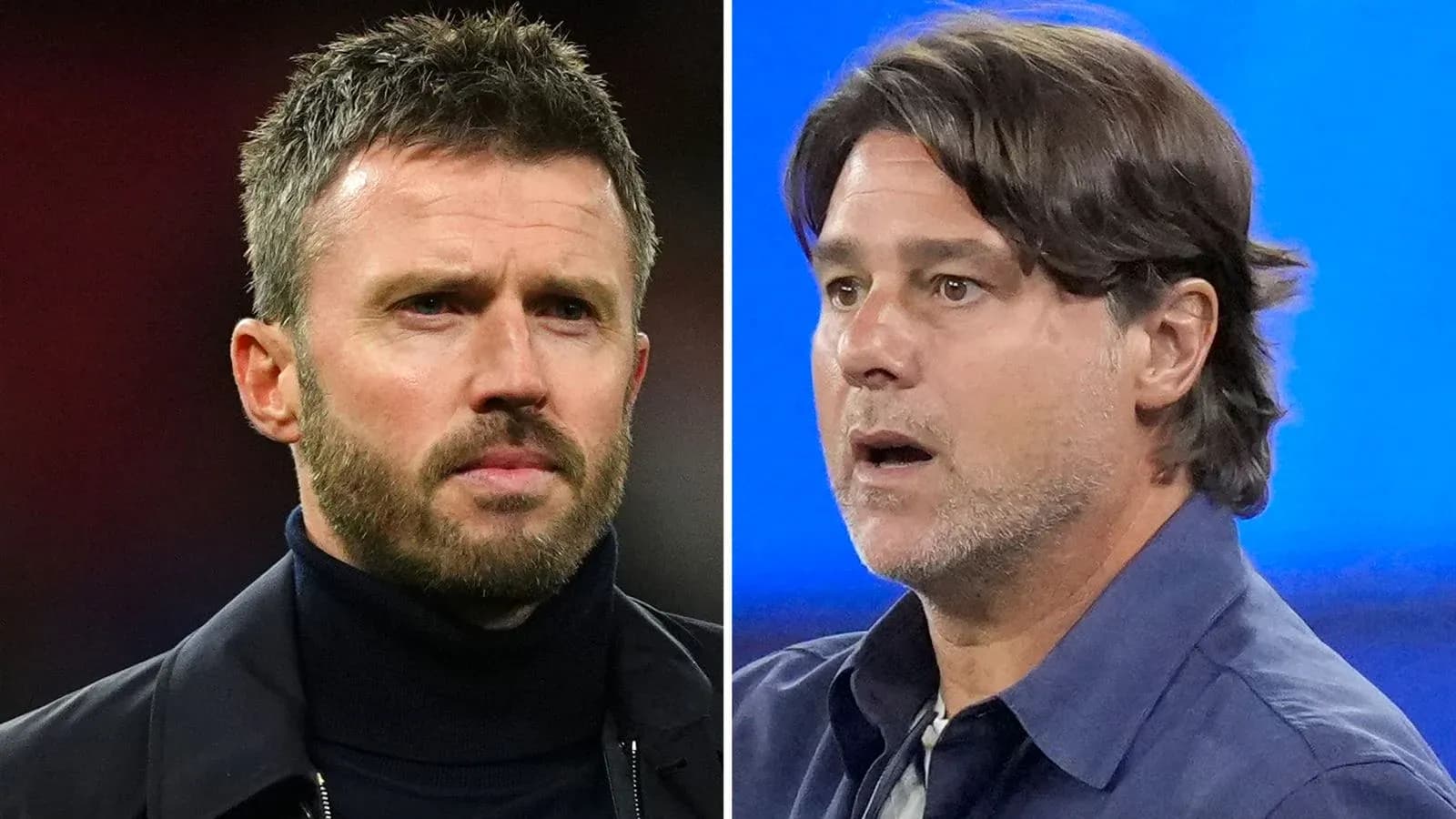
Mauricio Pochettino, currently in charge of USA, is open to talking if United call. That call has not come yet. But the conversations above Carrick’s head are starting to define his future more than anything happening on the pitch.
Ratcliffe summit looms as Carrick waits
On Wednesday, CEO Omar Berrada and director of football Jason Wilcox are due in Monaco for a scheduled meeting with minority owner Sir Jim Ratcliffe. On the agenda: the season review, the data, the mood in the dressing room – and a clear recommendation on whether Carrick should stay or go.
As of now, no final decision. That’s the line from inside Old Trafford.
Pochettino’s name sits near the top of the list of alternatives. The former Argentina defender has just extended his USA contract to 2030 and is preparing for a Nations League quarter-final against Haiti, but he is thought to be ready to listen if United make a move. Buying him out would cost around £7m – a significant fee, but not one that frightens a club of United’s size.
United have been here with Pochettino before. At least two rounds of talks in previous years, no deal. The difference this time? The club is in the hands of a new football structure, and patience with the current trajectory is thinning.
One win in 11 and a brutal defensive record
Carrick reported to the training ground on Tuesday, walking into a club deep in self-examination. Wilcox is leading a full review of the campaign so far, and the numbers are unforgiving.
- One win in 11 games.
- Thirty goals conceded in all competitions – the worst defensive record of any side in Europe’s top five leagues.
- The club’s worst-ever start to a Premier League season.
Even the late rallies of the last two matches – a Champions League win over Roma and a salvaged point against Villa – cannot mask the wider picture. Those comebacks have offered brief surges of optimism, but not enough to shift the overall judgement.
Carrick survived the 3-0 home defeat to Bournemouth a fortnight ago, granted three more matches to spark a reaction. Instead, the winless run in the league has stretched to eight. Now, serious doubt hangs over whether he will still be in the dugout when United travel to Anfield to face Liverpool the weekend after next.
Why Carrick is still in a job
For all the grim statistics, United have resisted pulling the trigger. There are three main reasons.
- First, the stands are not turning on him. Carrick’s history at Old Trafford matters. A serial winner as a player – 11 major trophies, including the Champions League and five Premier League titles – he retains a deep reservoir of goodwill. The usual soundtrack that accompanies a failing manager elsewhere, the chants calling for change, has not taken hold here. The board is not feeling that particular heat.
- Second, there is a belief inside the club that the players are still with him. The last two games have been chaotic, but they have also delivered a Champions League victory and a draw against a strong Villa side, both via spirited comebacks. The conclusion at board level: this is not a dressing room that has downed tools. The squad, in their eyes, are still fighting for Carrick.
- Third, there is a strategic doubt: will changing the head coach actually fix anything? If the hierarchy were convinced a new manager would unlock this team, they could already have moved. Julian Nagelsmann and Eddie Howe are both out of work, both thought to be open to talks if United come calling. Yet no substantive discussions have taken place.
For now, the club is using the international break as breathing space. With most players away, no first-team training scheduled for several days and Carrick and his squad given Monday off after the draw with Villa, the focus at Carrington is on evaluation rather than preparation. Every aspect of the season is under the microscope.
Over-achievement, under-achievement, and a crossroads
Inside the boardroom, there is a sense Carrick over-achieved last season. A third-placed finish and a return to the Champions League bought him time and credit. That buffer is shrinking.
The same executives are equally convinced that this group of players has badly under-achieved this season. The gap between what they believe the squad should be producing and what it is delivering grows wider by the week.
They also want to avoid another interim era. If Carrick goes, the preference is to move straight to a permanent appointment rather than stumble through another stop-gap solution. That is one more reason for the caution: sack the coach now without a clear successor lined up, and United risk drifting again.
Bigger than the man in the dugout?
Outside the boardroom, the debate rages over whether any coach can truly solve United’s problems under the current ownership model.
Sky Sports News chief reporter Kaveh Solhekol has put it bluntly. In his view, United need to become United again – a club that expects to challenge for titles and the European Cup, not one that measures itself against mid-table sides. Change the manager, he argues, and you only paper over the cracks while the club slides away from the Barcelonas and Real Madrids of the world and towards the Lincolns and QPRs.
It is a bleak assessment, but it captures the mood among many supporters: until the structure changes at the top, nothing else really does.
Carrick stands in the middle of all this, a club legend trying to manage through a storm that may not be his alone to control. The numbers say time is running out. The board’s caution says they fear a misstep. Pochettino waits across the Atlantic, contract in hand, open to the conversation.
The question now is not just whether Carrick survives this review, but what kind of Manchester United any manager is really being asked to lead.