Catalonia to Paris: A Player's Journey
He left Catalonia in the middle of a whirlwind. Not on the pitch – there, his game has travelled perfectly – but in every other part of his life.
At 26, uprooting from Barcelona to Paris meant starting again from scratch. New streets. New language. New rhythm to the day. The move to the Parc des Princes was not just a transfer; it was a jolt. Training and tactics came easily. Ordering dinner, understanding jokes in the dressing room, finding a sense of home in a different country? That took more work.
What softened the landing was the sight of familiar faces when he walked into PSG’s dressing room. Luis Enrique was waiting for him, the coach he still speaks about as a paternal figure in his career. Alongside him, compatriot Fabian Ruiz and former La Masia talent Dro Fernandez helped turn a foreign environment into something closer to a Spanish enclave inside the back-to-back European champions’ camp.
The deal itself barely gave him time to breathe. One moment he was a Barcelona player, the next he was on a plane, his life packed into suitcases. He summed up the chaos with a blunt truth: in modern football, permanence is an illusion. “It’s difficult: one day you’re here and the next you’re packing your bags,” he said, describing a reality every top player now understands.
He still found room for a joke about what – or rather who – he couldn’t bring with him from La Liga. “The only one I can’t bring with me is Pedri,” he laughed, a line that said plenty about the bonds left behind in Barcelona and the lightness he’s tried to maintain in the middle of upheaval.
If there have been struggles away from the pitch, they have stayed there. On it, he has been ruthless.
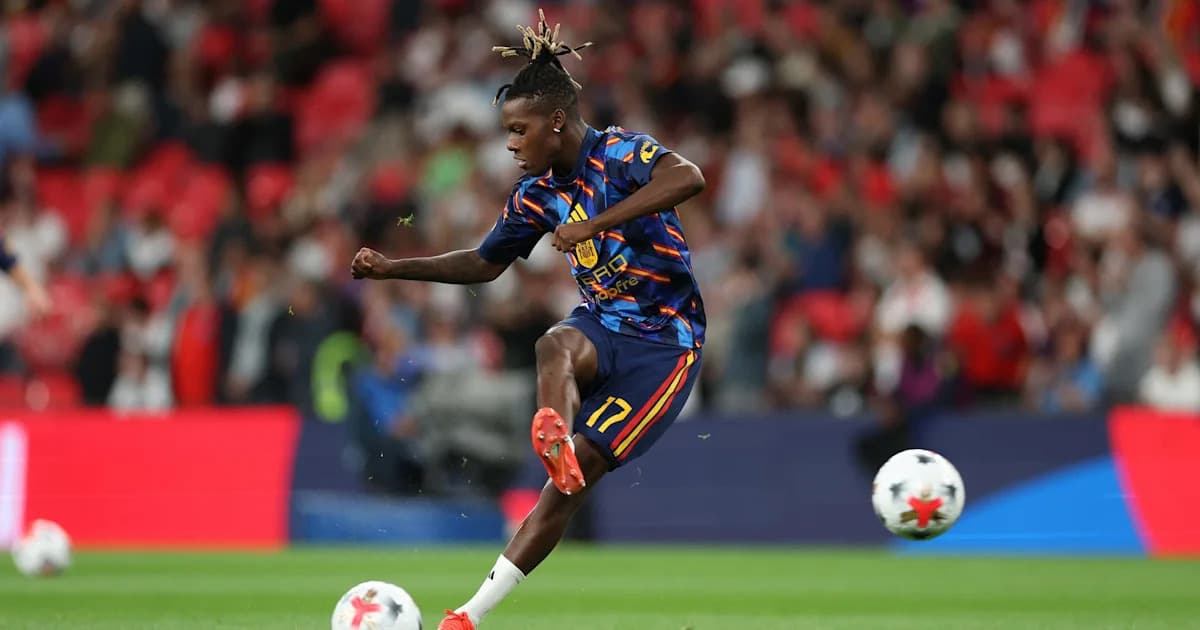
Seven goals in his first six matches for PSG is not an adaptation period; it is a statement. He has slotted straight into Enrique’s attacking structure as a primary weapon, his movement and finishing already central to how the French champions hurt teams. The speed of his impact has turned what could have been a gentle integration into an immediate elevation of status.
This burst of form did not come out of nowhere. It follows a summer that already belongs to his personal history. Wearing Spain’s colours, he scored the decisive goal in a 1-0 World Cup final win over Argentina, the defining touch on the biggest stage the game can offer. From that night to this autumn in Paris, his trajectory has only gone one way.
The recognition has followed. His name sits on the 30-man Ballon d'Or shortlist, a reward for his World Cup heroics and his consistency at club level. He stands there alongside fellow Spaniards Lamine Yamal, Pau Cubarsi, Marc Cucurella, Rodri and PSG team-mate Ruiz, a snapshot of a generation pushing Spain back towards the summit of the world game.
Asked about the award, he refused to turn the spotlight fully on himself or to lobby for a favourite. “Whoever’s meant to win it will win it; it’s not up to me,” he said, stripping away the noise around the vote. Then came the only hint of preference: “If a Spaniard wins it, so much the better.” Country first, ego second.
For now, his real campaign is not on a gala stage but on the grass. Having forced his way so quickly into the heart of Enrique’s plans in Paris, his task is clear: keep scoring, keep deciding games, keep making himself undroppable. Maintain this level and he doesn’t just secure his place in the starting XI; he sharpens PSG’s edge in the title race and in Europe, where the club’s ambitions remain as bold as ever.
The move has already changed his life. The question now is how far his goals in Paris can change his place in the game.