Champions League Preview: Arsenal, PSG, and the Fight for Glory
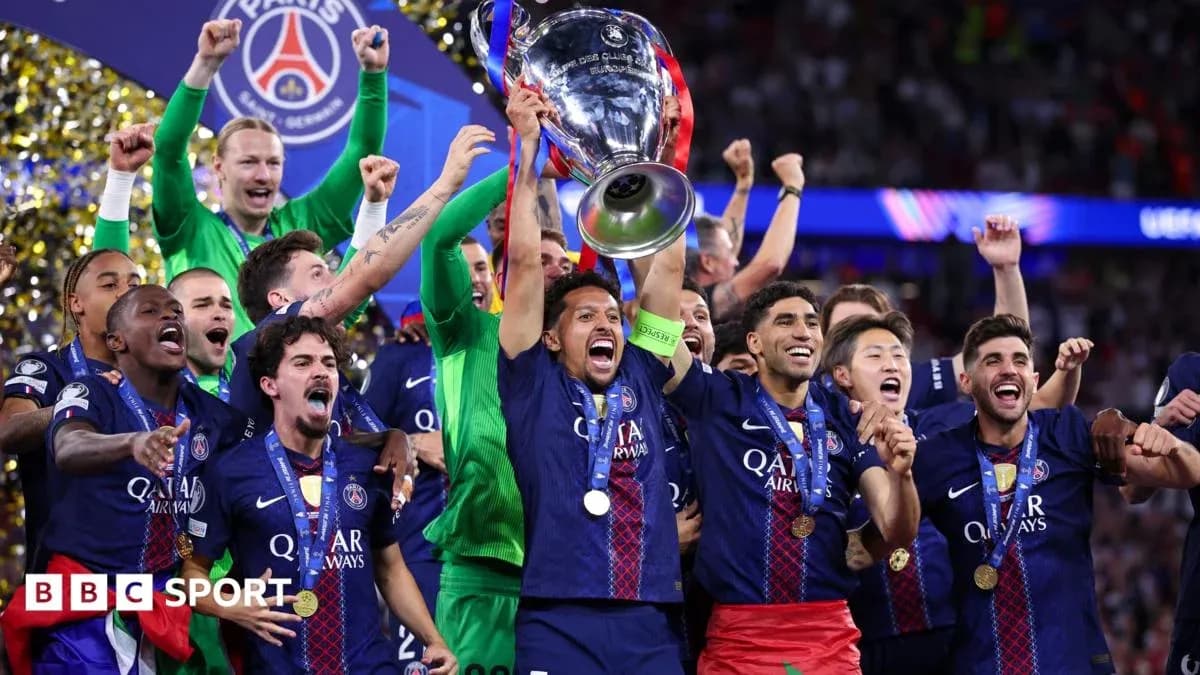
The Champions League is back. Madrid, 5 June. One trophy, one night, and a field stacked with contenders trying to knock Paris St-Germain off a throne they have turned into a habit.
PSG chase history this season, aiming for a third straight title as the new league phase kicks off on Tuesday. No one has done three in a row without a certain Cristiano Ronaldo leading the charge, and this PSG do not have him. They do, however, have the weight of expectation, a demanding coach, and a target on their backs the size of Europe.
Five English clubs stand in their way. Arsenal lead that pack, last season’s runners-up now viewed as the Premier League’s best shot at ending French dominance.
Arsenal, Bayern and the end of the three-peat?
Julien Laurens does not buy the fairytale of a PSG treble.
“If PSG do the three-peat, it would be an incredible achievement. I don't think they will do it,” he says. Two in a row is special. Three? “Impossible unless you've got Cristiano Ronaldo in your team, which they don't.”
Laurens still expects PSG to go deep. Semi-finals at least. But he sees the crown heading elsewhere.
He is unconvinced by the Jose Mourinho-Real Madrid experiment, and his gaze settles on two sides who have consistently knocked at the door in recent seasons: Bayern Munich and Arsenal. In his view, they, alongside PSG, have “deserved to be there the most in the past two seasons”.
The difference-maker? Arsenal’s back line.
To Laurens, Mikel Arteta’s team boast “the best defence in Europe by far” – and that, he argues, is what wins titles. His final: Bayern v Arsenal. His winner: Arsenal. PSG, in his bracket, fall in the last four, with Bayern close runners-up.
If that plays out, it is not just a new champion. It is a power shift.
PSG under strain, Barcelona on the rise
Guillem Balague sees a PSG side stretched by the demands of Luis Enrique’s football and the weight of recent success.
“With PSG's irregular start to the season we are seeing how difficult it is to maintain the level,” he says. Luis Enrique keeps pushing them to stay at the cutting edge: dynamic, aggressive, relentless without the ball. That takes a toll.
The league phase, for him, becomes a laboratory. A place to tweak, to experiment, to accept “strange results” before the real test from January onwards. The structure is there, the axis intact, so Balague still expects them to go “very close” to another title.
But there is a team he cannot ignore.
“Barcelona are flying.” Hansi Flick wants another centre-back and a number nine to hit what he sees as the next level, but he already believes they are on their way to the top. The squad looks liberated, the football sharper, the ambition obvious.
Arsenal, in Balague’s eyes, have crossed an important psychological barrier. They have “found a way to win regularly”, and with that burden lifted, the players feel a release that should allow them to play with greater freedom and authority.
His semi-final cast almost writes itself: PSG, Barcelona, Arsenal – unless the draw throws them together earlier. The final spot, he says, should fall to one of Bayern Munich, Real Madrid or Manchester City, again “draw permitting”. No wild outsiders. Just heavyweights.
The stars to shape the season
Laurens picks five players he believes will leave a mark on this campaign.
First, Jude Bellingham. A huge season, both for him and for Mourinho’s Real Madrid, with the England international operating as a number 10 in a role Laurens feels suits him perfectly. After an excellent World Cup, he expects that momentum to carry, with Bellingham scoring heavily and deciding big games.
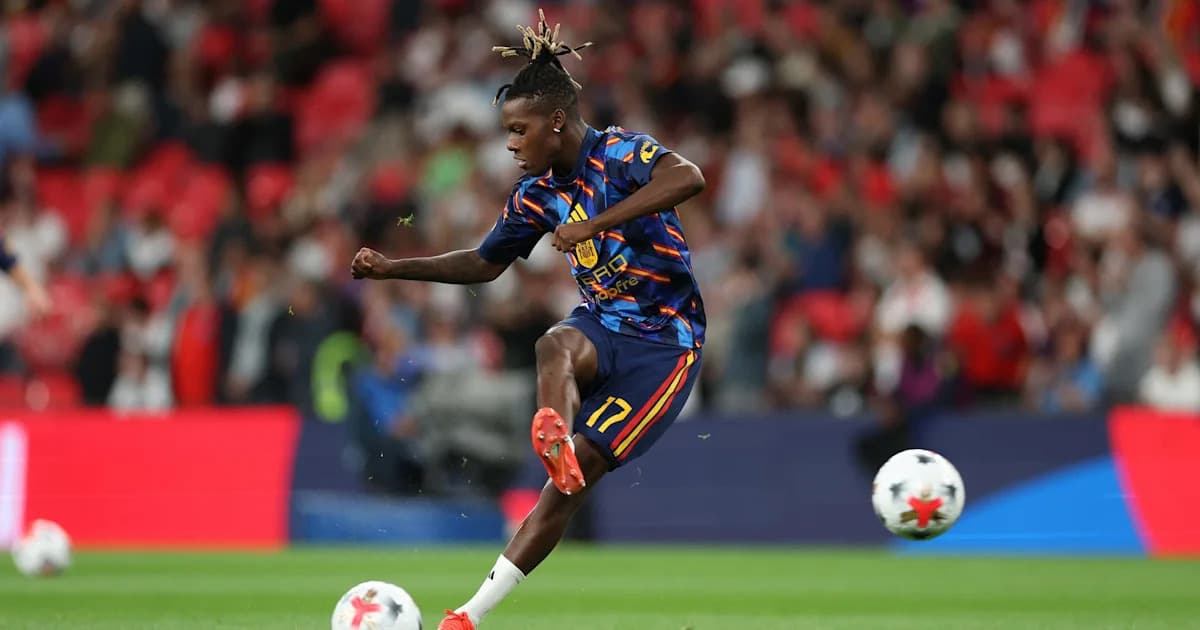
Then comes Nico Paz, Como’s number 10 and heartbeat. It is Como’s first ever Champions League adventure, with Cesc Fabregas on the touchline and a style that makes them “very entertaining” to watch. Paz, still very much a work in progress, is already central to everything they do with the ball. Laurens is convinced he will be a top player “very soon”.
On the left wing of PSG, Khvicha Kvaratskhelia has earned a nickname: “Mr Champions League”. For two seasons he has been electric, especially last year, cutting inside or going wide, dangerous on both feet, scoring spectacular goals and dazzling technically. Laurens believes he is in the Ballon d’Or conversation. He is “the guy” who gets you off the sofa.
From France to Lens, back in the Champions League after pushing PSG all the way in Ligue 1. At the heart of their resistance stands Ismaelo Ganiou, a 21-year-old centre-back who is quick, physical and comfortable with the ball. Laurens expects him to earn a move to a major Premier League club at the end of the season.
Finally, Donyell Malen. Since leaving Aston Villa for Roma, he has been transformed, scoring at almost a goal per game as a lone striker in Gian Piero Gasperini’s side. Roma’s return to the Champions League brings another attacking, open team back to the spotlight, and Laurens believes Malen is now back to his best.
Balague’s list is just as loaded.
Harry Kane, he says, is on a Ballon d’Or mission at Bayern Munich. The system suits him perfectly, and Balague does not expect any drop in his output.
At Barcelona, teenager Lamine Yamal wants more. He has “set his sights on the Champions League” and thrives in Flick’s high, passionate pressing game, which gives him the platform to shine.
Kvaratskhelia appears again. Balague insists the PSG winger has “another level” to reach and, with the French champions likely to go far, expects him to rescue them in key moments and win big games. For him, Kvaratskhelia will be a Ballon d’Or winner “soon”.
Shakhtar, long known for polishing Brazilian talent into major European transfers, may have found their next gem in 20-year-old Kaua Elias. Balague sees him as the latest in that production line.
Then there is Martin Odegaard. After an injury-hit campaign last year, the Arsenal captain has started this one strongly. The Norwegian, Balague says, can dominate games, and a more confident Arsenal will need exactly that. He looks ready to take full leadership.
Fabregas’ Como, dangerous underdogs and ambitious newcomers
Beyond the giants, this new format opens the door for fresh stories.
Balague is captivated by what Fabregas is building at Como and by the Spaniard’s decision to stay despite “interesting offers” over the past two years. The freedom to get things wrong without catastrophe has allowed him to push forward his ideas, to move from swimming against the tide to standing at the forefront of modern football. Balague expects Como to reach the knock-out stages.
LASK, who eliminated Celtic, have already shown a strong competitive level. For their first Champions League campaign, Balague sees a home win somewhere and a respectable points haul as a fair outcome, though he does not think they will qualify.
Azerbaijan’s Sabah intrigue him. Their success rests on organisation, but the schedule is brutal: trips to Arsenal and Manchester United, home matches against Barcelona and Borussia Dortmund. Balague believes they will spring “one or two surprising results”, just not enough to progress.
Then come Viking. Their group is unforgiving: Bayern, Atletico, Napoli, Aston Villa. Yet Balague points to Norwegian football’s culture of clever, competitive coaches and players. In that context, he dares to suggest they “could make it to the knock-outs”.
The stage is set. PSG chase immortality, Arsenal chase validation, Barcelona chase rebirth, Bayern chase inevitability. The rest? They chase a chance, a moment, a night in Madrid that could define a generation.