Charlotte Hornets' Bold Reset After LaMelo Ball Trade
The Charlotte Hornets didn’t just tweak the roster this summer. They tore up the blueprint.
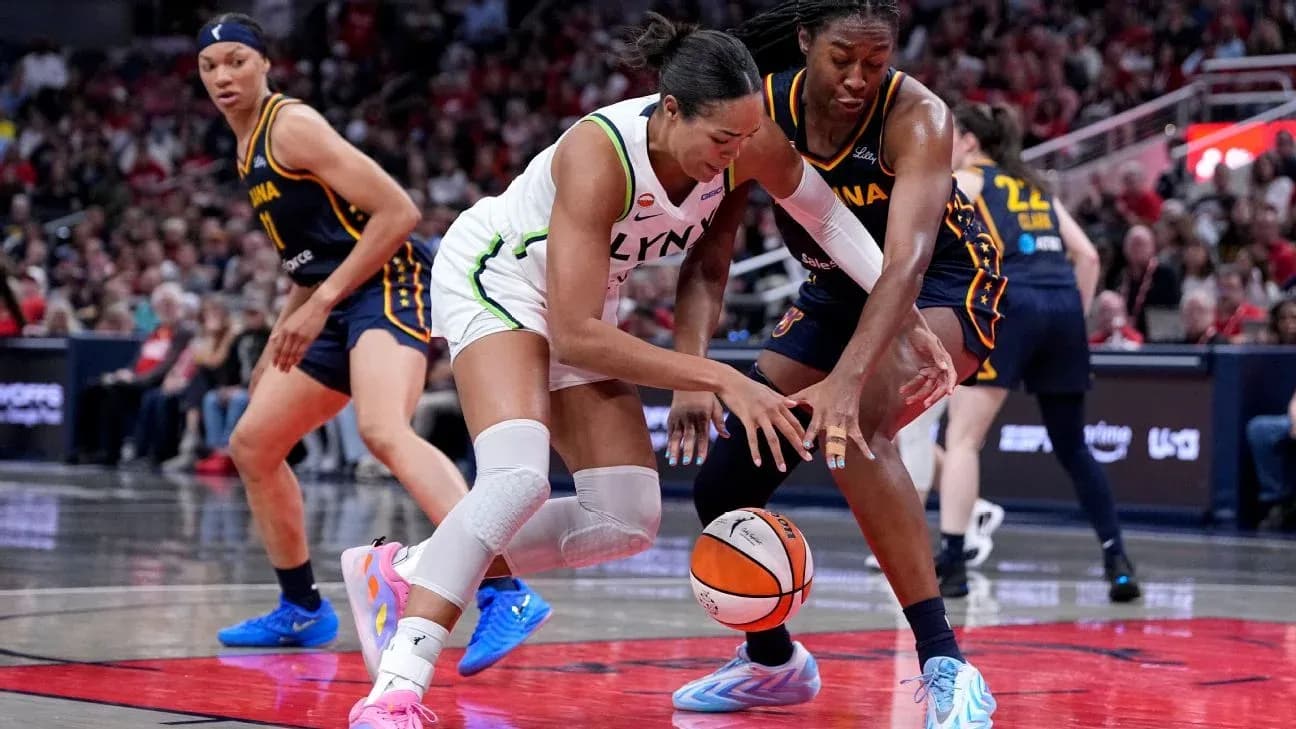
LaMelo Ball, the face of the franchise and the engine of last season’s surge, is gone — shipped to the Minnesota Timberwolves in a blockbuster that signaled a hard reset in Charlotte. In return: Naz Reid, an unprotected 2033 first-round pick, three second-rounders and three first-round pick swaps. A haul of flexibility and future rolls of the dice, but a trade that cuts deep into the team’s identity.
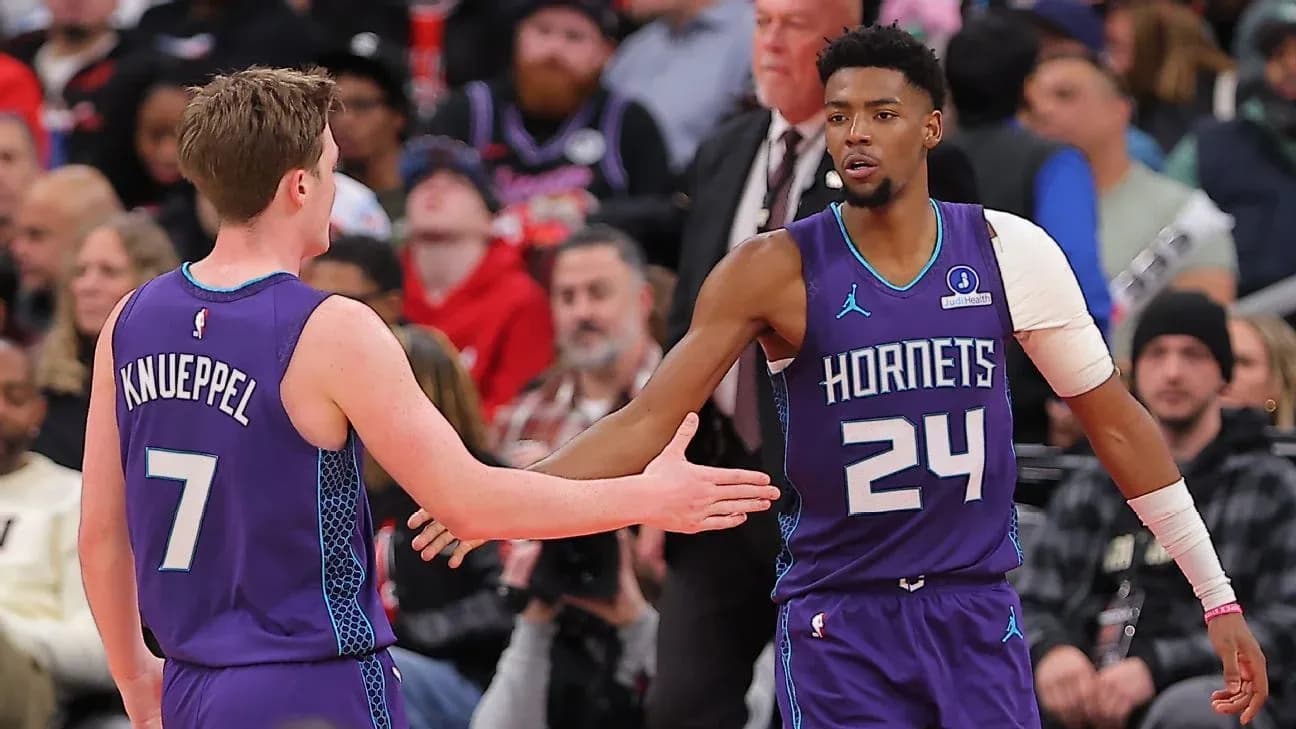
The message from the front office couldn’t be louder: this is now Brandon Miller and Kon Knueppel’s team.
Miles Bridges, the other pillar of last year’s starting five, is out as well, moved in a separate deal as the Hornets chased picks and cap space. In their place, a new layer of veteran scaffolding arrives: Grayson Allen, Dennis Schroder, Royce O’Neale and Dorian Finney-Smith. Not stars. Not saviors. Guides.
Charlotte has chosen a different kind of bet.
A contender’s ambition from a non-playoff team
The Hornets just delivered their best season in a decade. Forty-four wins. A top-five offense. For a young core, that’s usually the cue to run it back and hope internal growth does the rest.
Instead, the front office looked at that group — Ball, Miller, Knueppel, Bridges — and decided it wasn’t enough.
They moved Ball, a borderline All-Star on a max deal, and Bridges, a 28-year-old forward in his prime, to avoid the middle ground that swallowed the Trae Young-era Atlanta Hawks. Charlotte has watched that movie. It wants a different ending.
The result is one of the league’s cleanest cap sheets. As of next season, the Hornets are the only team without a single player committed at $25 million or more. They’ve stacked one of the NBA’s deepest draft pick reserves. They’ve reoriented the franchise around two younger lottery talents in Miller and Knueppel, and a front office philosophy that’s chasing titles, not play-in banners.
President Jeff Peterson made it plain: the goal isn’t sneaking into the postseason once. It’s to matter in May and June.
Of course, that kind of ambition comes with a price. It may send Charlotte straight back into the lottery in the short term.
The cost of losing LaMelo
Ball’s departure isn’t just about losing a name on a jersey. It’s about ripping out the creative core of an offense that hummed after the All-Star break.
He averaged 20.1 points and 7.1 assists with a hefty 32.0 usage rate. He dictated pace, bent defenses, and turned routine possessions into something chaotic and hard to guard. He also brought baggage: questions about shot selection, defense and durability lingered across his six playoff-free seasons.
Charlotte decided those questions weren’t going away fast enough.
Now, the scoring and playmaking load fractures across the roster. There is no single replacement. There is a committee.
Brandon Miller, coming off a breakout year, becomes option one. Kon Knueppel, a high lottery pick with All-Star potential, moves from exciting piece to foundational co-star. Coby White, retained on a three-year, $74 million deal, slides into the starting point guard role with a chance to expand his game. Schroder, the veteran journeyman, will steady the second unit and ease the initiation burden.
The identity won’t change entirely, though. This team is still built to let it fly.
Miller, Knueppel, White and Allen each averaged more than six 3-point attempts last season. Under coach Charles Lee, the Hornets are positioned to again be one of the league’s most trigger-happy teams from deep. The spacing should be there. The question is whether the creation — the ability to puncture defenses and make the right read under pressure — can survive without Ball’s flair.
Charlotte probably won’t be as good immediately. ESPN’s Zach Kram stamped the offseason with an A-, but even he acknowledged the step back: the Hornets broke up the league’s best five-man lineup and replaced it with depth, shooting and a long-term plan.
One step back, they believe, for multiple steps forward.
A center logjam with upside
If there’s a wild-card subplot to this new era, it’s in the middle.
Hannes Steinbach, Moussa Diabate and Ryan Kalkbrenner give Lee a center rotation rich in contrast. Steinbach, a lottery pick, brings rebounding and promise. Diabate, a key part of last season’s elite starting unit, injects energy and switchability. Kalkbrenner, who impressed early before injuries stalled his rookie campaign, offers sheer size and rim protection.
And that’s before you factor in Naz Reid, a former Sixth Man of the Year stepping into the first full-time starting opportunity of his career.
On paper, Lee has 48 productive minutes at center every night. The real puzzle is whether he can pair two of them together in certain lineups without choking the offense, and how he balances development with winning lineups. It’s an opportunity and a headache rolled into one.
Get that mix right, and Charlotte’s frontcourt could become a strength that buys Miller and Knueppel time to grow into their roles.
Fantasy and perception: sleepers in a reset
Strip away the long-term strategy, and there’s a simpler truth for this season: new usage, new roles, new numbers.
Coby White, freed from his Chicago context, steps into a starting role with the ball in his hands more than ever. In his last two full seasons with the Bulls, he hovered just under 20 points, five assists and three 3-pointers per game. With Ball gone and the keys handed to him, those marks are suddenly reachable — and beatable.
Naz Reid, long one of the league’s most productive reserves, finally gets the chance to be a full-time starter. His scoring, rebounding and floor spacing from the five spot could quietly anchor Charlotte’s offense and make him one of the season’s more profitable “how did we miss that?” fantasy plays.
From the outside, though, the shine is muted. ESPN’s metrics slot Charlotte 20th in Basketball Power Index and 21st in post-free agency Power Rankings. Dean Oliver looks at a projected core of Knueppel, Miller, White, Diabate and Allen and sees a group that, a year ago, wouldn’t have inspired much confidence.
The old “golden lineup” is gone. The sum of the parts doesn’t yet look imposing.
Who wins the split?
The Hornets and LaMelo Ball have effectively filed basketball divorce papers.
Ball heads to Minnesota, where he should finally taste playoff basketball alongside Anthony Edwards. Charlotte hands the future to Miller, Knueppel and a war chest of draft picks, betting that a colder, more analytical choice today leads to a warmer spotlight tomorrow.
It won’t be clear for a while who made the right call. The answer might look one way in 2027, and very different in 2030.
What’s undeniable is this: the Hornets refused to be seduced by their first good season in years. They chose risk over comfort, ceiling over certainty. Now they have to live with it — and so does the rest of the Eastern Conference.