
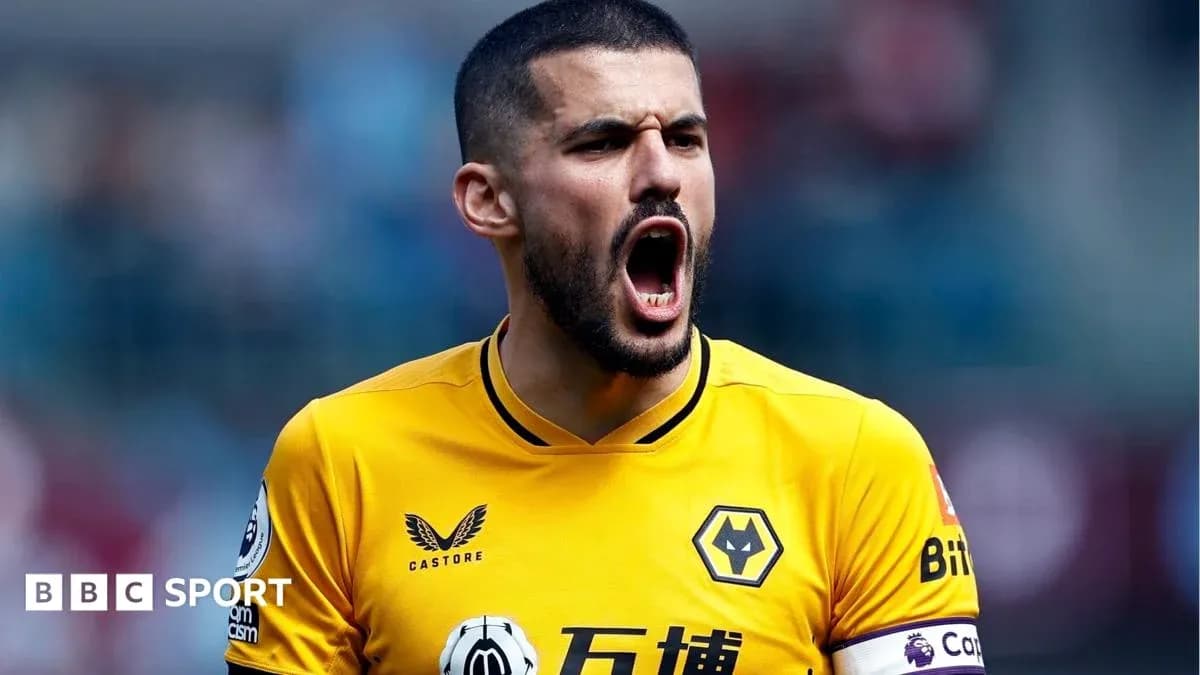
Conor Coady: Wolves Captain Retires After 503 Games
Conor Coady has never been the loudest name on a teamsheet, but he was almost always the loudest voice on the pitch. At 33, the former Wolverhampton Wanderers captain has retired from playing, closing the book on a 503-game club career built on graft, leadership and reinvention.
The ex-Wolves skipper, capped 10 times by England, steps away from the game after leaving Wrexham in September and seeing out a short loan spell at Charlton last season. The next step already seems to be forming in the background: he has been linked with a move into coaching and, specifically, with the assistant head coach role at League One side Barnsley.
If his playing days are over, his presence on a touchline somewhere feels almost inevitable.
From Liverpool Prospect to Football’s Middle Ground
Coady’s story started in the Liverpool academy, where he came through as a promising midfielder. He never quite broke into the elite core at Anfield, but he learned the game in a demanding environment and carried that education with him.
A loan move to Sheffield United in 2013 gave him his first real taste of senior football. It was a year of hard knocks in the lower leagues, the sort that either makes a player or quietly moves him out of the picture. Coady chose the first option.
Huddersfield Town signed him permanently at the end of that season. It was there that he began to establish himself as a reliable, durable professional. Yet his career still felt like it was orbiting the top level rather than entering it.
That changed in 2015.
Wolves, Jackett and a Turning Point
Kenny Jackett brought Coady to Wolves in 2015. It did not feel seismic at the time. A solid Championship signing, a good character, a squad piece.
It became something far more important.
Coady grew with the club. As Wolves rebuilt and re-energised, he became one of the constants. When promotion back to the Premier League arrived in 2018, he was no longer just another name; he was a core part of the side that dragged the club out of the second tier and into a new era.
Then came the tactical twist that changed everything.
Nuno, the Back Three and a New Coady
Under Nuno Espirito Santo, Coady shifted from midfield into the centre of a back three. It looked like a gamble. It turned into a masterstroke.
From that central defensive role, he became Wolves’ organiser, their on-pitch conductor. He read the game, he barked instructions, he pinged passes into midfield and beyond. He was not the quickest, not the flashiest, but he was the system’s anchor.
The results told their own story. Wolves finished seventh in the Premier League twice and reached the quarter-finals of the Europa League. They did it with Coady wearing the armband, marshalling the back line and setting the tone.
He would go on to make 317 appearances for Wolves, scoring seven of his 22 career goals for club and country in gold and black. For a player once seen as a functional midfielder, it was an extraordinary reinvention.
England Recognition and the Next Moves
His form at Molineux carried him onto the international stage. Coady earned 10 caps for England, recognition for his consistency and his influence in a system that prized intelligence and communication as much as raw athleticism.
By 2022, though, the Wolves chapter was drawing to a close. He left on loan for Everton, a move that initially promised a permanent switch. Everton chose not to trigger a £4.5m deal to keep him, and that decision nudged his career onto a different path.
Leicester City stepped in, signing him for a reported £8.5m in July 2023. It was another big club, another demanding environment, but this time the momentum of his career was no longer climbing. The moves started to feel shorter, sharper, more transitional.
An ill-fated brief spell at Wrexham followed. It ended earlier than planned and led to what would be his final move, to The Valley, linking up with Nathan Jones’ Charlton side on loan.
By then, the sense was growing that Coady’s future might lie on the other side of the white line.
A Natural Coach in Waiting
Anyone who watched Coady closely could see the coach in him. The constant talking. The pointing. The organising. The responsibility he seemed to crave.
Now, with retirement confirmed at 33, those traits are likely to define the next phase of his football life. Early links with the assistant head coach role at Barnsley feel entirely in character: a club that values fight and identity, and a man who has built a career on exactly that.
He leaves the pitch not as a superstar, but as something just as valuable to supporters: a captain who embodied a club’s resurgence, a defender who rebuilt his own career by changing position, and a professional who squeezed every last drop out of his talent.
The boots are off. The question now is simple: how long before Conor Coady is the one standing in the technical area, shaping the next generation in his own image?





