
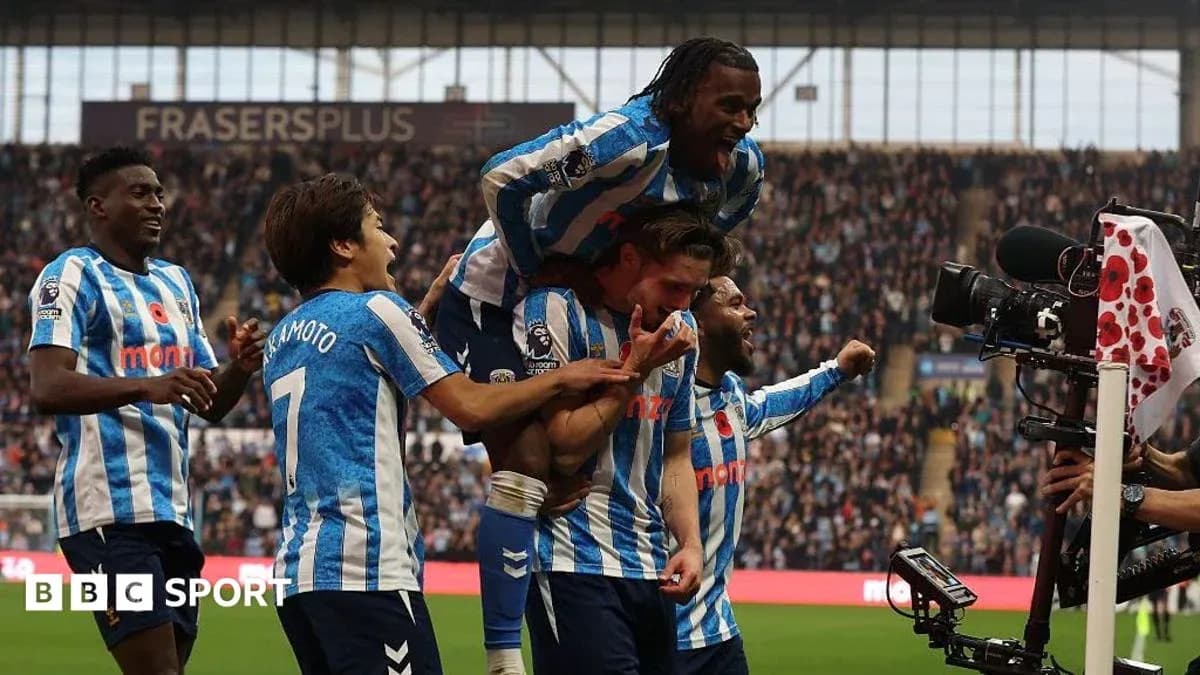
Coventry's Premier League Journey: From Defeat to Resilience
Frank Lampard walks back into Goodison Park on Friday night with a team many expected to be broken by now, not building a platform.
Coventry arrive on Merseyside with a chance to climb to 11th in the Premier League. Win at Everton and they reach 12 points, level with eighth-placed Bournemouth, a quarter of the way through their first top-flight campaign in 25 years. For a side written off after four straight defeats without a goal, it is quite a plot twist.
“I would like to think there is a higher ceiling,” Lampard says. The early evidence suggests he might be right.
From thumping to thinking clearly
Those opening weeks looked brutal. Arsenal, Hull, Manchester City, Brighton: four games, four losses, no goals. The kind of start that normally suffocates a newly promoted side and drains belief from the training ground.
It never really did.
At Coventry’s Ryton base, the mood held. Even the 5-0 home beating by Brighton, played almost an entire half with 10 men after Taiwo Awoniyi’s dismissal, did not trigger panic. Inside the club, that game was filed away under “this can happen in the Premier League” rather than “season-defining disaster”.
The staff clung to what they had seen in the defeats to Hull, Manchester City and Arsenal: long spells where Coventry looked like they could live at this level, not just visit it.
Then came a 3-1 Carabao Cup loss to Aston Villa. On paper, another setback. In reality, the moment Lampard drew a tactical line.
Lampard the adjuster
Ahead of a trip to Nottingham Forest, he changed. Out went the back four. Coventry switched shape to mirror Forest’s back three, and walked away from the City Ground with a 1-0 win and a new sense of direction.
“The result sometimes you can't quite control, but you can control your idea going into a game, that maximises our strengths and looks at the opposition's,” Lampard explains. He is in before 7.30am every morning, in the gym before training, setting the tone as much as the tactics.
“We went to Nottingham Forest and we matched up their formation because I wasn't keen to go there in the moment we were in with a back four and the problems they can give you with wing-backs and 10s.
“It's not just my, or our, choice on formation which is going to win or lose games. We know we have a big fight so every small percentage in our set-up if we feel that way we will do it - but we must feel it's going to be the right one.”
This is Lampard at his best: flexible, reactive, unafraid to bend his principles to the reality in front of him. Three wins in five have followed, enough to drag Coventry out of the relegation zone and into the conversation as something more than survival fodder.
Less ball, more bite
The numbers tell their own story of adaptation.
In that damaging-looking 1-0 defeat to Hull on the opening day at home, Coventry hogged the ball. They had 68.5% possession, knocked it around, controlled territory – and lost.
Fast forward to the 3-1 win over Sunderland on Saturday and the picture flips. Possession dropped to 42.6%. Coventry attempted more than 200 fewer passes, and over 50 fewer forward passes than against Hull. Their passes in the final third fell off a cliff, from 128 to just 60.
And yet they scored three, won comfortably, and walked off to applause rather than anxiety.
Patience and pragmatism replaced idealism. This is a promoted side learning the division in real time: you do not have to dominate the ball to dominate the game.
Lampard’s biggest call came with the team sheet. Club captain Matt Grimes, a central figure in last season’s promotion, found himself on the bench. For a newly promoted manager, leaving out such a key figure can fracture a dressing room. At Coventry, it has been met with understanding. The message is clear: status bows to survival.
Coventry still sit bottom of the league’s xG charts at 8.34, a warning light that nobody inside the club is ignoring. Yet context matters. Three of their first four away games came at Manchester City, Arsenal and Tottenham. Many seasoned Premier League sides would struggle to create in that run, never mind a newcomer feeling its way into the campaign.
History and the road ahead
There is another small comfort. Only three clubs – Middlesbrough in 1996-97, Burnley in 2009-10 and Cardiff in 2013-14 – have gone down after collecting 12 points from their first 10 Premier League games. Coventry can hit that mark with a win at Everton.
History does not keep you up on its own, but it does offer a glimpse of what is possible when a fast start is banked.
After Goodison, the schedule softens slightly, at least on paper. Crystal Palace and Ipswich visit Coventry, with a trip to Leeds wedged in between. Inside the club, that block of fixtures has been circled for months as a crucial stretch in their survival plan.
Lampard will not let anyone dwell on what they have already done.
“When you're in the zone, enjoyment of the win is pretty short-lived - you switch your attention to the next game. Relaxation and complacency is the biggest danger in this game,” he says.
“If we can keep the strength of feeling, even when difficult results come, we will give ourselves a chance.”
From four defeats and no goals to eyeing mid-table, Coventry have already shown they can absorb a punch. The question now is not whether they belong here.
It is how high that ceiling Lampard talks about really is.





