Cristiano Ronaldo Ends Iconic Portugal Career
Cristiano Ronaldo has finally done what for two decades felt almost unthinkable: he has walked away from Portugal.
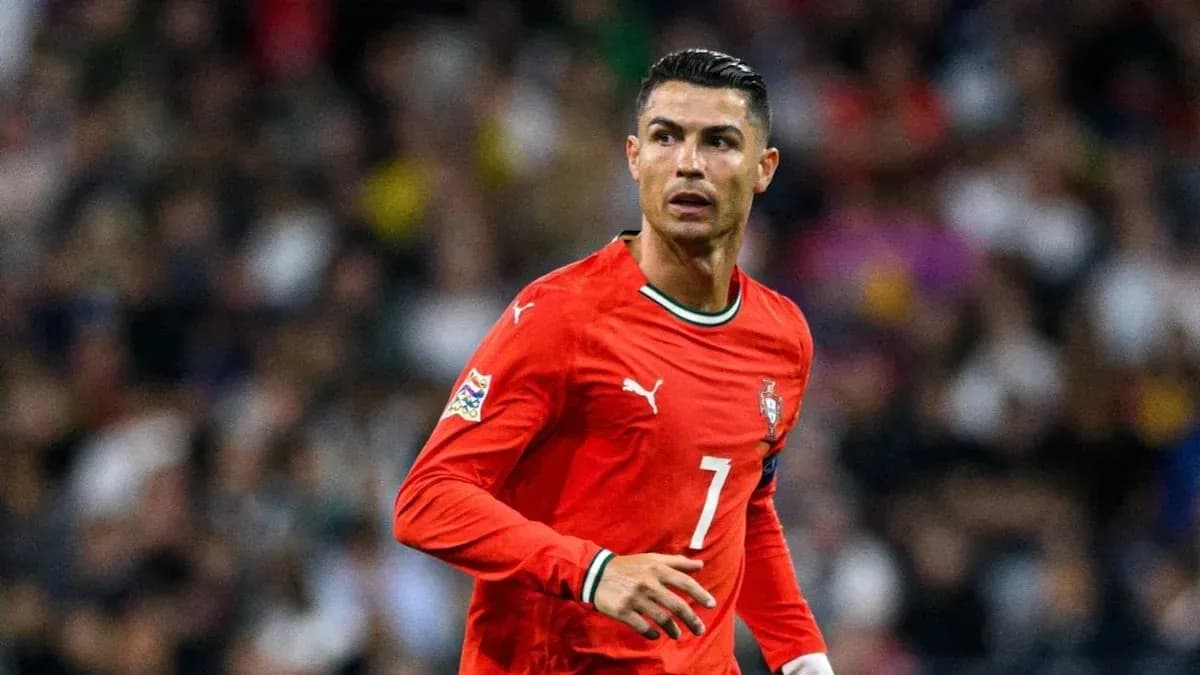
After 23 years, 234 caps and 146 goals, the country’s greatest footballer has retired from international duty, announcing the decision in a video message to Portuguese supporters on November 5. At 41, the captain who seemed to bend time and records to his will has chosen his moment. This time, there will be no comeback.
His numbers for Portugal stand alone. No man has played more senior internationals. No man has scored more goals for his country, according to FIFA. The statistics read like something out of a computer game, but the emotion in his farewell was unmistakably human.
“Time to pass it on to the future”
Ronaldo framed the announcement around a simple idea: the shirt must move on.
“Today the time has come to pass it on to the future,” he said of his national-team No. 7, in FIFA’s English translation of his message. The choice, he admitted, cut deep. It was driven by feeling as much as by the practical reality of age, miles in the legs and a squad already shifting into a new cycle.
He spoke directly to those who had lived his journey with him. Family first. The people who had accepted the absences, the training camps, the tournaments that swallowed summers and winters alike. Then teammates, coaches, doctors, physios, and the staff whose faces rarely make the photographs but who form the spine of any national setup.
Ronaldo lingered on one image: Portuguese fans scattered around the world, clinging to the flag in distant stadiums. He recalled scanning the stands during the anthem and seeing families wrapped in scarves and flags, those brief minutes when club loyalties, rivalries and differences dissolved into a single, shared identity. For him, those anthems were not routine; they were ritual.
His farewell did not touch every wound, but one recent scar hovered over the announcement.
A fractured end with Jorge Jesus
The break with Portugal did not happen in a single moment. It built, quietly at first, then publicly.
On September 27, Ronaldo sat on the bench and stayed there. Portugal beat Norway 2-1, and he remained an unused substitute, a detail confirmed in the Norwegian federation’s match record. Three days later, on September 30, he left the national camp, missing the following game against Denmark.
The fallout arrived a week later.
In an October 6 statement, Ronaldo accused coach Jorge Jesus of breaking promises about his role, including what he said was an assurance he would play against Norway. He had warmed up. He never got the call. Jesus rejected the idea that any agreement on playing time existed, as reported by Sky Sports.
The dispute spilled into the public, but Ronaldo tried to close his part of it. He apologized to teammates and supporters for walking out, accepting that he should not have left the camp. At that point, he insisted he was still available for selection, still willing to pull on the shirt.
The federation responded with a 30-day suspension and a €255 fine. By the time he recorded his farewell message, that ban had already been served. The bridge, though, had clearly changed.
On November 5, speaking to Canal 11, Jesus revealed he had asked Ronaldo to continue before naming his first Portugal squad, wanting the forward alongside him as the new era began. The coach conceded he now had to live with the decision. He also disclosed that a large photograph of Ronaldo would hang in the team’s auditorium, a permanent reminder to the younger generation of what the shirt can demand—and what it can give.
Records, trophies and a legacy that reshaped a nation
Ronaldo’s story with Portugal began in August 2003, when an 18-year-old winger replaced Luis Figo at halftime against Kazakhstan. One legend stepped off; another stepped on. At the time, it felt symbolic. In retrospect, it was historic.
From that debut grew a career that dragged Portugal into a different footballing universe. He captained the country to its first major trophy at Euro 2016, a night in Paris that rewrote the national psyche. Three years later came the Nations League title in 2019, followed by another Nations League triumph in 2025, trophies that confirmed Portugal as a force to be feared, not just admired.
His relationship with the World Cup never quite matched the fairy-tale scripts that followed him at club level, but even there the numbers speak loudly. He scored at six World Cups, finishing with 11 goals across those tournaments, including three at this year’s competition. His final World Cup appearance ended in a 1-0 defeat to Spain in the round of 16, a quiet exit for a player who so often dominated the global stage.
Yet the impact stretches far beyond medals and tallies. Ronaldo turned every Portugal match into a global event. He gave a small country a giant’s presence. Children in distant corners of the world wore Portugal shirts because of him, not because of a tournament, not because of a golden era, but because of a single player who made the shirt iconic.
Club career rolls on, but the anthem is over
This is not a full goodbye to football. Not yet.
Ronaldo will continue at Al Nassr in Saudi Arabia, still chasing one more impossible landmark: 1,000 professional goals. It is the kind of target only he would say out loud and only he could make sound plausible.
For Portugal, though, the Ronaldo era is over. The announcement arrived on the eve of Jorge Jesus naming his next squad, with Nations League fixtures against Denmark and Wales on the horizon. For the first time in more than two decades, a Portugal team will walk into a competitive game without the possibility of calling on Cristiano Ronaldo.
The federation has already promised a farewell tribute to its former captain. It will be emotional. It will be loud. It will be deserved.
What comes next belongs to others. The No. 7 shirt will pass to a new owner. The anthem will play, and different faces will scan the stands, searching for their own connection to the flag.
Ronaldo’s Portugal chapter closes here, not with another record or another goal, but with a choice: to leave as the standard, not the shadow.