Dejounte Murray Requests Trade from Pelicans Amid Frustration
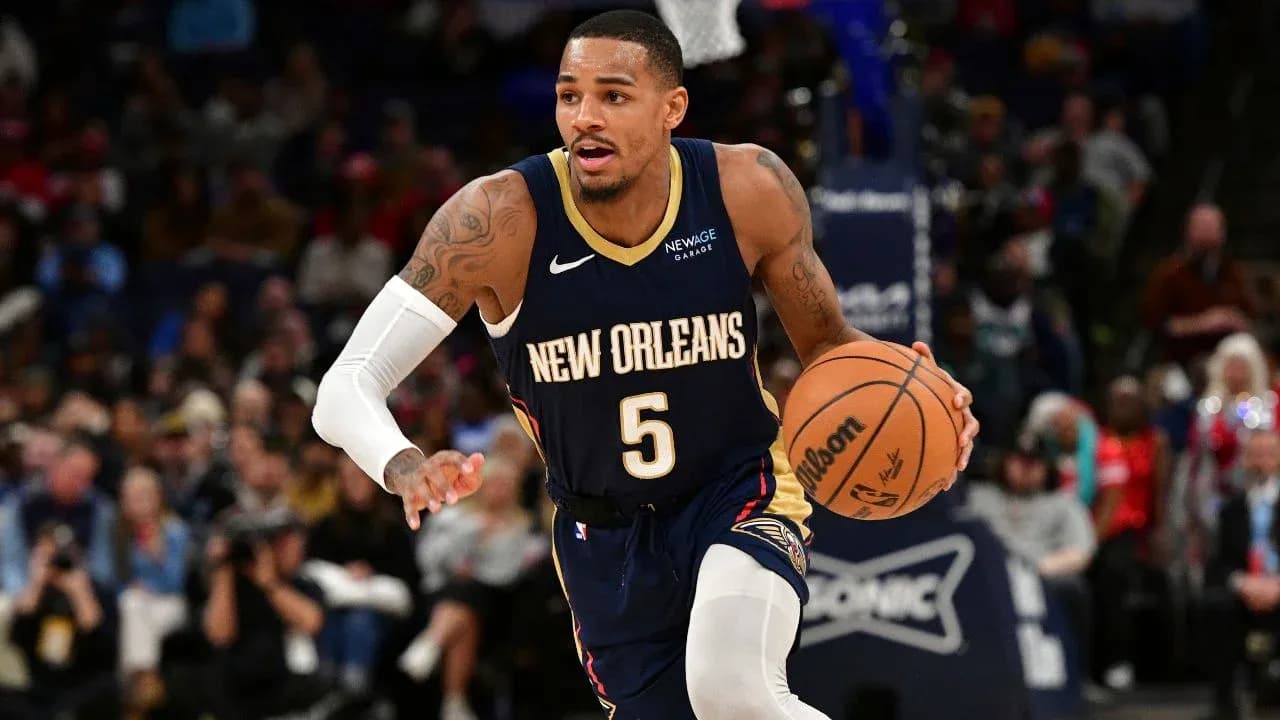
NEW ORLEANS — The Dejounte Murray era in New Orleans is ending with a whimper, not a roar.
On Friday, the Pelicans confirmed what had been simmering for weeks: their 30-year-old guard, frustrated and increasingly vocal about it, has asked out. The organization, in a clipped, carefully worded statement, made it clear it will now look to move him.
“Today, Dejounte Murray’s representatives informed us of his request to be traded,” the team said. “We will evaluate potential trade opportunities that are in the best interest of our organization.”
No grand confrontation. No face-to-face reckoning. Murray wasn’t even in the building.
While the Pelicans prepared to face the Memphis Grizzlies at the Smoothie King Center, Murray sat out with a left ankle sprain and stayed away entirely. Head coach Jamahl Mosley confirmed his absence pregame, another stark reminder of how far this marriage has drifted from the optimism of 2024.
From centerpiece to complication
When New Orleans swung big for Murray in June 2024, it felt like a statement of intent. David Griffin, then the Pelicans’ executive vice president of basketball operations, paid a premium: two first-round picks plus Dyson Daniels, Larry Nance Jr. and E.J. Liddell went to the Atlanta Hawks.
The vision was clear. Murray, an All-Star in 2022, would be the two-way guard who could ease the playmaking burden on Zion Williamson, bring edge at the point of attack, and steady an offense that too often lurched between brilliance and chaos.
On paper, it made sense. Murray arrived off a season in which he averaged 22.5 points, 6.4 assists and 5.3 rebounds per game. He was in his prime, on a significant contract but with the kind of versatility that front offices covet.
The reality never matched the blueprint.
Injuries, interruptions, and a stalled rhythm
Murray’s time in New Orleans never found a rhythm. It barely had a chance.
He broke his hand in the 2024 season opener, a brutal early blow that cost him a significant chunk of games and forced Mosley to improvise from the start. When Murray did return, flashes of the old All-Star surfaced, but never long enough to anchor a season.
Then came the real gut punch: a season-ending Achilles injury in January 2025. For a guard who relies on timing, burst and defensive agility, it was the kind of setback that can alter a career arc.
Across three seasons, the numbers tell the story of a stop-start tenure. Murray has appeared in just 54 games for the Pelicans, averaging 16.6 points, 6.6 assists and 5.9 rebounds. Respectable on the surface, but not the transformative presence New Orleans thought it was getting.
This season has underlined the disconnect. In nine games, Murray has averaged only 13.4 points, shooting 41.9 percent from the field. The ball stuck more often. The swagger that once defined his game flickered rather than burned.
Tension spills into public view
Frustration rarely stays behind closed doors in today’s NBA, and Murray’s didn’t.
On social media, the guard began firing off pointed messages that made his dissatisfaction impossible to ignore. When one online reporter highlighted that the Pelicans were 3-0 without him in the lineup, Murray shot back with a loaded response:
“From what’s going on INSIDE, this sounds like someone hit you to say this! THE ‘SABOTAGE’ IS REAL!”
It was a revealing choice of words. “Sabotage.” “Inside.” Not the language of a player who believes everyone is pulling in the same direction.
Those posts landed at a delicate moment. New Orleans is in the middle of a four-game losing streak, the kind of skid that already tests belief in a young season. Murray’s trade demand adds another layer of turbulence to a group still trying to define itself.
Mosley looks past the noise
Mosley, asked about a player wanting out while the team is sliding, didn’t bite on the drama. He steered the conversation back to the players who are available, and to standards he feels the group has recently abandoned.
“How well we play is very important to me, and making sure that we keep up that standard,” Mosley said. “That’s why it’s so glaring when we don’t, because I know what this team has shown during training camp, what it has shown during the preseason.
“The first couple games didn’t go on the win column, but the way we played, we did a lot of good things. … As the leader of this group, how we’ve been playing these last three games have not been a representation of this organization, the city, of the way we said we were going to play. That’s been my focus over this last day or so. How do we get back to that style of basketball that we know represents this organization the right way?”
His message was clear: the Pelicans can’t afford to let one player’s discontent define their identity, not with the season already wobbling.
The contract and the clock
The business side now looms large.
Murray is earning $32.8 million this season and holds a player option for $30.8 million next year. That figure, combined with his recent injuries and uneven form, complicates the market. He’s still talented, still capable of running an offense and guarding multiple positions, but any team calling New Orleans will weigh that salary against the risk.
The Pelicans, for their part, must decide what constitutes “the best interest of our organization.” Do they chase draft capital again, trying to reset around Williamson and the rest of the core? Do they look for immediate help to steady a season that threatens to slip away before it really begins?
What’s certain is that the bold gamble of 2024 has come full circle. New Orleans pushed its chips in for Dejounte Murray. Two years, two major injuries, a handful of flashes and a stream of social media barbs later, the franchise is back on the trade market — this time as a seller.
The experiment is over. The next move will say plenty about where the Pelicans truly believe their window lies.