Diego Maradona and the Birth of the Champions League Era
On a September night in 1987, Diego Maradona walked into the old European Cup and straight into a brick wall. His Napoli, carrying the weight of a city and the aura of the game’s greatest player, arrived at the Bernabéu to face La Quinta del Buitre’s Real Madrid. They left with a 2-0 defeat. The return at the San Paolo finished 1-1. Out in the first round. Gone almost before the competition had time to clear its throat.
Some defeats echo louder than others. This one rattled across the continent and straight into the office of Silvio Berlusconi. The AC Milan owner, who had built an empire on spectacle and control, did not intend to see one of his own heavyweights suffer the same fate. One of the favourites, dumped out before the serious money and glamour had even arrived? That was bad business.
So Berlusconi pushed a different vision: a European super league, a closed shop for the elite. The idea never formally landed, but the pressure did. Uefa blinked. Five years later, the European Cup had been reshaped and rebranded as the Champions League, the first big structural concession to the demands of power and television.
Even that, of course, only opened the door. Once the format bent to the richest clubs, it kept bending. First came multiple entrants from the biggest leagues. One became two, then three, then four. In some cases, we now stand at five. The principle was clear: the continent’s financial giants should not be left to the mercy of a bad night in September.
Now comes the Swiss model, the latest and most brazen expression of that logic. A sprawling league phase, more fixtures, more guaranteed dates between the superclubs, and far less early jeopardy. It is the Berlusconi rationale taken to its end point: ring-fence the product, protect the brands, stretch the calendar until it squeaks.
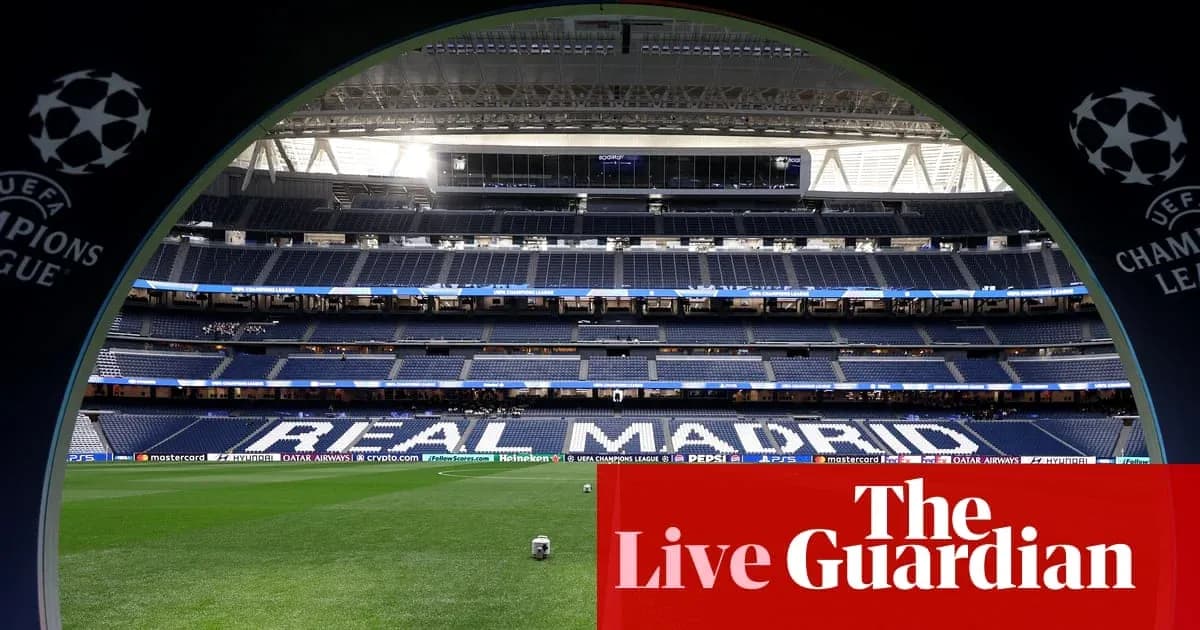
Gabriel Hanot, the French journalist who first imagined a pure, open continental competition, would surely be in despair at what his idea has become. The romance of knockout peril has been traded in for a schedule stuffed with premium content. Yet here we are, with little choice but to sit back and savour Real Madrid v Internazionale.
And what a fixture it remains. Even stripped of some of the old innocence, it crackles with intrigue. At Madrid, the expectation never dips. At Inter, the storylines are layered. José Mourinho, back under the harshest spotlight, walks into another of those nights that feel like a verdict on his current relevance. This is the latest last chance for a manager who once bent Europe to his will.
Across from him stands Cristian Chivu, once a loyal lieutenant, now a head coach entrusted with reviving the club where Mourinho delivered perhaps his most complete work. The dynamic is irresistible: mentor and former disciple, history and ambition colliding under the lights.
Elsewhere, the competition offers a different kind of thrill. Borussia Dortmund, still feeding off the energy of the Westfalen, bring with them one of the season’s freshest stories. Konstantinos Karetsas, just 18, has burst into their midfield with a composure and spark that make you look twice at the team sheet. Every touch feels like a glimpse of what he might become.
Villarreal stand in their way, awkward, technical, and dangerous enough to spoil any carefully scripted rise. The match might not shape the entire campaign, but it will tell us something about whether Dortmund’s latest prodigy can carry his early momentum into Europe’s biggest stage.
While that unfolds, other screens will flicker with parallel tension. Porto v Manchester City offers a clash of traditions and resources: a historic Portuguese force, expert in reinvention and player trading, against the modern superpower built on depth, detail and relentless standards. Lille v Real Betis brings its own promise of chaos and flair, two clubs capable of turning a routine group game into a frantic, end-to-end spectacle.
What does all of it mean in the broader scheme? In an era when formats swell and tables stretch, the answer grows murkier. The structure blurs. The stakes, at least in the early rounds, feel less sharp. Yet the magnetism of the football itself remains. Millions will tune in not for the architecture of the competition, but for the possibility that something unforgettable might happen in the next 90 minutes.
And while Europe’s elite trade blows, the domestic game keeps humming in the background. The League Cup, long the testing ground for squad players, academy hopefuls and managers under quiet pressure, kicks off at 7.45pm and 8pm BST. It will run alongside the Champions League’s 8pm drama, offering a different flavour of jeopardy: smaller crowds, shorter journeys, but careers and seasons still on the line.
So the evening stretches out: superclubs in curated confrontation, traditional cups fighting for relevance, and a new generation trying to elbow its way into the spotlight. The formats may change, the calendars may bloat, but the question lingers over nights like this: is the game still ours, or just another asset in someone else’s portfolio?