Draft Season Insights: Uncovering Value at Guard
The NBA regular season sits just over a month away, and fantasy draft rooms are already humming. This year, the sharpest edges aren’t at center or on the wing. They’re in the backcourt, where price and projected usage are badly out of sync and where last spring’s storylines are still clouding judgment.
Ignore the noise, and there’s real value to be had.
Garland Takes the Controls in Los Angeles
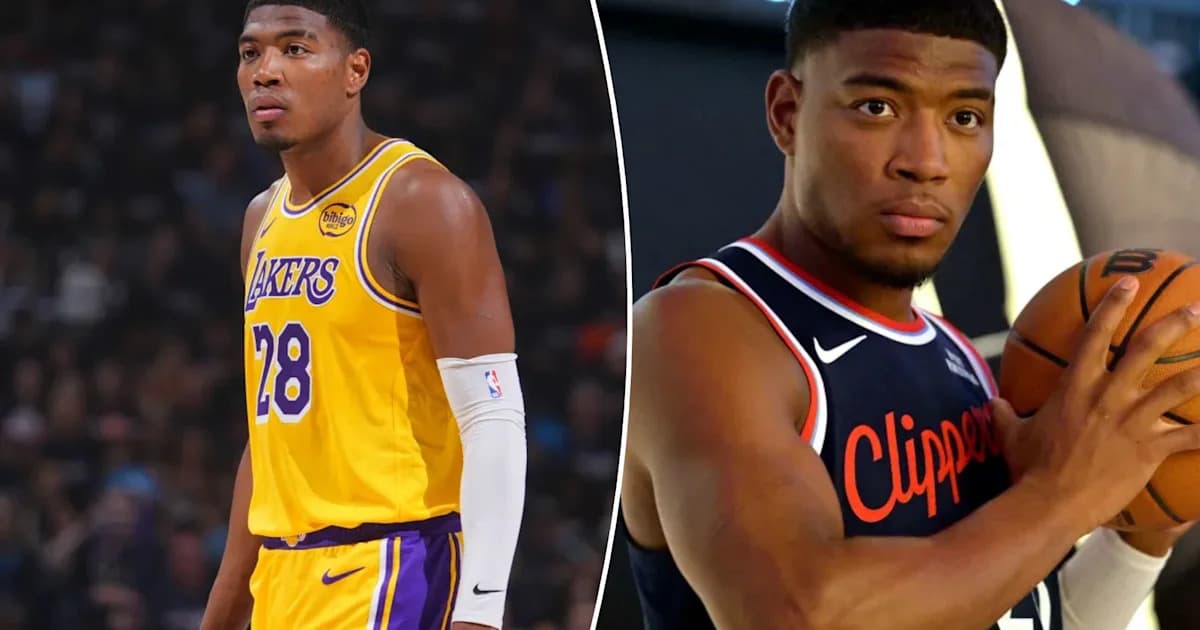
Darius Garland arrives in Los Angeles with the keys to a Clippers offense that looks nothing like the one we’ve grown used to. James Harden and Ivica Zubac were moved at last year’s deadline. Kawhi Leonard is expected to follow. What’s left is a franchise entering a new chapter, and a multi-time All-Star set up as the primary decision-maker.
The numbers already paint the picture of a fantasy engine. Over the last five seasons, Garland has averaged 20.1 points, 2.8 rebounds, 7.3 assists, 1.2 steals and 2.6 3-pointers in 33 minutes, while shooting 46% from the field, 39% from deep and 87% at the line. That’s a classic 9-cat anchor. Now give him more volume.
His work when Leonard sat last season hints at what’s coming: 27.5 points, 2.2 rebounds, 8.5 assists and 1.2 steals per 75 possessions on a 34% usage rate. That’s star-level control of an offense. In formats like High Score, where assists are worth two points, that kind of playmaking isn’t just helpful — it tilts matchups.
Dejounte Murray’s Second Act in New Orleans
Two years. Forty-five games. An Achilles tear that could have derailed a career. Dejounte Murray has lived through the worst of it, and by the end of last season he looked like the player fantasy managers once took inside the Top 25 without blinking.
Since 2021-22, Murray’s baseline has been elite: 20.7 points, 6.2 rebounds, 7.1 assists, 1.7 steals and 1.9 threes. The final 13 games of last season backed up the belief that he’s still that guy — 17 points, 5.6 rebounds, 6.6 assists and 1.7 steals in roughly 28 minutes a night. Essentially his five-year production in six fewer minutes.
New Orleans offers him a clear lane. Jeremiah Fears and Jordan Poole bring scoring, while Zion Williamson and Trey Murphy III demand defensive attention. Murray slots in as the connective tissue, the guard who organizes everything and punishes mistakes. Those 1.7 steals per game are gold in High Score formats, where they’re worth more than five points a night on their own.
He hasn’t turned 30 yet. Achilles recoveries look different now than they did a decade ago. The runway is there.
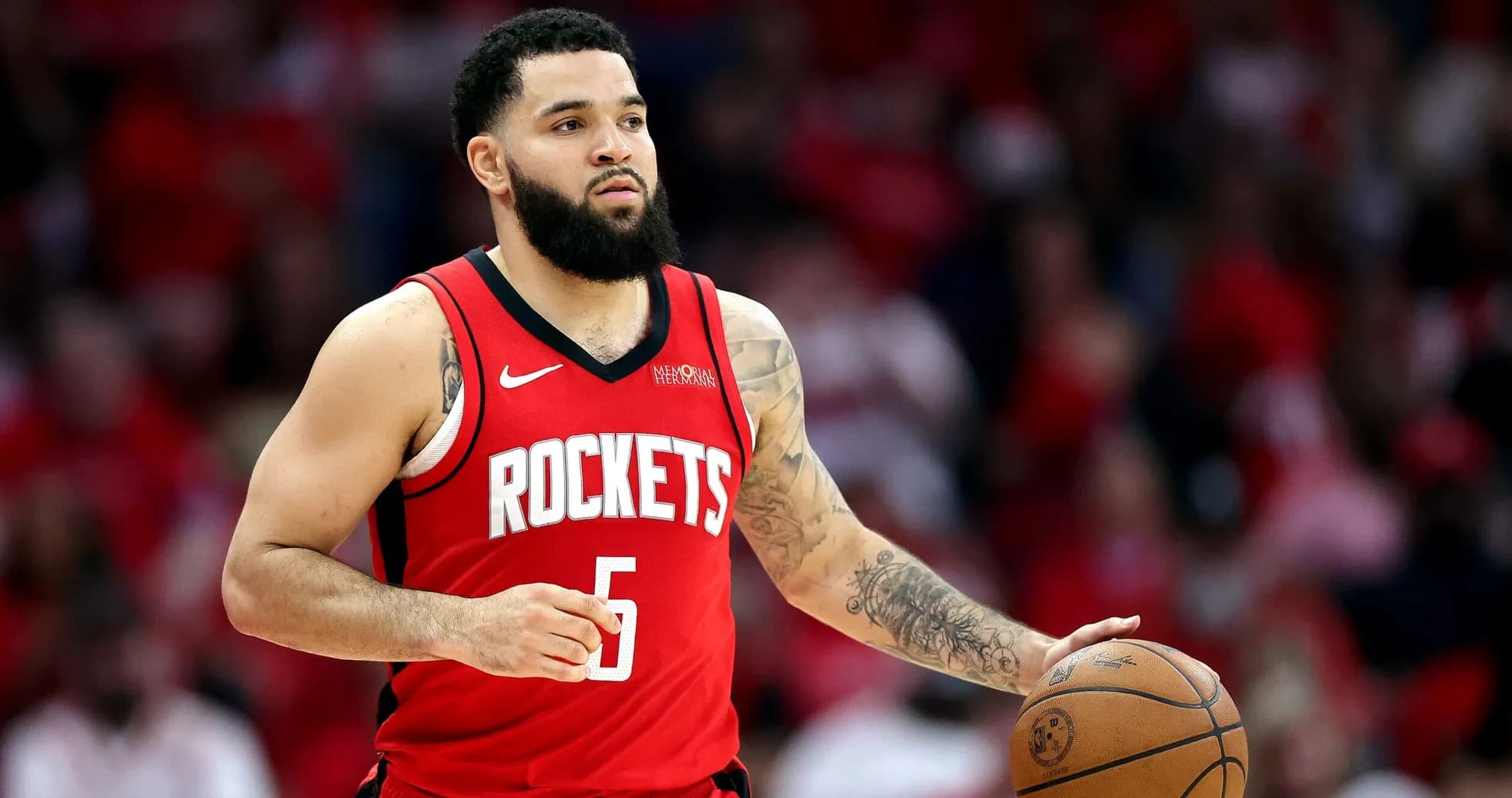
Fred VanVleet: Discount Workhorse in Houston
Fred VanVleet has lived most of his career inside the Top 50 of fantasy rankings. Now he’s sitting at the back of drafts with a 35-minute starting job waiting for him in Houston. That disconnect is where sharp managers make their money.
He tore his ACL in September 2025 and has reportedly returned looking fully healthy. The long view says you trust the track record: 18.1 points, 4.0 rebounds, 6.8 assists, 1.7 steals, 0.6 blocks and 3.1 threes over the last six seasons. That’s consistency, not a one-year spike.
Even if you only buy the two-year Rockets sample — 15.9 points, 3.8 rebounds, 6.9 assists, 1.5 steals and 0.6 blocks on solid shooting — the current cost is still soft. Houston’s postseason run showed exactly what they missed: a 32-year-old guard who calms possessions, gets teammates organized and hits big shots. The role is waiting. So are the minutes.
De’Aaron Fox: Buried by Narrative, Not by Numbers
De’Aaron Fox’s draft price tells the story of San Antonio’s spring more than it tells the story of Fox himself. Dylan Harper and Stephon Castle burst onto the playoff stage. Fox, playing through a significant ankle sprain, struggled to look like the blur he’s been for most of his career.
The market reacted. Maybe a little too strongly.
Even in a “down” season, Fox delivered 18.6 points, 3.8 rebounds, 6.2 assists and 1.2 steals. For a player sitting around pick 85, that’s already solid. But his previous six-year baseline — 24.3 points, 4.2 rebounds, 6.2 assists and 1.5 steals — suggests that’s closer to his floor than his ceiling when healthy.
Durability backs him up. He’s played at least 72 games in three of the last four seasons. In a High Score setup where only one game per week counts, Fox’s explosive nights — the 30-plus with dimes and steals — can swing an entire matchup. The ankle heals. The speed usually comes back. The discount won’t last forever.
Immanuel Quickley: Garland Profile, Toronto Price
Immanuel Quickley’s fantasy profile looks a lot like Darius Garland’s. The gap in cost — roughly 40 picks — comes down to perception of Toronto’s depth chart. The Raptors have more mouths to feed. They also have Scottie Barnes, and players like him tend to lift their point guards, not cap them.
Across two full seasons in Toronto, Quickley has averaged 16.6 points, 3.9 rebounds, 5.9 assists, 1.1 steals and 2.6 threes while shooting nearly 44% from the field, 38% from three and 84% at the line. He’s done all of that in just 30.6 minutes per game.
Now look at the rotation. Behind him, only Jamal Shead and Ja’Kobe Walter. Thirty minutes looks like his floor, not his ceiling. He’s appeared in at least 64 games in five of his six NBA seasons, giving him the kind of availability that matters over a long fantasy campaign. If Garland is priced as a star, Quickley is the same archetype at a fraction of the cost.
Scotty Pippen Jr. and the Open Door in Memphis
Memphis has a vacancy at point guard after trading Ja Morant. Scotty Pippen Jr. has been waiting for exactly this kind of opening — and every time the Grizzlies have handed him the job, he’s produced.
Across three seasons in Memphis, he’s averaged 10.6 points, 3.2 rebounds, 4.5 assists, 1.4 steals and 1.2 threes in 22 minutes. When he stepped in as a starter two seasons ago, filling in for Morant, those numbers climbed to 14.2 points, 4.5 rebounds and 5.7 assists over a 21-game stretch.
Last season, he appeared in just 10 games but finished the year in the starting lineup. That’s not a coincidence. It’s a coaching staff testing what it has before a summer of change. Past production, a natural fit on the roster and a 155 ADP combine to make Pippen one of the most underpriced guards on the board.
Keon Ellis: The Defensive Specialist Waiting to Break Out
Keon Ellis sits outside the Top 200 in most drafts, a name you scroll past unless you know exactly what you’re looking for. Brooklyn might change that.
The Nets head into the season with a wide-open guard rotation, and Ellis finally has a clear path to 30 minutes a night. That’s all he needs.
Across his career, he’s played just under 20 minutes per game and still managed 1.2 steals and 0.6 blocks. Those are elite defensive counting stats for a guard. Stretch that out with a real role, and you’re suddenly staring at a category specialist who becomes a weekly weapon. In High Score formats, where steals and blocks are worth three points each, Ellis doesn’t just fill out a roster — he attacks it from a different angle.
The board is set. The market is leaning on old narratives. Garland with the ball in his hands, Murray healthy, VanVleet ignored, Fox discounted, Quickley overlooked, Pippen Jr. and Ellis hiding in plain sight — these are the guards who can flip a fantasy season.
The question is simple: who’s willing to trust the numbers and step in before everyone else catches up?