Eintracht Frankfurt Backs Krösche Amid Power Struggle Rumors
For a few hours, it sounded as if Eintracht Frankfurt were preparing to saw off the man who has shaped their sporting direction for three years. A supposed showdown on 2 September, a supervisory board ready to discuss an early exit, a sporting chief suddenly on the brink.
Then came the pushback. Hard, coordinated, and from the very top.
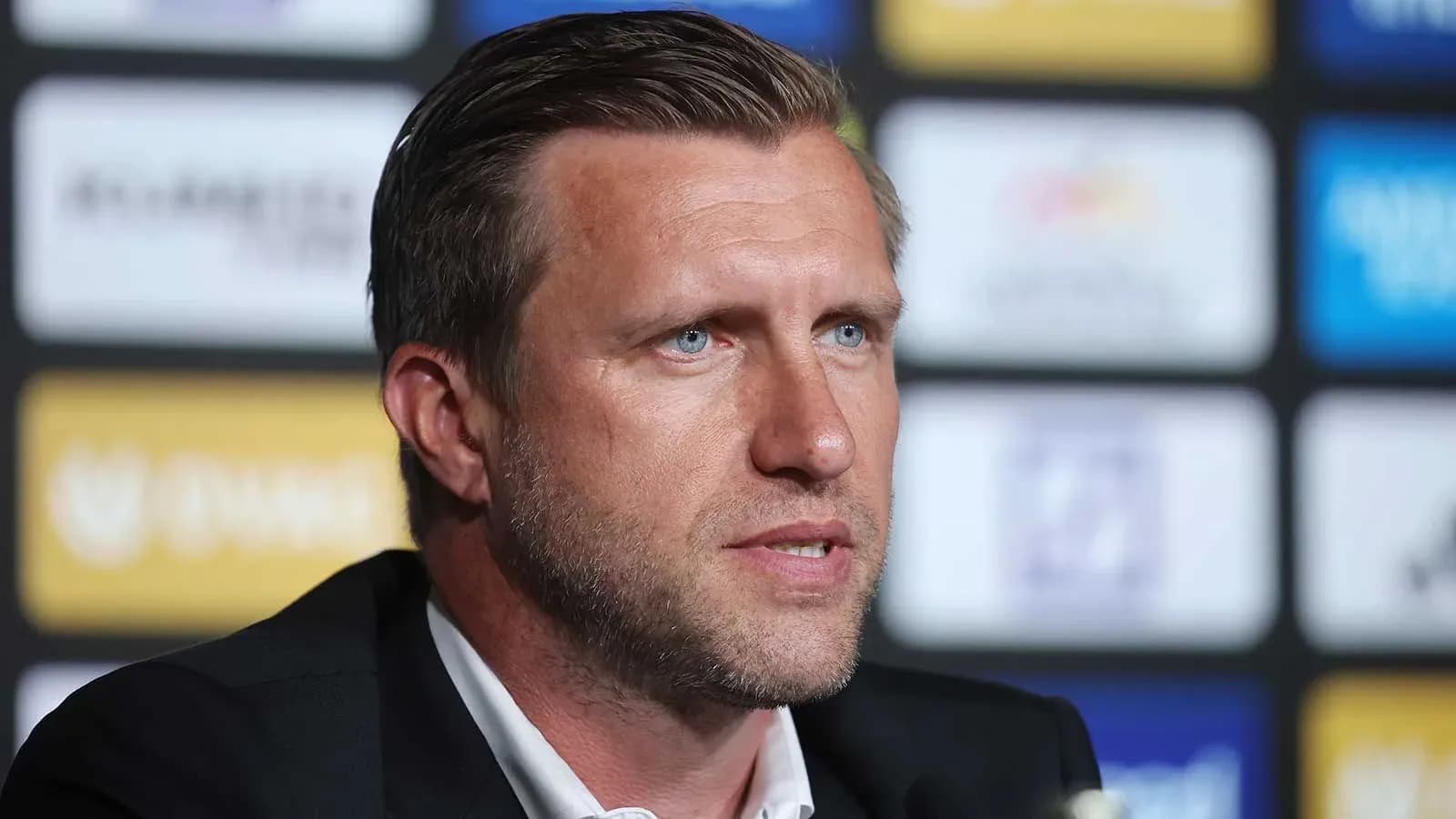
According to research by specialist magazine kicker, based on multiple conversations with figures in Eintracht’s upper hierarchy, neither Markus Krösche nor the club are working toward a separation this summer. Quite the opposite: the 45-year-old is said to enjoy “full backing” from the SGE supervisory board.
That version of events stands in stark contrast to the picture painted days earlier by Bild, which claimed the supervisory board meeting next Wednesday would address how to bring Krösche’s time in Frankfurt to a premature end.
Supervisory board chairman and club president Mathias Beck has now drawn a clear line.
He stressed the meeting is a long-planned, routine gathering that will review all summer topics, including sporting matters, but not a tribunal on Krösche. Beck pointed to the sporting director’s contract, which runs until 2028, his public commitment to Eintracht two months ago and his current role in the final stretch of the transfer window. On that basis, he sees “no reason” to speculate about Krösche’s future.
“Stink bombs” and vanities behind the scenes
Inside the club, kicker’s conversations revealed something close to bafflement over the rumours. An “ever-present surprise” is how one impression was described. It did not feel orchestrated, not like the usual softening-up process before a big decision.
The suspicion is different: “stink bombs” lobbed into the public arena to “stir up unrest”, driven by the “vanities” of certain individuals. The precise route by which Bild am Sonntag obtained its information remains “mysterious”, but the affair has exposed one uncomfortable truth. Not everyone at Eintracht seems to be pulling in the same direction right now.
On Sky90, Lothar Matthäus struck a similar chord on Sunday evening. The record Germany international spoke of something “being played behind the scenes” against Krösche, hinting that jealousy of his position and influence could be at work.
One alleged flashpoint has already been debunked. According to kicker, there has been no major falling-out between Krösche, who has carried the can for a turbulent and sluggish transfer period, and coach Adi Hütter. The Austrian is unhappy that key personnel decisions were only made around the start of the season, but talk of a serious bust-up is wide of the mark. Hütter did receive two of his preferred signings in goalkeeper Noah Atubolu and centre-back Lilian Brassier.
So the mood is tense, but not yet mutinous.
Murky window, big numbers
On the pitch, Eintracht’s season opened with a warning shot. A 3-1 lead at Union Berlin dissolved late into a 3-3 draw, two points spilled on the first matchday and a reminder of how fragile momentum can be.
Off the pitch, the window in Frankfurt remains wide open and full of moving parts.
There is still hope of another loan for Arnau Kalimuendo, who impressed in the second half of last season with six goals in 19 games while on loan from Nottingham. Kicker reports that Eintracht are working on bringing the forward back.
At the same time, the balance sheet could change dramatically in the final days. A move for Hugo Larsson to the Premier League might bring in up to €25 million. The midfielder recently travelled to London with the club’s blessing to negotiate with two interested sides, one of them Crystal Palace.
Jean-Matteo Bahoya was also expected to swell the coffers. His proposed switch to Hull City was set to bring in almost €20 million, only for the player himself to reject the deal, according to Sport1.
And then there is Ritsu Doan. A sale that was not originally on the agenda could yet go through in the closing hours. Multiple media outlets report that Al-Ittihad are pushing hard for the Japan international, with a move for around €18 million now considered likely.
Add those figures up and Eintracht could, in theory, clear more than €60 million in player sales. All of it unfolding while speculation about the man overseeing the strategy rages in the background.
Only weeks earlier, Krösche had already been at the centre of a very different story. AC Milan tried to lure him to Serie A, reportedly with a four-year offer worth €40 million. He turned it down in June, giving the Rossoneri a final rejection and staying in Frankfurt on a significantly less lucrative package.
Now, instead of a glamour move, he is fighting noise at home.
Riera, the first real dent in Krösche’s armour
Until last season, Krösche’s standing at Eintracht bordered on untouchable. His reputation rested on a series of shrewd squad builds and lucrative exits that kept the club competitive and ambitious.
Then came Albert Riera.
After the dismissal of Dino Toppmöller, Krösche pushed through the appointment of the Spaniard. It proved a misjudgement of rare proportions. Riera clashed with fans and players, results sagged, and the experiment collapsed after only 14 matches. Eintracht limped to eighth place.
The consequence cut deep: for the first time since Krösche’s arrival in 2021, Eintracht Frankfurt will not play in Europe this season. The first big stain on his record. The first time serious internal and external criticism stuck.
Against that backdrop, any wobble in the transfer market or stuttering start to the campaign was always going to feel louder. The current rumours have simply poured petrol on that fire.
Krösche himself is refusing to fan the flames. After the draw in Berlin, he shut down questions about his own future. “We’re talking about football,” he said, and when pressed again, asked to “leave it at that”.
For now, the official line is unity and continuity. The sporting director remains in place, the supervisory board stands behind him, and the transfer window still offers the chance to reshape both squad and mood.
The real test comes later: when the window closes, the dust settles, and Eintracht’s season starts to tell the truth about whether this is just background noise – or the opening act of a power struggle that will define the club’s next few years.