
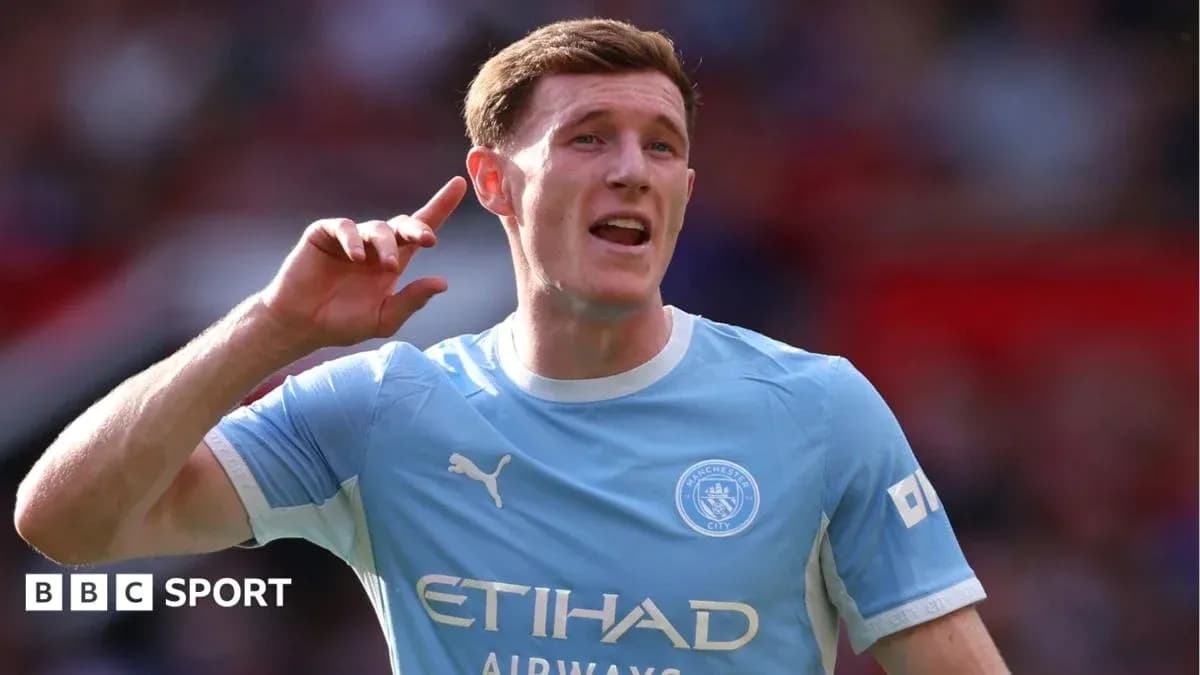
Elliot Anderson: From Nottingham Forest to Manchester City's Midfield Maestro
Elliot Anderson walks back into the City Ground on Saturday as the £116m midfielder who outgrew Nottingham Forest – and as the man Manchester City believe can run English football for the next decade.
The journey has been rapid. Almost violent in its acceleration. Two seasons of driving Forest’s survival bids from midfield, a World Cup where he became a pillar for Thomas Tuchel’s England, and then the call from the Etihad. From “one to watch” to “one you build around” in barely 24 months.
Now comes the return.
From Forest heartbeat to City centrepiece
At Forest, Anderson wasn’t just busy. He was everywhere.
Last season he topped Premier League charts for touches, possession won, duels contested and fouls drawn. Those numbers came in a side that chopped through four managers and finished only five points clear of relegation. In a team clinging on, he played like someone from a different weight class.
That was why Manchester United and Arsenal circled. City didn’t circle. They pounced.
Enzo Maresca saw a player who could do the work of two midfielders. Anderson’s tireless running, his ability to take the ball under pressure, to nick it back, to drag his team 20 yards up the pitch – all of it screamed “City profile” with a twist of controlled chaos.
He has effectively replaced both Bernardo Silva and Rodri in Maresca’s evolving structure. That is not a gentle introduction. That is being dropped straight into the deep end of a team that won two trophies last season and expects to go again.
European football analyst Guillem Balague revealed on BBC’s Match of the Day that he had asked Maresca in the summer whether City might still move for Bournemouth’s Alex Scott or Crystal Palace’s Adam Wharton. The answer was blunt.
“No,” came the reply, before the Italian added: “Anderson is going to become the key player for England, not just City.”
That is the level of faith.
Elite numbers, different role
Has he lived up to the noise? Statistically, he is not bullying the league in quite the same way as he did at Forest. Context matters.
At City, Anderson operates as a deep-lying number six, the pivot around which everything turns. The job is less about charging into the final third and more about dictating tempo, locking down transitions and threading passes through crowded midfields.
The output remains ferocious.
He has drawn more fouls (28) than any other player in the division. Only one player has won more duels (he sits second on 66). He ranks third for successful passes (610) and for touches (851). In a side packed with technicians, he is still constantly on the ball, constantly involved.
Look closer and his passing becomes even more telling. Only Tottenham’s Jan Paul van Hecke and Arsenal’s Declan Rice have played more successful passes in the opposition half and more line-breaking passes than Anderson – and the City midfielder has logged at least 66 minutes fewer than both.
This is not a passenger in a super-team. This is one of its primary engines.
The goals and assists column looks modest: one goal and two assists in 14 games. But again, the role explains plenty. He sits deepest, often behind the play, the man who starts moves rather than finishes them. On Wednesday, that deeper craft still told on the big stage, when he set up Erling Haaland’s winner against RB Leipzig in the Champions League.
“He has been amazing,” Haaland said afterwards. “He has had an amazing start to his City career and that is what you expect. You have to come straight in and perform.
“It is not easy to come in, you need to adapt and new players and a new coach, so he has been impressive. Respect.”
The respect is earned, not gifted.
Steel behind the talent
Watch Anderson around the squad and a picture emerges that goes beyond numbers.
In Tuesday’s open training session before the Leipzig trip, some City players strolled out in small groups, chatting, laughing, loosening up. Anderson came out alone. Ball at his feet. Head down. Kick-ups with a kind of quiet intensity that suggested he was already in the game.
During one group drill – a slalom run with the ball and a finish into a mini net – he stepped up first. He finished first as well, judged the winner of the exercise. Small moment, but telling. He wants to lead, even in training.
Maresca has quickly tuned into that mentality.
“Knowing him now, he is a guy who wants to learn every day and we sat with him with video [analysis],” the City manager told BBC Sport. “He wants to understand things, he wants to learn and improve and for a manager it's a dream because you know that he wants to learn and you can do different things.”
That hunger is crucial. Because for all his dominance at Forest, life as City’s holding midfielder demands a different kind of discipline.
Pep Guardiola once summed up Rodri’s early struggles in the role with brutal clarity. “Last season he moved too much,” Guardiola said in 2021. “The holding midfielder has to be there, don't move, be there.” Rodri learned, refined his positioning, and by 2024 he had the Ballon d’Or in his hands.
City hope Anderson can follow a similar curve, only quicker.
Learning the art of stillness
Maresca has already experimented to help him along. Ayyoub Bouaddi has been trialled alongside Anderson in midfield, particularly in games where Anderson steps out to press higher – as seen against PSG. When he vacates that central pocket, a second defensive midfielder drops in to protect the space he leaves behind.
It is a temporary safety net while he sharpens the positional instincts that define the very best number sixes. The aggression is there, the reading of the game too. The next step is knowing when not to go, when to hold, when to become the calm eye of the storm.
City can live with the bumps along the way. Because the ceiling is obvious, and his debut season has already started better than Rodri’s did in 2020.
A bittersweet homecoming
Back at the City Ground, they know exactly what they lost.
Forest supporter Ellie Molloson told BBC Sport: “I know the stadium will be ringing with ‘Geordie Maradona’.
“It will be bittersweet because we miss him, but we are quite proud of just how fantastic a player he is.”
Few Forest fans begrudge him the “whopping move”. They watched him almost single-handedly drag their midfield into Premier League respectability, then saw him graduate to England and Manchester City. There is pain, of course. But there is pride too.
“The way Anderson reads the game, the way he dominates midfield, he is such an intelligent football player and he is so young, there is still so much more to come from him,” Molloson added.
“He is a leader on the pitch and I just think he is phenomenal. I think Forest fans would definitely have him back in a heartbeat.”
They will not get him back. Not now. Not with City convinced they have secured the long-term heir to Rodri and, perhaps, the heartbeat of England’s midfield.
So the question as Anderson steps out onto familiar turf is no longer whether he can live up to the hype of that £116m fee. The early evidence suggests he already is.
The real intrigue lies elsewhere: if this is just the beginning, what will he look like when he truly masters the art of standing still at the very centre of the game?





