Empowering Girls in Northern Nigeria Through Basketball
Abuja, Nigeria – In Kano State, where dusty courts sit behind school walls and boys usually claim the space, Khamila Sani Ibrahim learned to play basketball in the shadows.
She timed her training around her grandparents’ routines, sneaking out when expectations at home briefly loosened their grip.
“It is very hard for me to train in basketball,” Ibrahim said. “I only go out to play when they are not around, or I tell them that I’m going to visit my friends, and from there I go to the court.”
In much of northern Nigeria, the message to girls has long been clear: football and basketball are for the boys. Courts are scarce. Equipment is basic. Coaching is limited. Funding is almost non-existent. For girls, competitive games are a luxury, not a given.
Yet a quiet shift is under way.
A new lane opens
Grassroots To Greatness (G2G), a female-focused sports initiative, is carving out space where there was none, offering girls structured training, competition and, just as crucially, visibility.
The project is the brainchild of youth sports advocate Jawahir Bello, who grew tired of watching girls sit on the sidelines while tournaments and talent programmes passed them by.
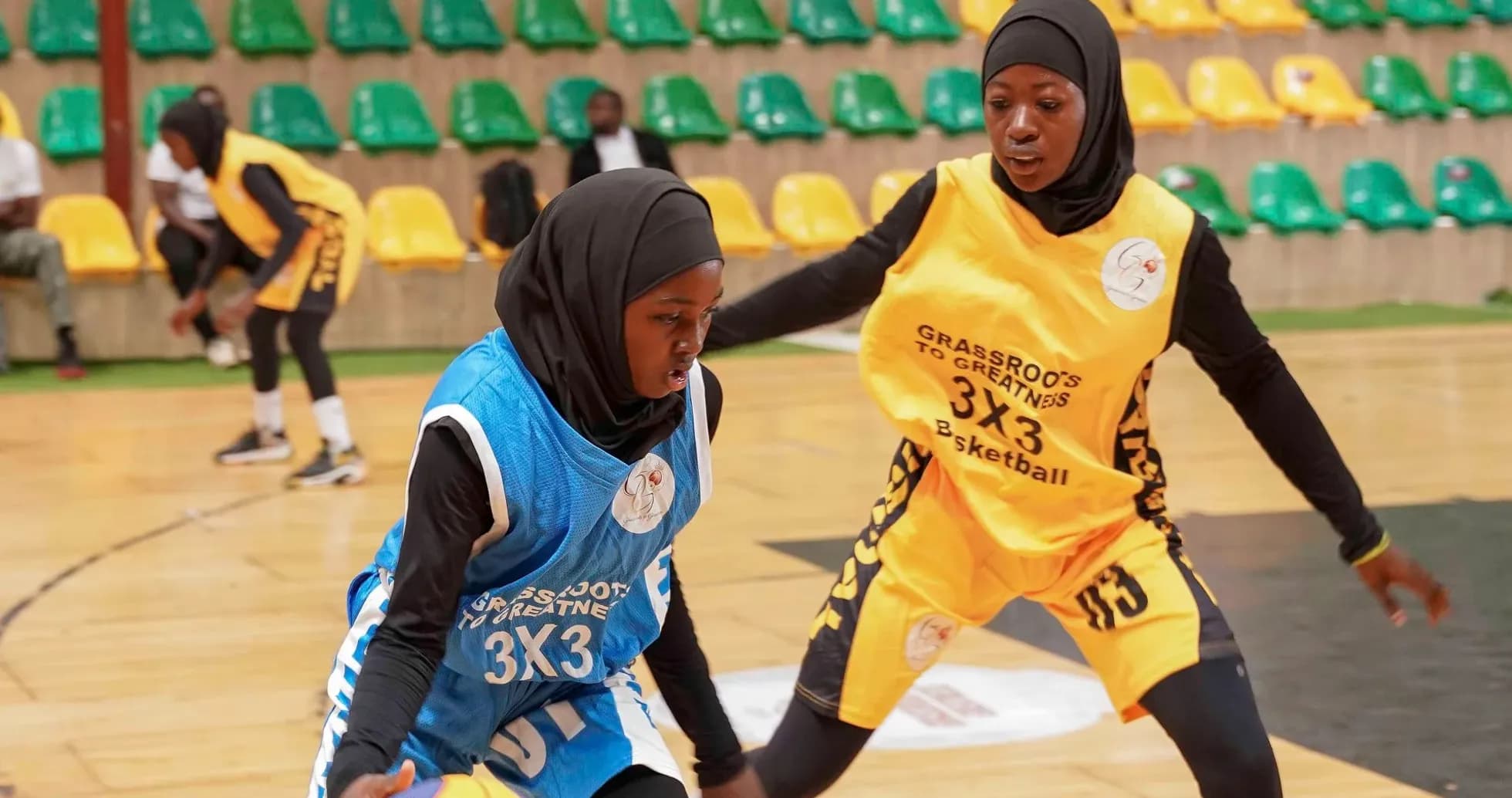
At G2G events, the difference is obvious before a ball is tipped. Players run out in custom hijabs, long sports vests and athletic tights. The dress code is not an afterthought; it is the foundation.
“Our core value is about participating in sports without doing anything that goes against our cultural values or our identity as Muslims,” Bello told Al Jazeera. “Whether you put on a hijab or innerwear under your jersey, modesty is key. You come out modest, decent and fully covered.”
She expected pushback when she launched female-only tournaments and community training sessions. Instead, she found something else: local leaders willing to listen, parents willing to watch, and communities ready to test a new idea of what sport can look like for girls.
To reach the girls who rarely appear on official talent pathways, G2G works directly with grassroots coaches already running informal teams in neighbourhoods and schools. The trust is there. The challenge is turning that trust into opportunity.
A tournament that feels different
When Ibrahim pulled on a Kano State jersey at a multi-state G2G tournament featuring female players from up to nine states, she stepped into a world that felt unfamiliar in the best way.
No boys taking over the court. No dismissive glances when she picked up the ball. No sense that she was an extra.
“What G2G did for us was incredible,” she said. “They provided jerseys, custom hijabs, basketballs, cover for our transport and even financial stipends for all the teams, regardless of who won or lost. It made us feel seen and valued.”
On the other side of the country, in Abuja, 11-year-old schoolyard games were the starting point for another player, Fatima Diouf. She joined the G2G programme in search of tougher opponents and a higher standard.
Her team did not reach the finals. That did not matter as much as what she took away.
“I have learned a lot beyond just basketball. I learned teamwork, confidence, discipline and how to keep improving,” Fatima told Al Jazeera.
The scorelines faded. The lessons did not.
Beyond the baseline
The hardest battles for these girls are often fought away from the court.
Ibrahim still wrestles with time and expectations. Training sessions compete with domestic chores and schoolwork. Male players question whether girls can keep up. Self-doubt waits at the edge of every missed shot.
Yet the presence of coaches who understand the cultural and social pressures makes a difference.
Mansur Abdullahi, assistant coach of Nigeria’s U-20 women’s national football team, the Falconets, sees community-led projects like G2G as vital to building a bridge between tradition and ambition.
“Official sports bodies have big structures, but local groups provide the actual trust and cultural understanding,” he said. “So it’s only through community-led initiatives that more professional teams will understand what’s acceptable for girls and boys and how to frame sports so it fits the existing values instead of clashing with them.”
The big federations set the rules and run the leagues. The grassroots programmes convince families that letting a daughter lace up her trainers is not a betrayal of who they are.
Dreams that stretch beyond Nigeria
For many of the girls, these tournaments are more than a weekend event. They are a test, a showcase, a glimpse of what might be possible.
Before G2G, Ibrahim’s father worried that competitive sport might pull his daughter away from family standards. Then he came to watch. He saw the hijabs, the long vests, the structured environment. The concern began to give way to pride.
From that moment, she was no longer sneaking out to play. She was being driven to games.
“I want to secure a college sports scholarship in the United States and eventually turn professional. More than that, I want other Muslim girls across northern Nigeria to see that sports build your health, strength, and confidence, and that nothing should hold you back from chasing your dreams,” Ibrahim told Al Jazeera.
Diouf, watching the network of coaches, organisers and stakeholders at the tournament, started to think beyond Abuja. She could picture herself playing in other African countries, wearing her colours on courts far from home.
The ambition is contagious.
Keeping identity, claiming space
For Bello and G2G, the mission is not simply to run female-only tournaments and walk away. The aim is to rewrite what participation looks like for girls who have been told that the court is not their place.
“You can keep your identity, stay covered and still achieve something in life,” Bello said.
In northern Nigeria, that statement is as radical as any slam dunk. The girls are not just fighting for points on a scoreboard. They are fighting for the right to belong on the court at all.
The question now is not whether they can play. It is how far this new generation, grounded in its culture and unafraid to compete, can go once the doors stay open.