Ernest Udeh Jr.'s Journey to the Cavaliers: A Traditional Big Man's Role
Ernest Udeh Jr. has taken the long way to Cleveland.
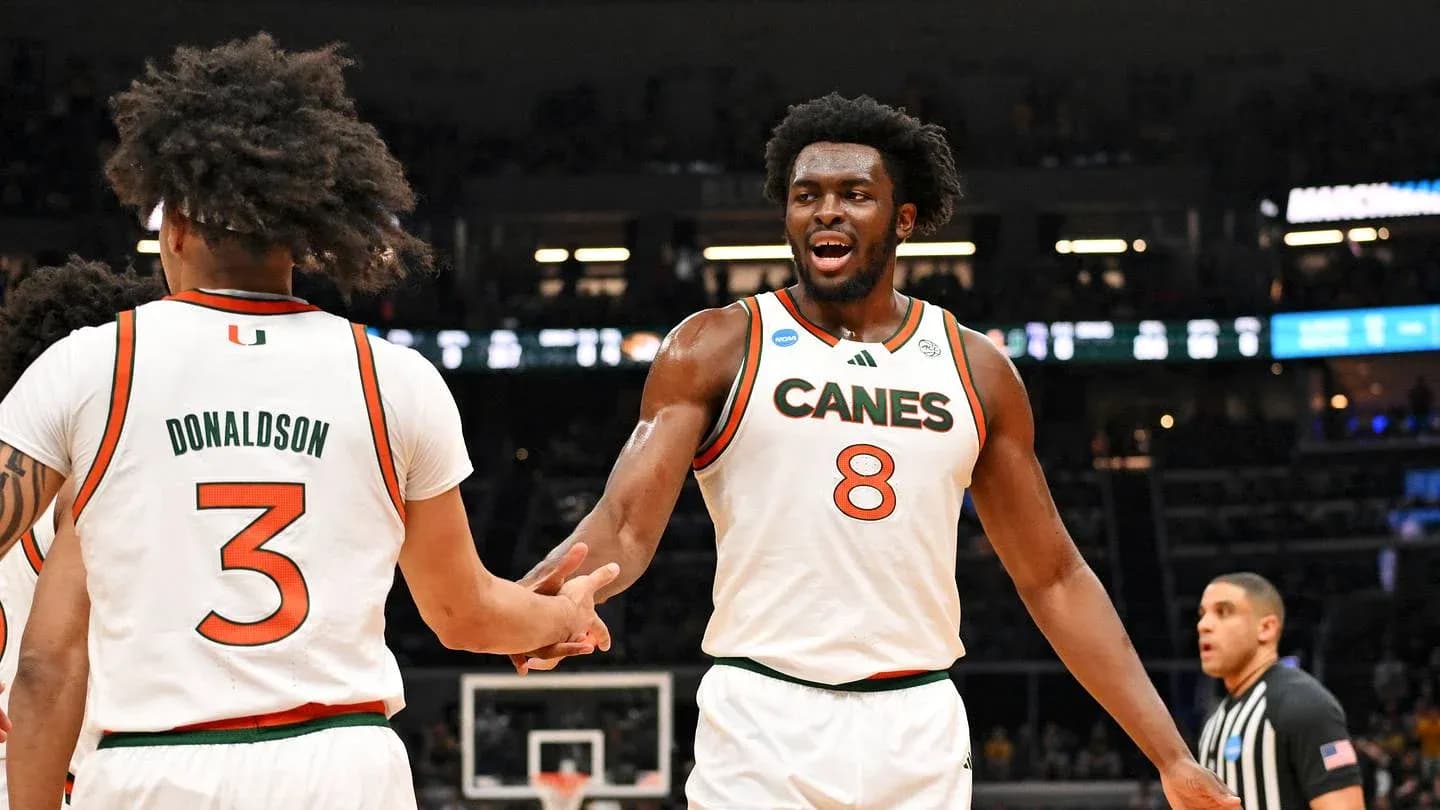
Three schools in four years, a final stop at Miami (FL) in 2025-26, a modest NCAA Tournament run, undrafted, then a two-way deal with the Cavaliers. It’s the kind of path that usually ends quietly on a training camp cut list.
His hasn’t. Not yet.
A strong Summer League in Las Vegas turned a flyer into something more serious. The 22-year-old didn’t light up the scoring column, but he didn’t have to. Cleveland wasn’t looking for a stretch five or a pick-and-pop project. They were looking for an old-school big man who could survive in a modern game. Udeh has at least made them stop and think about giving him a standard NBA deal for 2026-27.
A throwback in a spread-out league
Udeh is unapologetically traditional.
He’s not going to run an offense from the elbow or float to the corner for threes. He doesn’t need the ball on the block. His job is simple and brutal: live at the rim, finish everything, and make opponents regret coming inside.
At Miami, he averaged just six points per game as a senior. In Summer League, that dipped to four. On paper, that’s background noise. On the floor, it looked different. When he did touch the ball near the basket, he finished with force—lobs, dump-offs, put-backs. No finesse, no wasted motion, just quick catches and violent dunks that put defenders on posters and on alert.
The real story sits in the other columns.
Udeh pulled down nine rebounds per game in college over 28 minutes a night. Stretch that to a per-36-minute clip at the NBA level and you’re staring at a double-digit rebounder. He hunts the ball off the glass, and that travels in any system, any era.
Then there’s the rim protection.
In Vegas, Udeh averaged 2.8 blocks per game, turning the paint into his own testing ground. Timing, length, and a willingness to challenge everything made him a problem. At Miami, he posted 1.4 blocks per game across the full season, a solid number that hinted at more. Summer League confirmed it: this is a big man who can anchor a defense at the G-League level from day one and potentially more down the line.
Cleveland doesn’t have a deep center rotation behind Thomas Bryant right now. That matters. If there’s a lane for Udeh to climb from a two-way deal into a standard contract, it starts with that simple depth chart reality.
Value, flexibility, and a familiar blueprint
The Cavaliers’ front office faces a straightforward question over the next stretch of the offseason: spend on a veteran big, or lean into a cheaper, developmental option they already know?
With Udeh on a two-way, Cleveland can have him active for up to 50 regular season games. The timing works in their favor. The G-League schedule starts later than the NBA’s, which means they can open the season with Ernest Udeh Jr., Tristan Enaruna, and Riley Minix available while still preserving some of that two-way flexibility for later.
If they decide Udeh has earned a standard deal, the math gets even more interesting. Upgrading him would cost less than bringing in a veteran on a minimum contract. For a team trying to squeeze value out of every roster spot, that’s not a small detail. It’s a potential cost-saving move that also rewards internal development.
Cleveland has walked this road before.
Dean Wade, Lamar Stevens, Craig Porter Jr., Nae’Qwan Tomlin—each of them turned a two-way opportunity into a standard deal once the season was already underway. None of those moves were rushed. They were responses to need, performance, and fit as the year unfolded.
Udeh feels like the next candidate in that line.
He won’t sell jerseys or headline highlight reels. What he offers is more subtle but just as valuable: rim running, glass cleaning, shot blocking, and a willingness to do the dirty work behind established veterans. On a roster that could use another big body behind Bryant, that profile has weight.
The Cavaliers don’t have to decide today. They can let the season breathe, see how Udeh handles the G-League grind, monitor his minutes when he’s called up, and judge whether his Summer League flashes hold against better competition.
But if he keeps erasing shots, swallowing rebounds, and punishing the rim the way he has so far, the question won’t be whether he belongs on an NBA roster.
It will be how long Cleveland can afford to keep him on a two-way.