Fantasy Basketball Forward Risers and Sleepers for 2026-27
The forward pool in fantasy basketball just changed shape.
LeBron James is out of Los Angeles. Giannis Antetokounmpo has flipped conferences and uniforms. Rotations have been torn up and redrawn, and the 2026-27 forward class is suddenly littered with opportunity. That’s where fantasy managers win drafts — in the gaps left behind by departing stars, on teams scrambling to redefine who gets the ball and when.
In Yahoo’s High Score format, those ripples are even more pronounced. Usage, minutes and defensive activity carry heavy weight. Several forwards now walk into bigger roles than their ADPs suggest, with a handful lurking outside the top 100 who could crash the top-75 conversation if things break right.
Forward Risers
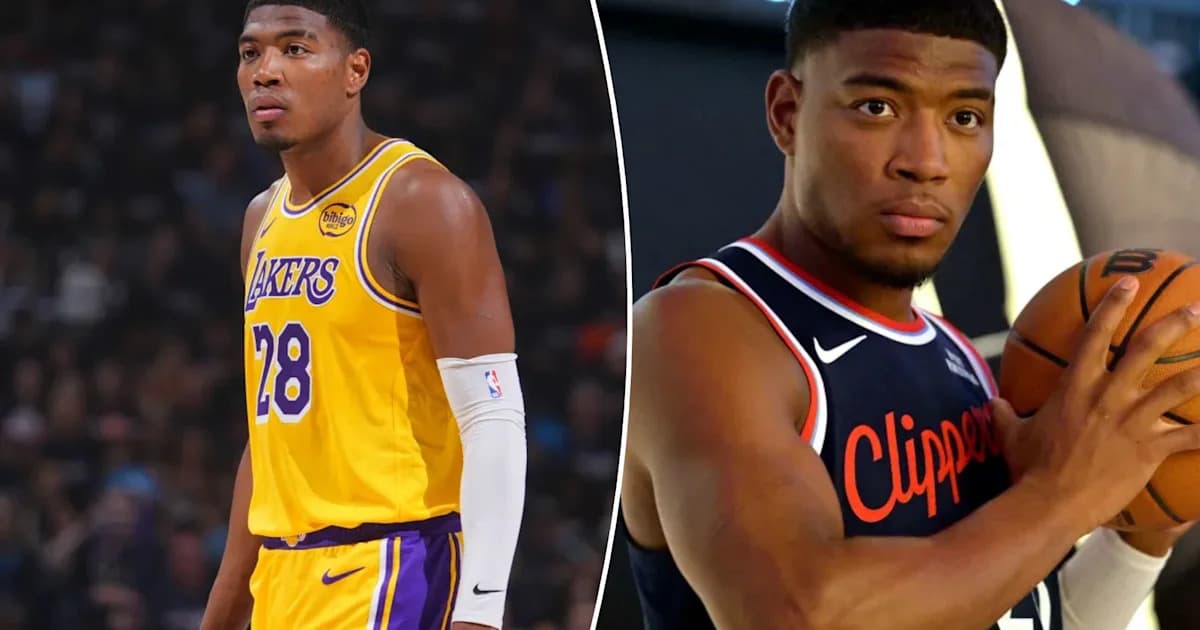
Naz Reid, Charlotte Hornets
Naz Reid has been waiting for this kind of runway.
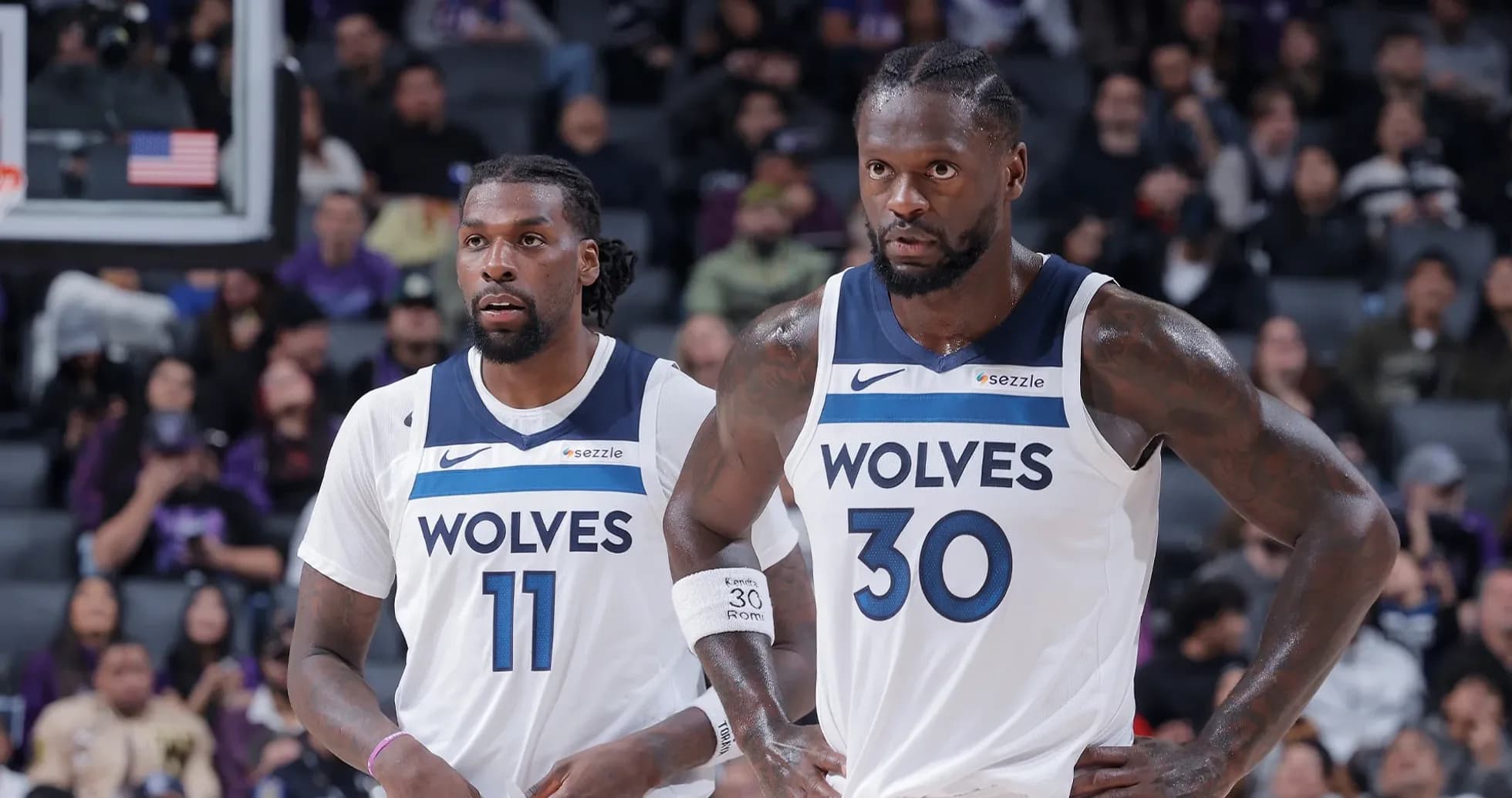
In Minnesota, the money said “core piece,” but the depth chart said “luxury.” With Rudy Gobert anchoring the middle and Julius Randle demanding touches, Reid’s ceiling stayed capped at 26 minutes per game last season. He still churned out 13.6 points, 6.2 rebounds and 2.2 assists in that limited role.
Charlotte changes everything.
The Hornets made size a priority this summer and then watched Miles Bridges walk, taking a chunk of frontcourt usage with him. Reid steps into a roster that needs his scoring, his stretch range and his activity on both ends. Thirty minutes a night is no stretch. Thirty-plus is on the table.
His track record as a starter tells the story: across 77 starts, Reid has averaged 15.5 points, 7.1 boards, 2.0 assists, 1.8 threes, 1.1 steals and 1.2 blocks. In Yahoo High Score, that profile lands around 33.5 points per game — before you even bake in the potential bump in volume and responsibility in Charlotte.
The key? That rare steals-and-blocks blend. High Score leans into defensive counting stats, and Reid’s ability to chip in across the board gives him explosive nights when the shot is falling. With an ADP of 65, he isn’t a secret, but he still looks underpriced for a big who can pop into the 40s on any given night.
This is the first time Reid walks into camp as a clear candidate for 30 minutes and a central role. Fantasy managers shouldn’t wait to see how it looks.
Julius Randle, Brooklyn Nets
The Timberwolves didn’t just clear a lane for Reid. They shipped out Julius Randle and, in doing so, handed him back the kind of offensive canvas he once enjoyed in New York.
Brooklyn is rebuilding its identity around Michael Porter Jr. and a youth movement headlined by rookie guard Mikel Brown Jr. Someone has to steady the offense. Randle has done that job before — and done it at volume.
In 2022-23 with the Knicks, he averaged 25.1 points, 10 rebounds and 4.1 assists on a 29.5% usage rate. Minnesota never let him get close to that level of control, capping him at 26.5% usage. In Brooklyn, with fewer established creators, that New York version of Randle isn’t just a memory. It’s a blueprint.
That 2022-23 stat line translates to roughly 43 High Score points per night before you even account for steals and blocks. In a format where only your best game of the week counts, a forward capable of dropping a 30-15-6 line turns into a weekly sledgehammer. You don’t need perfection — you need spikes. Randle lives in that territory when the offense runs through him.
Brooklyn will ask him to carry possessions, bully mismatches and create late-clock looks. Fantasy managers should treat him like the high-usage engine he’s been every time a team hands him the keys.
Andrew Wiggins, Miami Heat
Miami’s identity shifted the moment Antetokounmpo arrived.
Tyler Herro and a chunk of the Heat’s young depth went to Milwaukee, leaving Erik Spoelstra with a stripped-down rotation built around Giannis, Bam Adebayo and a mix of role players. Davion Mitchell brings control and defense at the point. Tim Hardaway Jr. and Klay Thompson stretch the floor.
That structure leaves one obvious question: who becomes the third scorer?
Andrew Wiggins walks straight into that vacancy. Last season, even on a restrained 19.4% usage rate, he delivered 15.4 points, 4.8 rebounds, 2.7 assists, 1.1 steals and 1.0 blocks — about 32 High Score points per game. Quietly efficient. Quietly valuable.
Across his career, Wiggins has typically hovered above that usage level. He cleared 20.9% every season before last, and at 24.5% two years ago, he averaged 18 points per night. Put that version of Wiggins next to Giannis and Bam, and you get a wing who can attack the softer side of the defense and feast on single coverage.
The fantasy edge comes from those “quiet” defensive numbers. One steal. One block. Every night. In High Score, that subtle consistency adds up quickly, especially when the scoring volume ticks back up. With an ADP of 110, he’s being drafted like a fringe starter.
On this Miami roster, he’s more than that. He’s the release valve when Giannis draws a wall and Bam sees a double.
Forward Sleepers
Jaime Jaquez Jr., Milwaukee Bucks
Jaime Jaquez Jr. has already lived a small roller coaster in his young career.
He flashed as a rookie, faded a bit in his second season, then came roaring back last year with 15.4 points, 5.0 rebounds and 4.7 assists in 28 minutes per game. The efficiency jumped too — 50.7% from the field, up from 46.1%. That growth turned him from a promising piece into a centerpiece in the blockbuster that sent Giannis to Miami.
Milwaukee now steps into a post-Giannis world with Tyler Herro as the primary scorer. Ryan Rollins joins him in the backcourt. Kevin Porter Jr., Kyle Kuzma and Myles Turner fill out the rotation, with prospects Brayden Burries and Nate Ament waiting in the wings.
In that mix, Jaquez is the connector. The stabilizer. The player coaches trust to glue lineups together.
His 4.7 assists alone translate to 9.4 High Score points per night. That’s before you touch his scoring and rebounding. His low three-point volume, which might be a knock in other formats, doesn’t cost him anything here, where threes don’t get their own category. What matters is his ability to fill multiple columns while staying on the floor for heavy minutes.
With usage and minutes both up for grabs in Milwaukee, Jaquez has a clean path to career highs across the board. He doesn’t need a dramatic leap in one category. He just needs a little more of everything — and the Bucks look ready to give it to him.
Collin Murray-Boyles, Toronto Raptors
On paper, the path looks blocked. Jakob Poeltl is locked in through 2029-30 on more than $27.3 million annually, and big contracts usually mean big minutes.
Reality has been different.
Poeltl played just 46 games last season and has failed to clear 57 appearances in any of his three full campaigns in Toronto. Those absences cracked the door open for Collin Murray-Boyles, and the rookie walked right through it. Across 22 starts, he averaged 9.1 points, 5.7 rebounds, 2.7 assists, 1.1 steals and 1.2 blocks.
That line comes out to roughly 27 High Score points per game — from a first-year forward still figuring out the league. Nearly a quarter of that total came from steals and blocks, the exact categories that can supercharge a player in this scoring system.
There’s more. Sandro Mamukelashvili’s 22 minutes per game just left the rotation after his move to the Lakers, freeing up additional frontcourt time. Toronto can slide Murray-Boyles across multiple spots, lean into his defensive energy and let him grow into a larger role even when Poeltl is healthy.
At an ADP of 122, he’s priced like a stash. His profile says something else: a live-wire defender whose stat set is tailor-made for High Score and who only needs modest playing time to matter.
If Poeltl misses another chunk of the season, Murray-Boyles turns from “interesting flier” into “weekly difference-maker.”
Sandro Mamukelashvili, Los Angeles Lakers
Sandro Mamukelashvili finally got a real chance last season. Toronto handed him 22 minutes a night over 80 games, and he responded with 11.2 points and 4.9 rebounds while shooting 52.3% from the field and 38.9% from deep.
That performance earned him a four-year, $52 million deal with the Lakers — a team desperate for size, spacing and fresh frontcourt legs.
The context in Los Angeles is stark. LeBron James is gone. The power forward spot is suddenly wide open, with Jake LaRavia and Mamukelashvili expected to soak up the bulk of those minutes. Another jump in playing time isn’t just possible; it’s likely.
There is one catch in High Score: three-point shooting, on its own, doesn’t move the needle. Mamukelashvili’s value will hinge on whether his increased role brings more rebounds, a few defensive stats and enough scoring volume to matter. The opportunity is there. The Lakers need his floor spacing to unlock their offense, and that need usually translates into a long leash.
At an ADP of 114, he sits in that sweet spot where upside meets affordability. You’re not paying for a breakout, but you might be drafting one if his minutes climb into the mid-to-high 20s.
The Lakers have a vacancy in their frontcourt hierarchy. Mamukelashvili now has the contract — and the runway — to claim it.