
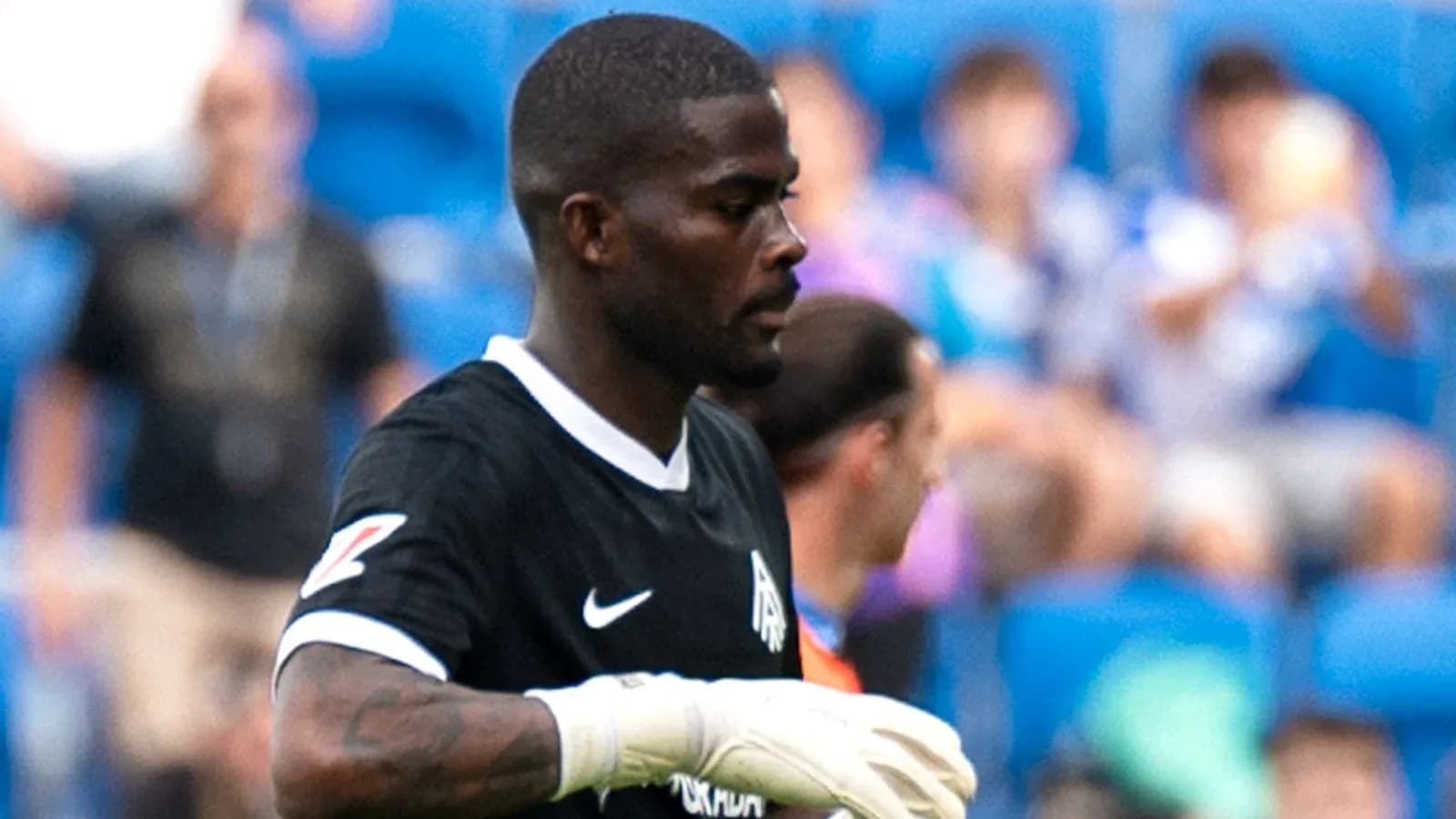
FC Andorra Goalkeeper Jesus Owono Receives 12-Game Ban After Collision
Spanish football has delivered its harshest sporting sanction in the wake of one of the game’s darkest recent moments.
FC Andorra goalkeeper Jesus Owono has been suspended for 12 matches after a disciplinary committee ruled that his challenge on Tenerife forward Jesus de Miguel involved “excessive force” and led to the striker’s death.
Owono, 25, was sent off late in the Segunda Division match earlier this month after a high-speed collision with De Miguel. The Tenerife forward died in hospital the following day. The incident stunned the league, froze the match, and has now drawn the maximum punishment available under Spanish federation rules.
Committee Cites “Violently Striking” in Referee’s Report
The Spanish Football Federation’s disciplinary committee anchored its decision in the referee’s account of the incident. In its written ruling, the committee stressed that it had to rely on what the match official recorded in real time.
The referee’s report stated that Owono was dismissed for “violently striking an opponent in the chest with his leg, using excessive force, while the ball was in play.” On that basis, the committee concluded there was no room for leniency.
“The tragic outcome of the incident, resulting in the death of Jesus de Miguel, is public knowledge,” the statement read. It added that, given the nature of the challenge and the surrounding circumstances, “the maximum sanction, 12 matches of suspension, is justified.”
The decision underlines the federation’s view that, even in a contact sport, there are clear limits to what can be considered acceptable force when challenging for the ball.
Scoreline to Stand, Match Not to Be Resumed
The game itself stopped just minutes after the collision. With Tenerife and FC Andorra level at 2-2, play was abandoned seven minutes into stoppage time as the gravity of the situation became apparent.
There were early questions about whether the match would have to be replayed or completed from the point at which it was halted. The federation has now closed that debate.
It ruled that the 2-2 result will stand, describing that choice as the “most respectful course of action” given the “extraordinary and tragic circumstances” of the case. By fixing the scoreline and refusing to resume play from the precise moment of the incident, the authorities signalled that the match itself could not be separated from what followed.
Owono’s Future in Doubt
Away from the legal wording and procedural decisions, there is a human cost on every side.
FC Andorra manager Carles Manso revealed on Thursday that Owono has not yet decided whether he will return to football at all. The Equatorial Guinea international now faces a long suspension, a police investigation and, more profoundly, the psychological weight of being involved in an incident that ended a fellow professional’s life.
Owono had already spoken publicly once, issuing a statement in which he expressed his “enormous pain” at De Miguel’s death and said he “will face whatever comes with the utmost respect.” Since then, he has stayed out of the spotlight while the legal and disciplinary processes unfold around him.
Police Investigation Underway
Spanish police have opened an investigation into possible involuntary manslaughter, a step that, under Spanish law, is standard practice when a death occurs in such circumstances.
That process will run alongside the sporting sanction. The 12-match ban closes the federation’s disciplinary chapter but does not end the wider legal scrutiny. Every movement, every frame of the collision will now be examined again, this time in a different arena.
A football match that began as just another fixture in the Segunda Division has become a landmark case, forcing the sport in Spain to confront its boundaries between physical commitment, responsibility, and tragedy.





