
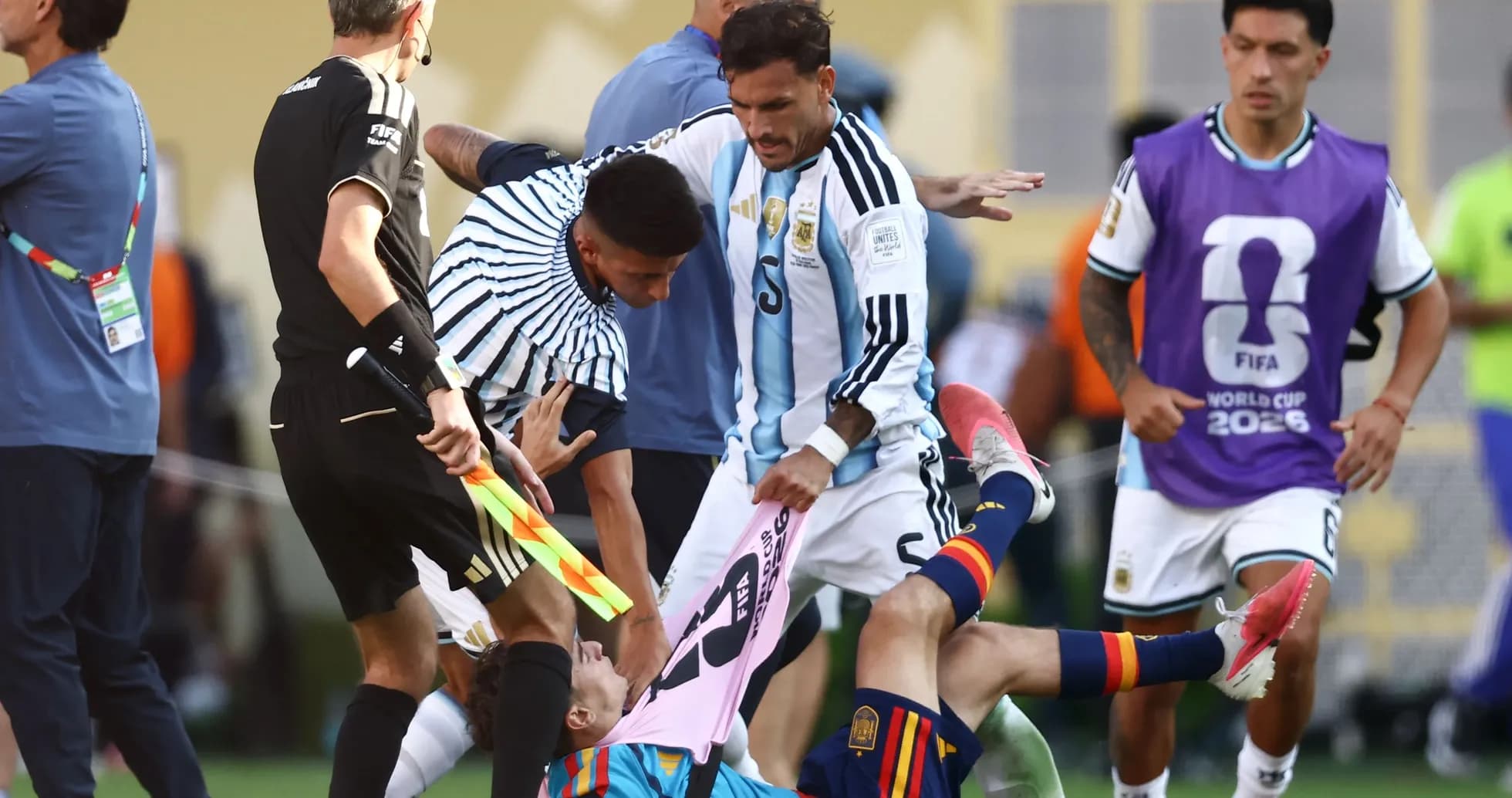
FIFA Eases Molina Ban but Paredes Faces Full Suspension
FIFA’s Appeal Committee has handed the Argentine Football Association a partial victory – and a stark reminder of where the line now sits on discriminatory behaviour.
Nahuel Molina has seen his punishment cut. Leandro Paredes has not.
According to Spanish daily Marca, FIFA reduced Molina’s suspension from seven matches to four and trimmed his fine from 90,000 dollars to 60,000. The former Atlético Madrid full-back, one of the more high-profile names caught in the fallout from the 2026 World Cup final against Spain, will now miss fewer games than initially feared, a small but significant shift for both player and country.
The same leniency did not extend to Paredes. The midfielder’s 10‑match ban remains untouched, as does a 90,000‑dollar fine. For him, the door stayed firmly shut.
Argentina’s federation is not stopping here. In an official statement, the AFA confirmed it will request the full written grounds for the decisions and then take the fight to the Court of Arbitration for Sport (CAS). The body insisted it has “sufficient arguments from both a factual and legal standpoint” to seek a review of the sanctions, a clear signal that it believes FIFA’s disciplinary arm has overreached in at least some aspects of the case.
The timing adds an extra layer. CAS is already deep into another politically charged dispute involving a major final: the 2025 Africa Cup of Nations showdown between Morocco and Senegal. A ruling in that case is expected by the end of November, and whatever CAS decides there will inevitably shape the mood – and perhaps the legal strategy – around Argentina’s challenge.
At the heart of this storm lie the sanctions imposed for discriminatory chants during Argentina’s matches at the World Cup, culminating in the final in July, where Spain edged a 1-0 win to lift the trophy. Those incidents, recorded across several games, prompted FIFA’s Disciplinary Committee to come down hard.
The AFA was hit with a 321,000‑dollar fine and restrictions on crowd attendance at future national team fixtures. The punishment drew on multiple articles of FIFA’s disciplinary code and covered behaviour from matches against Cape Verde, Egypt, Switzerland, England and, ultimately, Spain.
Individual figures did not escape either. Thiago Almada picked up a one‑match suspension under the earlier round of sanctions. Roberto Ayala, part of the national team’s technical staff, received a three‑match ban, a reminder that responsibility, in FIFA’s eyes, stretches beyond the players on the pitch.
Back in August, FIFA had already granted one key concession to Argentina. It approved the AFA’s request for player suspensions to be served across both friendly and official fixtures organised under CONMEBOL’s umbrella, “whichever comes first”. That decision ensured the bans would be worked through more quickly, rather than hanging over competitive windows alone.
Now, with Molina’s sentence softened but Paredes’ left intact, the battle moves from FIFA’s corridors to CAS. Argentina has made its stance clear. The next word belongs to sport’s highest court.





