Filip Hrgovic Stops Moses Itauma to Claim IBF World Title
Moses Itauma’s dream of crashing the heavyweight history books was shattered in brutal, unforgiving fashion, as Filip Hrgovic dragged him into deep water and stopped him in the ninth round to claim the IBF world title.
For most of the fight, it looked like a coronation, not a collapse.
The 21-year-old Briton, chasing the mark of becoming the second-youngest world heavyweight champion in history, boxed with a kind of cold, electric authority early on. His southpaw stance, his speed, his angles – they all seemed too much for the older man. Hrgovic, 34, was supposed to be the test. For seven and a half rounds, he looked more like the victim.
Then the tank emptied. And everything changed.
A prodigy in command
Itauma walked to the ring with a solemn calm that belied the stakes. The arena was already his, the crowd chanting his name before he had even left the dressing room. He barely reacted. No smiles, no theatrics. Just a young man carrying the weight of expectation as if it were nothing.
From the opening bell, he looked the part.
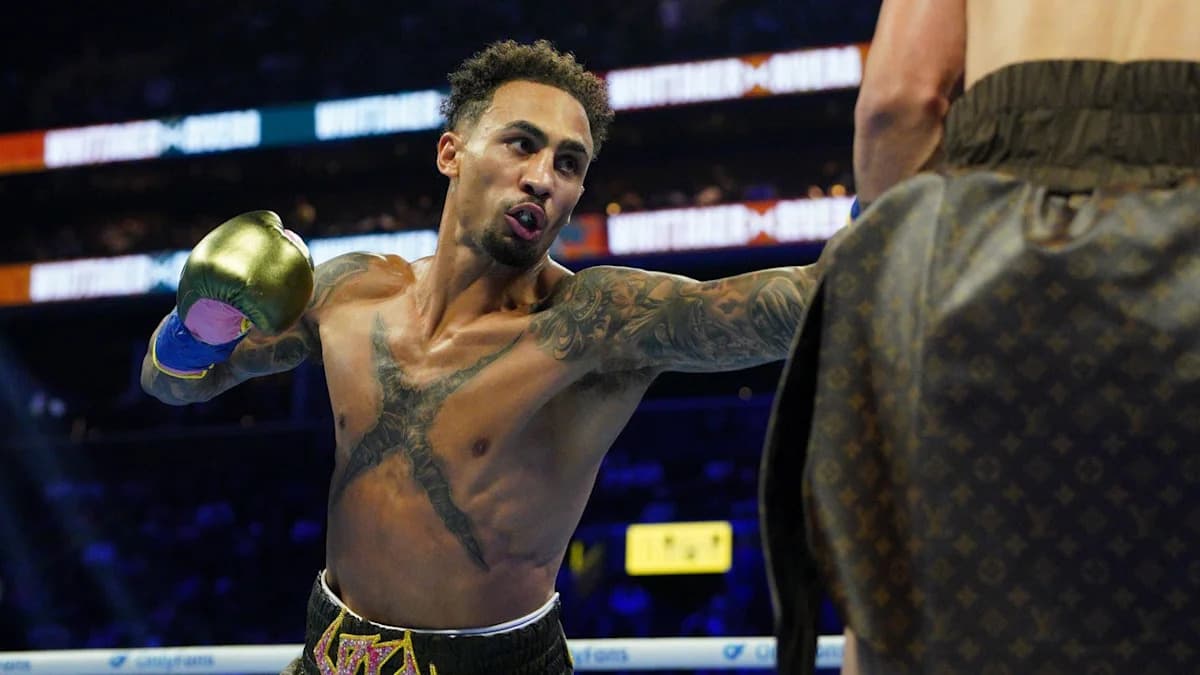
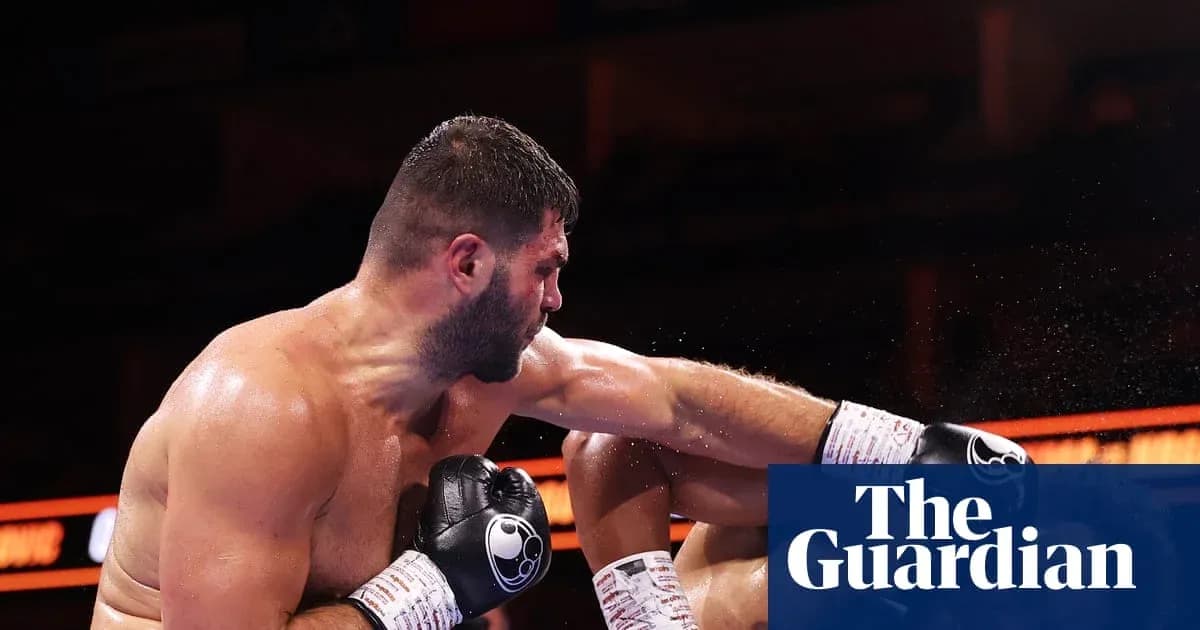
Fighting as a left-hander, he landed the first meaningful shot – a sweeping right hand that set the tone. He moved with menace, clipping Hrgovic with fast, cuffing blows, backing up the bigger Croat with a jolting right cross that visibly shook him.
The second round underlined the gulf in speed and timing. Itauma missed with a wild, scything left, but Hrgovic marched straight onto a short, savage right hook. Down he went. The count reached eight before he rose, blinking, hurt but defiant.
Hrgovic tried to answer late in the round, but Itauma lashed back with another blistering combination. The young challenger was not just winning; he was dictating everything.
In the third, a sharp left snapped Hrgovic’s head back, sweat spraying under the lights. Itauma dug to the body with a cruel shot to the gut. Hrgovic absorbed it, refused to fold, and his fans at ringside roared as he finally found some success of his own. The ambition was still there. The resistance was real.
Yet the rhythm of the fight remained Itauma’s. His feet were quicker. His hands sharper. His ideas clearer.
Cracks in the armour
The price of that high pace began to surface.
By the fifth, Itauma was occasionally grimacing, the work-rate and intensity starting to leave their mark. He threaded a beautiful short left through Hrgovic’s guard, but the older man just kept marching forward, stoic and stubborn.
Itauma’s breathing grew heavier. At one point he had to use a glove to nudge his black gumshield back into place – a small, telling sign that the effort was beginning to bite. His previously impassive face showed the first hints of strain.
Still, his quality shone through. At the bell, a spiteful uppercut snapped Hrgovic’s head back on the thick column of his neck. Blood began to seep from a cut above the Croat’s right eye, a thin red line that suggested the tide was turning against him.
Yet just before the end of the round, Hrgovic landed heavy shots of his own. Itauma took them, fired back, and for the first time the fight truly caught fire. The exchanges were no longer one-way traffic. They were arguments. Hard, bruising arguments.
Itauma had never been past six rounds as a professional. The seventh was unknown territory. He stepped into it with ambition, again forcing Hrgovic onto the back foot and stitching together neat, sharp combinations.
But the clock was ticking on his legs.
The storm arrives
The eighth round became the hinge on which the whole night swung.
Itauma hammered Hrgovic with one meaty blow after another. On another evening, against another man, it might have been enough to break him. Hrgovic, though, stood firm, as resolute as ever. The cut, the knockdown, the punishment – none of it dislodged his belief.
Itauma, by contrast, began to look desperately weary. The snap drained from his punches. His movement lost its spring. The young man who had dazzled early now moved like someone dragging an invisible weight.
That was Hrgovic’s moment.
The Croatian, who had spent fight week probing at Itauma’s psyche by warning that becoming world champion so young would be “bad for his soul”, suddenly looked like a man whose own spirit had been sharpened by adversity. He rallied in the eighth, then rolled straight into the ninth with a kind of relentless, bludgeoning purpose.
Itauma, instead of using his feet and boxing with caution, allowed himself to be dragged into a slugfest he no longer had the energy to control. His inexperience, so often masked by talent, finally betrayed him.
A champion forged in resistance
By the ninth, the dark storm Hrgovic had summoned crashed down.
Itauma sagged back against the ropes, his body language screaming exhaustion. Hrgovic opened up with renewed conviction, pouring in punches, sensing the end. The younger man tried to resist, but his legs, his lungs, his reserves were gone.
As the assault intensified, the referee stepped in. At almost the same moment, Ben Davison, Itauma’s trainer, hurled the white towel over the ropes, the fabric floating sadly down as a final act of mercy. The stoppage spared Itauma from a clean knockout, but not from the brutality of the lesson.
The twist was too much for the 21-year-old. He left the ring on a stretcher, apparently nursing a knee injury. The real damage, though, had been inflicted by Hrgovic’s astonishing refusal to bow to the script.
In doing so, the Croat carved out his own slice of history, becoming the first world heavyweight champion from a country with no great boxing tradition to fall back on. No lineage. No conveyor belt of champions. Just a single, stubborn man who would not go away.
Hrgovic, who had lost only once in nine years as a professional, acknowledged how close he had come to being outclassed.
“It was not me tonight. It was Jesus Christ in me. Holy Spirit. Father, Son and the Holy Spirit. It was not me. I was losing every round. I was outboxed. And I don’t know from where I got energy in that ninth round. And it was really not my strength. It was the Holy Spirit.”
Then, even in triumph, he turned back to the fallen prodigy.
“He’s an amazing fighter,” Hrgovic said of Itauma. “I want to thank him for accepting this fight, to give me a chance to become a new superstar in the heavyweight division. I’m the present and he’s definitely the future.”
A harsh education
This was the reality check heavyweight boxing specialises in.
For all Itauma’s obvious gifts – the speed, the angles, the composure, the rare sense of timing – a young heavyweight remains one punch, one lapse, one empty gas tank away from disaster against a world-class opponent who refuses to surrender.
Hrgovic was always going to be an acid test of the hype surrounding the Briton. The expectation had been that he would struggle to live with Itauma’s nimble feet, fast hands, clear thinking and sudden, whipping power. Instead, it was Itauma who found himself helpless against superior stamina and an iron will.
The 21-year-old is young enough, talented enough, to rebuild from this. Many great heavyweights have learned their hardest lessons under the brightest lights.
But the belt, the history, the celebration – they belong to Filip Hrgovic now, the new world champion who turned a prodigy’s coming-out party into a brutal seminar on what this division really demands.