Flick Focuses on Wins Over Records as Barça Prepares for Racing Santander
The rhythm at Ciutat Esportiva is changing. The drills are sharper, the voices a little louder, and every movement is framed by a clear objective: Racing Santander at Spotify Camp Nou in midweek La Liga action.
This is the last full session before Hansi Flick’s side step back under the lights, and the German coach has made his stance brutally simple. He is not chasing history. He is chasing wins.
“I don't want to break records, I want to win matches.”
It is a line that slices through the usual noise around FC Barcelona. In a club where every streak, every milestone, every statistical oddity is usually pinned to the wall, Flick is stripping the message back to something more basic. Three points, nothing else.
The session itself follows that logic. High tempo. Short spaces. Pressure on the ball. With the Cantabrians coming to town, Barça are preparing for a game that will demand patience on the ball and discipline without it. Racing will not arrive to admire the architecture; they will come to spoil, to frustrate, to turn 90 minutes into a grind.
Flick wants his players ready for that kind of fight, not for the record books.
A global audience for a midweek test
Inside Barcelona, it feels like a routine league fixture wedged into a busy calendar. Outside, it is anything but routine.
The club have already laid out the international viewing guide for FC Barcelona v Racing Santander, a reminder of how far this team’s reach extends. From early-morning kick-offs in parts of Asia to late-night viewing in the Americas, the midweek game at Spotify Camp Nou will again play out in front of a scattered, global audience.
For many, this will be another chance to watch a Barça side still defining itself under Flick. A new coach, a familiar badge, and a fanbase eager to see how this version of the team handles the less glamorous, must-win league nights that often decide titles.
Spotify Camp Nou, present and future
The stadium itself sits at the centre of two very different timelines.
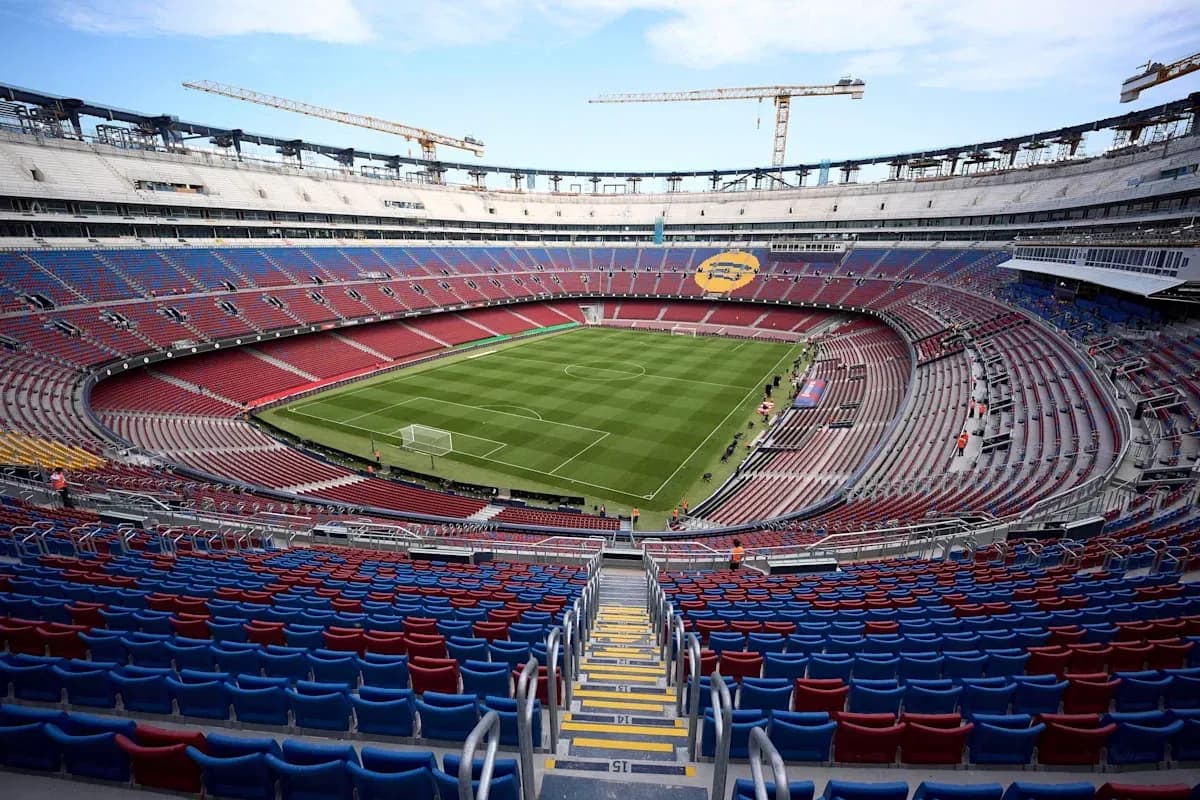
On one hand, it is the immediate stage for Racing Santander’s visit, another La Liga chapter in a long domestic story. On the other, it has just been handed one of UEFA’s biggest nights: the 2029 Men's Champions League final.
That decision is more than ceremonial. It is a formal nod to Spotify Camp Nou’s status as one of the sport’s great arenas, a venue trusted to host the pinnacle of European club football and to welcome a global wave of supporters, media, and pressure.
For Barça, it is validation. For the players training today, it is a reminder of where they are expected to perform — and what kind of standards this club lives by.
Barça Femení: comeback, control, and a Clásico on the horizon
Across the club, the competitive edge is just as sharp.
Barça Femení underlined their dominance again with a 4-2 comeback win over Atlético Madrid, turning a difficult, hard-fought contest into their third win in three league matches. It was not a procession. They had to chase, adjust, and then impose themselves.
That ability to flip a game when it starts to tilt away from them has become a defining trait of this side. The scoreline says 4-2; the story says resilience and authority.
And there is more to come. The Women's Clásico now has a date and time: Sunday 4 October at 5pm CEST, at Spotify Camp Nou. A fixture that already carries weight will now be played on the biggest possible stage, with the stadium again at the heart of the club’s identity — this time painted in the colours of the women’s game.
Barça Atlètic held, but on the front foot
Lower down the ladder, the pattern is familiar: control without reward.
UD Logroñés B and Barça Atlètic played out a 0-0 draw in Logroño, a result that adds another point but leaves a lingering sense of frustration. Belletti’s side dominated, dictated the ball, and pushed the game where they wanted it. The only thing missing was the finish.
For a development side, though, there is a deeper lesson. Performance first, points later. The structure is there, the style is there; the ruthlessness in front of goal will have to follow.
Flick, Lamine and the Ballon d'Or debate
At first glance, the Racing Santander game looks like a standard league assignment. Flick has made sure it is framed as such: win the match, move on. Yet around the coach, the conversation keeps drifting towards individual brilliance.
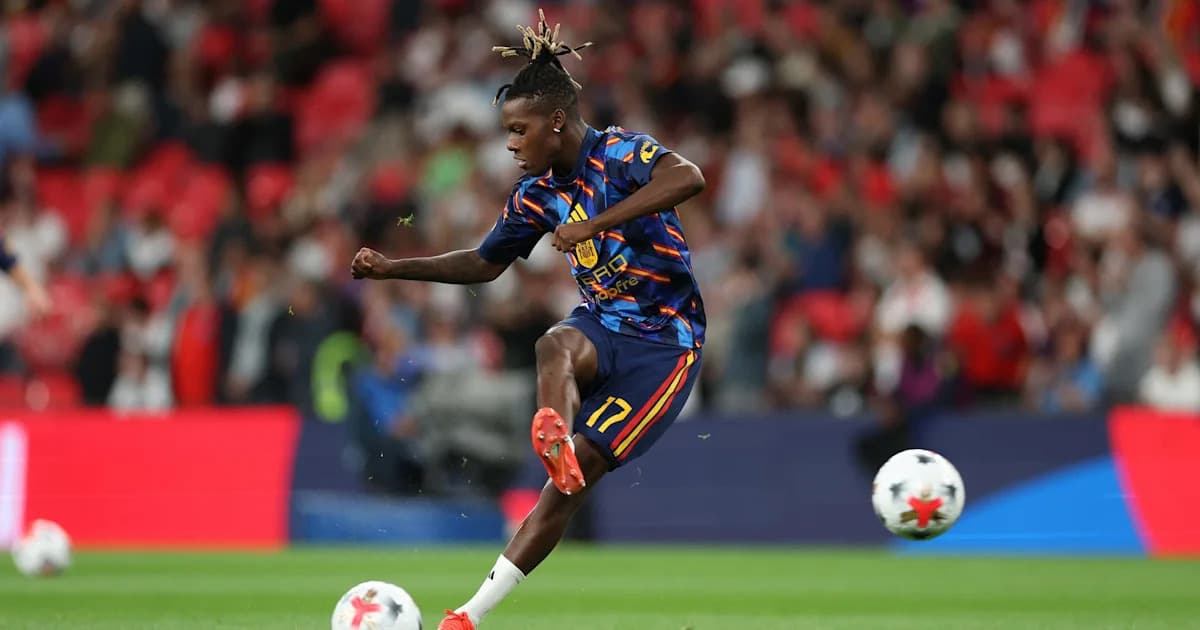
Lamine Yamal’s name is now firmly embedded in the Ballon d'Or debate, and Flick has not shied away from backing his young star. He has openly supported the idea of campaigning for the number 10, stressing that the player carries “a lot of self-esteem and is honest” in how he speaks and plays.
That kind of endorsement matters. It tells the dressing room that talent will be protected and promoted, but also that the bar is sky-high. You do not get Ballon d'Or talk at Barça for flashes; you get it for impact, for consistency, for deciding games like the one that is coming next.
And that is where everything loops back to Racing.
The training ground intensity, the coach’s refusal to chase records, the global broadcast plans, the Champions League final award, the women’s team’s statement win, the academy’s controlled draw, the Ballon d'Or noise around Lamine — all of it feeds into the same demand.
Win the next match. Then see how far this season can really go.