Fouzi Lekjaa Defends Morocco's Position in AFCON 2025 Dispute
Fouzi Lekjaa is not blinking.
With the clock ticking toward an 8 October hearing at the Court of Arbitration for Sport (CAS), the president of the Royal Moroccan Football Federation has doubled down on Morocco’s stance in the dispute over the 2025 Africa Cup of Nations final against Senegal, framing it as a battle over the very rules that govern the game.
In a long interview with “Jeune Afrique”, relayed by “Al-Shorouk”, Lekjaa laid out Morocco’s case and its broader football ambitions, from the legal wrangle with Senegal to the race to host the 2030 World Cup final.
A final that refuses to be filed away
For Lekjaa, the controversy around the AFCON 2025 showpiece is not a political tug-of-war, nor a diplomatic spat dressed up as sport. He insists Morocco’s position is rooted squarely in the competition’s regulations and the principle of fair play.
The Moroccan federation, he explained, believes Senegal violated those regulations during the final when players and members of the coaching staff left the pitch. In his view, that act goes to the heart of how international competitions are supposed to function. Walk off, and you walk straight into the disciplinary code.
Lekjaa underlined that FIFA has since tightened some of its laws and sanctions in similar situations. For him, that evolution only underlines the importance of a strict reading of the rules and a refusal to normalise behaviour that, as he sees it, undermines the integrity of elite tournaments.
Morocco, he said, will keep “defending its rights” through the channels football itself has created. No backroom deals. No shortcuts. Only the bodies empowered to interpret and enforce the laws of the game.
CAS date set – but no quick verdict in sight
All eyes now turn to 8 October and the scheduled CAS hearing. Lekjaa, though, is careful not to oversell that date as judgment day.
He described the session as one step in what could be a long legal journey rather than the final word on the dispute. CAS, he reminded, can hold several hearings as it digs through a case. The file may remain open for some time before a definitive ruling lands.
In the meantime, Morocco intends to hold its line. The federation, Lekjaa stressed, will keep pushing for a decision that, from its perspective, reinforces respect for the regulations that govern both continental and global competitions. For him, this is not just about a single final. It is about the precedent it sets.
Morocco’s eyes on the 2030 World Cup final
From the courtroom to the biggest stage of all.
Lekjaa then shifted to the 2030 World Cup, which Morocco will co-host with Spain and Portugal. The tournament is already shaping up as a landmark event, and the battle to stage the final promises to be just as intense as anything on the pitch.
The Moroccan president made it clear: his country intends to be in that race.
He stressed that Morocco is following every FIFA requirement to the letter – from inspection visits to the formal procedures for selecting host cities and stadiums. The process is technical, detailed, and unforgiving. Lekjaa’s message is that Morocco is fully aligned with it.
At the same time, he insists Morocco has every right to defend its candidacy to host the final as Africa’s representative in the joint bid. Ambition, he argued, does not collide with respect for procedure. It feeds off it. Play by the rules, then fight hard within them.
Standing by Infantino – but demanding stronger governance
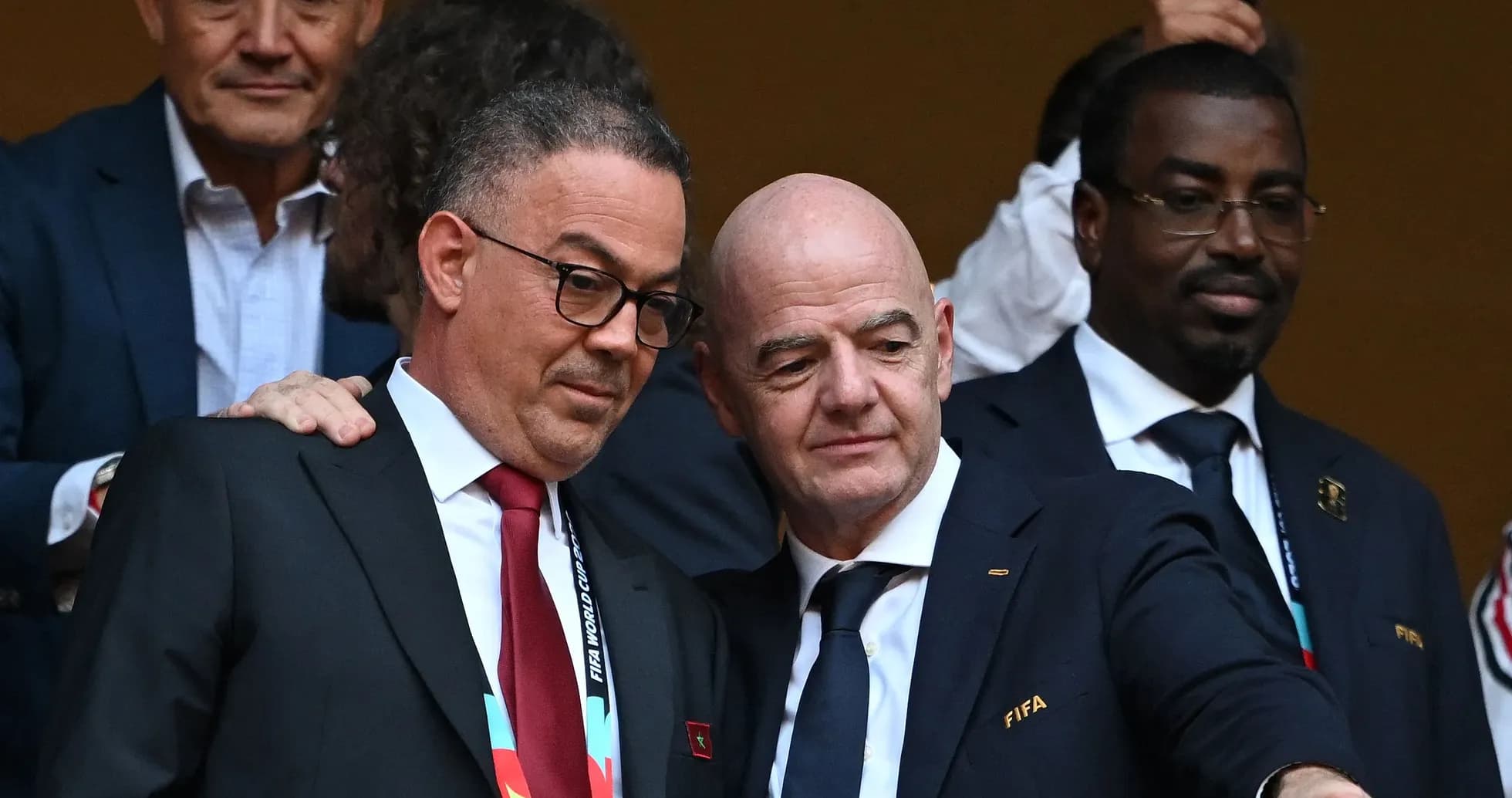
Lekjaa also addressed another sensitive topic: his support for FIFA president Gianni Infantino.
He framed that backing not as blind loyalty to a man, but as a belief in what football can do when its institutions function properly. For him, the sport remains a powerful tool to unite peoples and bring nations closer together.
That does not mean he is blind to FIFA’s flaws. Lekjaa underlined that his support for Infantino goes hand in hand with a demand for better governance at the top of world football. Balance between interests, greater transparency, and stronger structures, he argued, still need serious work.
His vision, as he put it, is anchored more in principles and institutions than in personalities. Build a robust system, he believes, and it can manage competing agendas without tearing itself apart.
As the CAS hearing looms and the 2030 World Cup planning gathers pace, Lekjaa has planted Morocco firmly at the heart of both stories: a federation ready to fight its corner in court, and a country determined to bring the world’s biggest match to African soil.