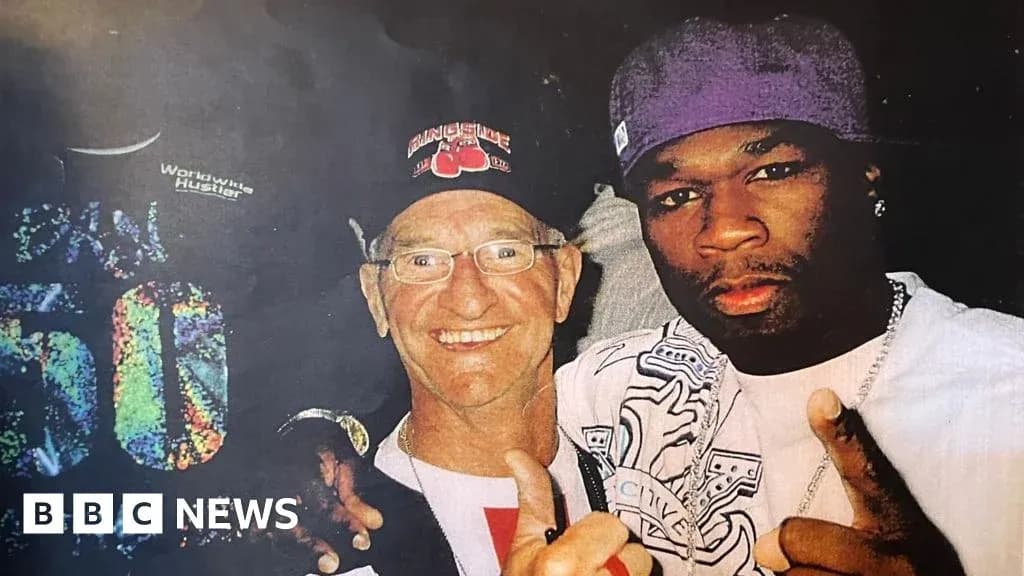
Fred Little at 90: From War to Boxing's Biggest Nights
The son of a rag-and-bone man from Barton Hill, Bristol, still can’t quite believe where life took him.
“Being the son of a rag-and-bone man, I had to pinch myself being among all these superstars,” says Fred Little, now 90, a man who spent decades in the shadows of the brightest lights in professional boxing.
He never laced up the gloves under the TV cameras. He made sure those who did were safe enough to walk away.
From Burning Skies to the Boxing Board
Fred’s story starts under a very different kind of spotlight. As a child in wartime Bristol, he watched the sky burn.
“We used to run down the street with airplanes on fire and bombs hitting houses,” he recalls. “We'd go to a communal air raid shelter and everyone's crying and screaming, it was terrible.”
Those nights in the shelters forged a resilience he carried everywhere – from oil rigs to Las Vegas fight nights.
As a young man, he became a welder and took his skills offshore. The work was hard, the stakes higher still. He spent time on rigs around the world, including the Piper Alpha platform off Aberdeen shortly before the 1988 disaster that claimed 167 lives.
“I was inconsolable,” he says of the tragedy. “I knew quite a lot of those blokes.” The grief stayed with him. So did the sense of responsibility when lives depend on the details.
A Detour Through Football and America
Fred’s journey did not run in straight lines. Football opened another door.
After leading a team from St Pauls in Bristol to victory in a soccer tournament, he crossed the Atlantic and spent five years in the United States coaching. It was a different sport, a different culture, but the same thread ran through it: preparation, discipline, care for the people under his watch.
Then boxing called, and that is where his name quietly grew.
The Man Behind the Big Nights
Rising to chief inspector for the British Boxing Board of Control, Fred became one of those figures every major show needs but few fans ever notice. He oversaw gloves, ring preparations, medical standards, security, safety, ambulance cover – the unseen scaffolding that holds a fight night together.
He stood close enough to feel the roar when Tyson Fury, Frank Bruno and Ricky Hatton stepped into the ring. Close enough to see the strain in a fighter’s eyes before the first bell and the relief when it was over.
One memory still crackles in his mind: Las Vegas, Roy Jones Jr against Antonio Tarver.
The Strip has seen everything, but this, for Fred, was different.
He watched Jones and Tarver share a ring in an atmosphere he calls “unbelievable” – a word that sounds almost understated for a man who had grown up under bombers and worked on oil rigs. The noise, the tension, the sense that every punch could tilt a career. He was there not as a tourist but as an official, part of the machinery that allowed such nights to happen.
Stars in the Ring, Stars on Stage
Boxing wasn’t his only route into the orbit of the famous.
Fred also worked in security for some of the biggest entertainers of their eras. Tom Jones. Shirley Bassey. UB40. He moved from dressing rooms to stage doors, the same steady presence, the same quiet authority.
One night stays with him in particular. Singer Elaine Paige dedicated a performance of “Memories” to him. A small gesture on a big stage, but for a lad from Barton Hill whose father collected scrap, it meant the world.
“I've had the most amazing life, I've done everything you can think of,” he says now, not boasting, just taking stock.
A Familiar Face, A Fighting Spirit
Back home in Bristol, he is more than a footnote in boxing history. He is a fixture.
“He is a very familiar face around Bristol and is hugely respected within the community and by the many people he has met throughout his life,” says his daughter, Charlotte Maggs.
Respect hasn’t come easily. Nor has survival. Charlotte speaks of the battles her father has fought away from the ring – “numerous health problems,” including a cardiac arrest that left the family fearing the worst.
He pulled through. Again.
At 90, he carries the scars of a long, varied life but talks with the same directness that took him from communal air raid shelters to championship nights under neon.
His last request is as simple and uncompromising as the man himself.
“When I'm gone, on my headstone just put: ‘I have lived’.”