
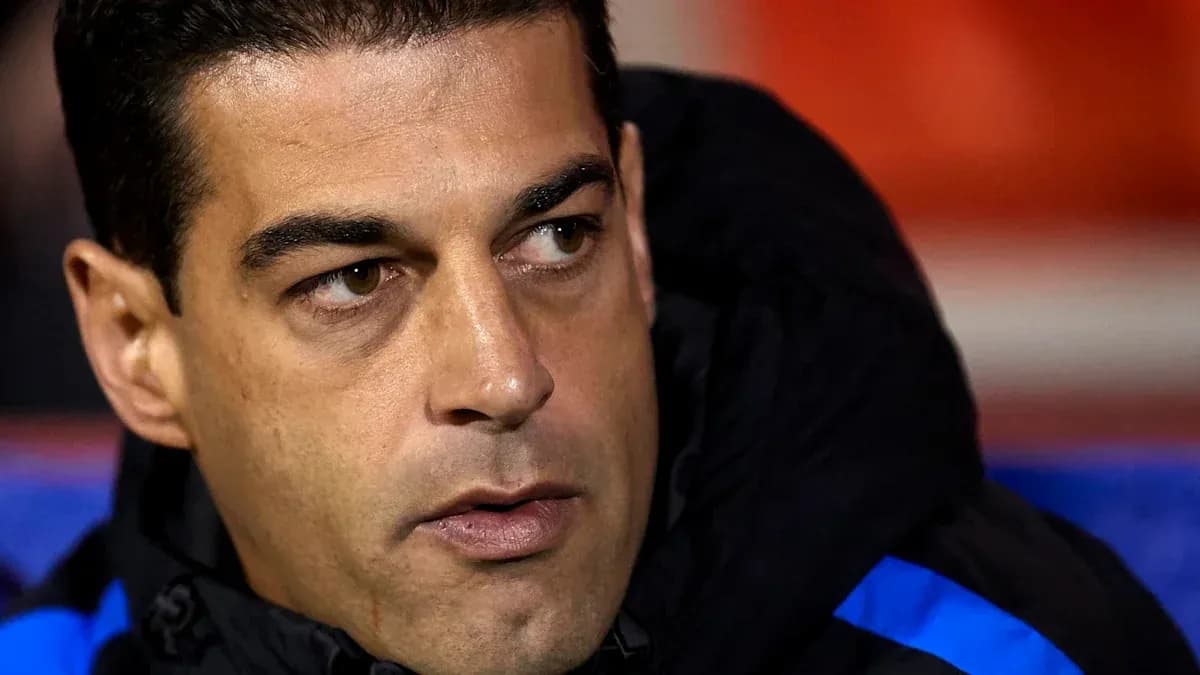
Gerard López Supports Barça Defense in Negreira Case
The Negreira case, the scandal that has hovered over FC Barcelona and Spanish refereeing for nearly four years, has taken a turn that suits the club’s narrative.
Gerard López, current coach of the Catalan national team and former Barcelona B manager, has testified that he did, in fact, receive and read referee reports compiled by José María Enríquez Negreira during his time with the reserve side. His account, reported by Spanish agency EFE, lands squarely in line with Barça’s long-standing defense: the money went toward technical analysis, not match-fixing.
He is not alone. Former reserve-team delegate Toni Alonso has backed him up, reinforcing the idea that these reports were a real, working tool inside the club’s structure.
A Different Tune from the B Team
This is where the story becomes more nuanced for Barcelona.
Luis Enrique and Ernesto Valverde, two former first-team managers, previously told investigators they had never seen such reports. Their testimonies raised obvious questions: if the club paid millions for referee analysis, how did the first-team coaches not see it?
López and Alonso offer a different layer. They reportedly explained that, especially before VAR, understanding the “tendencies” of referees mattered even more in the lower divisions. Barcelona B, competing away from the bright lights of La Liga, often faced officials who were far less familiar to the club and the wider public.
In that context, detailed scouting of referees — their thresholds for contact, their tolerance for dissent, their positioning habits — became another piece of preparation. For the defense, it is a crucial nuance: the reports existed, and they were used, at least within parts of the club.
The €8.4 Million Question
At the heart of the case lies a stark figure: around €8.4 million paid over 17 years to Negreira, who served as vice president of the Technical Committee of Referees but was no longer an active match official.
Prosecutors argue that this money was effectively a covert attempt to secure favorable refereeing appointments and influence key decisions, even if they have yet to demonstrate that any specific match was altered as a result. No single game, no single penalty, no single red card has been definitively tied to those payments in court.
Barcelona insist the opposite: the club maintains the money bought consultancy work and referee reports, not influence. López’s testimony, aligned with Alonso’s, gives that line of defense something it previously lacked — internal voices confirming that such material circulated and was used.
The power Negreira actually wielded over referee appointments remains a central point of contention. The prosecution still has to bridge the gap between money, influence, and concrete sporting impact. So far, that bridge is more allegation than proven structure.
Bribery Dropped, Corruption Charge Remains
One major legal hurdle has already fallen in Barcelona’s favor. A Spanish court previously threw out bribery charges against the club, a significant legal and reputational win in a case that has become a lightning rod across Europe.
The storm, though, has not passed.
Prosecutors continue to pursue a charge of “sports corruption,” and the case stretches beyond the institution of FC Barcelona. Club executives, Negreira himself, and several associates face accusations of breach of trust, false business documentation, and money laundering.
The scope is broad: financial conduct, governance, and sporting integrity are all under the microscope. The testimonies now surfacing, including López’s, will help shape how judges interpret intent and practice inside the club.
Investigation Ends, Spotlight Shifts to the Courtroom
After almost four years of investigation, the case is finally leaving the shadows of the examining phase. The instruction period has officially closed, and the file is moving toward a full trial with oral arguments expected soon.
The legal battle will now play out in public, not just in leaked documents and contested narratives.
Barcelona have always insisted they paid for information, not influence. Prosecutors still claim the opposite. With López and Alonso now reinforcing the existence and use of those referee reports, the courtroom will have to decide whether those documents were the product — or simply the cover — for one of the most controversial financial relationships in modern football.
The next whistle will not be blown on a pitch, but in a courtroom. And when it sounds, what will it say about how far a club can go in the name of “preparation” before it crosses into corruption?





