Germany Dominates Mali 83-58 in Group A Clash
“Through the Monsoon” thundered out of the speakers and the German players bounced onto the Berlin floor, singing, clapping, soaking in every decibel from a sold-out Uber Arena. It felt like a statement even before the ball went up.
By the time the final buzzer sounded, the message was unmistakable.
Germany had dismantled Mali 83-58, locked in second place in Group A behind powerhouse Spain and booked a qualification clash with South Korea on Tuesday for a spot in the quarter-finals. A nervous four-way deadlock at tip-off turned into a controlled, mature performance that suggested this team is growing into the tournament, not just surviving it.
From chaos to control
The stakes were sharp. All four teams in the group started the day on three points, each with one win and one defeat. First place was still possible. So was crashing to fourth.
Germany knew what was required after the heavy opening loss to Spain (53-83) and the strong reply against Japan (74-58): win again, and win with authority. “We have to be the aggressor from the start,” Frieda Bühner had demanded after starring against Japan.
They listened.
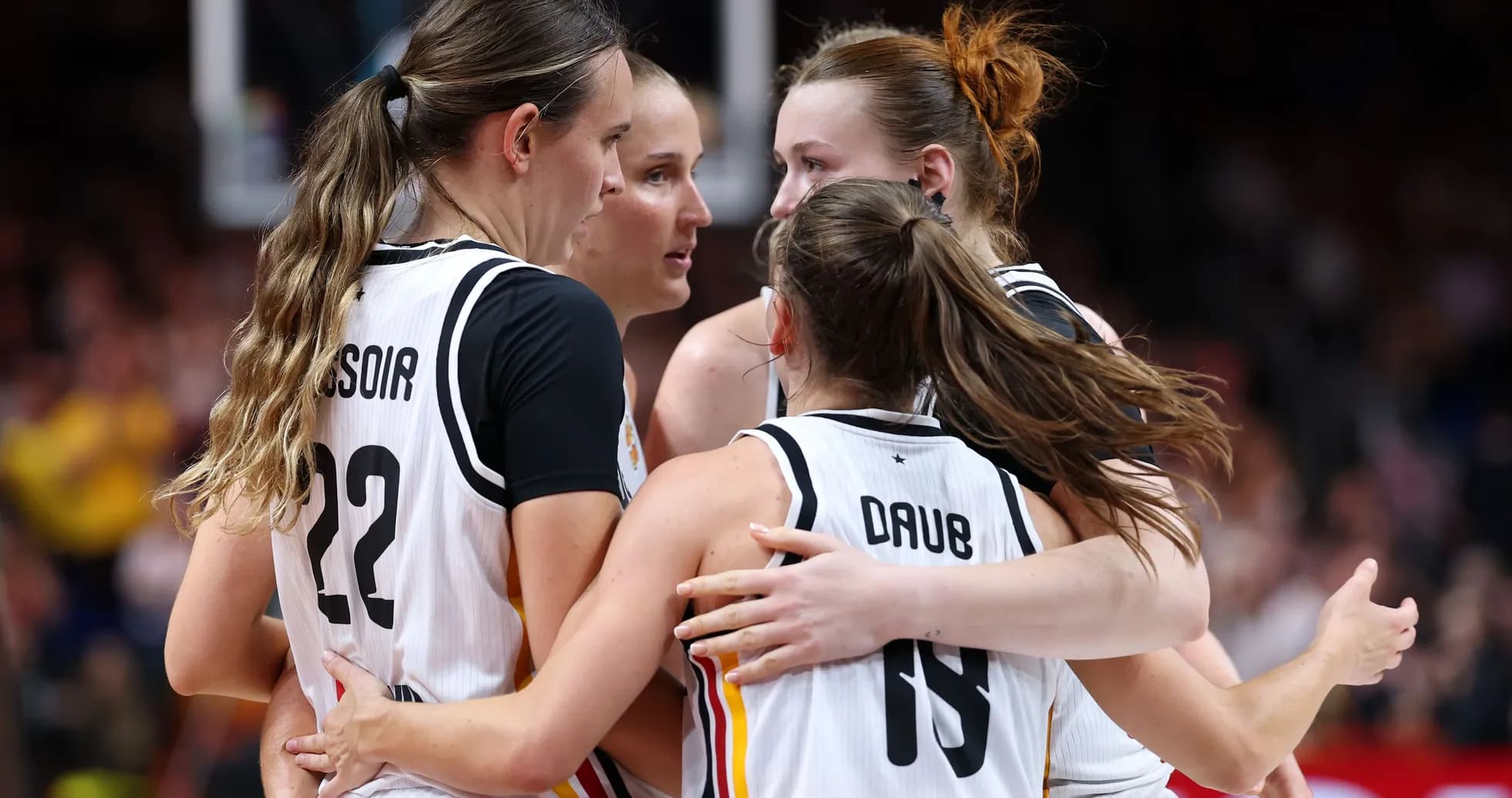
With world champion captain Dennis Schröder courtside, the hosts flew out of the blocks. The defence smothered Mali early, Leonie Fiebich drilled a three, and Germany surged 15-7 ahead by the sixth minute. The arena responded with the sort of noise that rattles opponents and lifts legs on defence.
Then came the wobble.
A messy stretch, turnovers, rushed decisions. Alexis Peterson, back in the lineup after missing the second half against Japan due to an infection, lost the ball twice in quick succession. The game threatened to fray, the tension of the group situation creeping into German hands and minds.
They steadied themselves through their frontcourt.
Geiselsöder and Bühner change the tone
Luisa Geiselsöder, who had struggled to find her rhythm earlier in the tournament, suddenly looked like a different player. Confident, decisive, ruthless around the basket. She did not miss a shot in the first half, anchoring Germany’s offence and punishing every lapse in Mali’s interior defence.
Around her, the shooters lit up.
Bühner, again the spark, rained in back-to-back three-pointers, the second of them pushing Germany to a double-digit lead at 40-29 in the 16th minute. The rim seemed huge. Alexandra Wilke and Marie Gülich joined in from deep, stretching Mali to breaking point.
By the break, the hosts were 49-32 up and in complete control. Bühner would finish as top scorer with 21 points, the heartbeat of a team playing with purpose and bite.
“You want to get better in every game, and that’s what they are doing,” Schröder said at half-time, nodding towards the court and praising the “brilliant atmosphere” created by the 12,550 fans packed into the arena. It felt less like a polite compliment and more like a diagnosis: this team is evolving in real time.
No mercy after the interval
Germany had history on their side, having beaten Mali in an international back in 2007 in Saarlouis. This time, the stakes were far higher. Mali arrived with serious credibility after stunning Spain 82-73 on the second matchday. They knew how to land a punch.
They never got close to landing one here.
Every time Mali tried to build a run, Germany’s energy and discipline snuffed it out. The defensive rotations stayed tight, the rebounding fierce. There were no long lapses, no doors left ajar.
The pressure finally told midway through the third quarter.
Geiselsöder stepped out and buried a three-pointer for 56-37 in the 25th minute, a shot that felt like the definitive break in Mali’s resistance. The bench exploded, the crowd roared, and Mali’s shoulders dropped just a fraction. “It felt great. It was really good basketball,” said the WNBA player afterwards, a simple description of a performance that had transformed her tournament.
From there, Germany managed the game with the composure of a side that understood the bigger picture. No reckless risks, no unnecessary drama. Just solid possessions, sharp execution and a defence that refused to loosen its grip.
South Korea next – and then Belgium?
When Spain later beat Japan 79-59 in the parallel fixture, top spot in Group A officially slipped away. Germany had already done what they needed to do. Second place secured, confidence restored, momentum building.
Now comes the real test of their new-found edge.
South Korea, third in Group B, await in the qualification round on Tuesday evening. Win that, and the reward is a quarter-final against Belgium, the European champions of 2023 and 2025 and the dominant force in Group C, which they won without a single defeat.
Olaf Lange summed up the mood with a mix of satisfaction and steel. “I’m very happy with how we have developed. Now the success is there too,” he said on MagentaTV, before quickly turning the page. “Now we have to reorganise again. South Korea are a good team.”
Germany have their song, their crowd, their rhythm – and now a clear path.
Beat South Korea, and the next step is a shot at Europe’s reigning queens.