
Germany Secures Top Tier Spot for Euro 2028
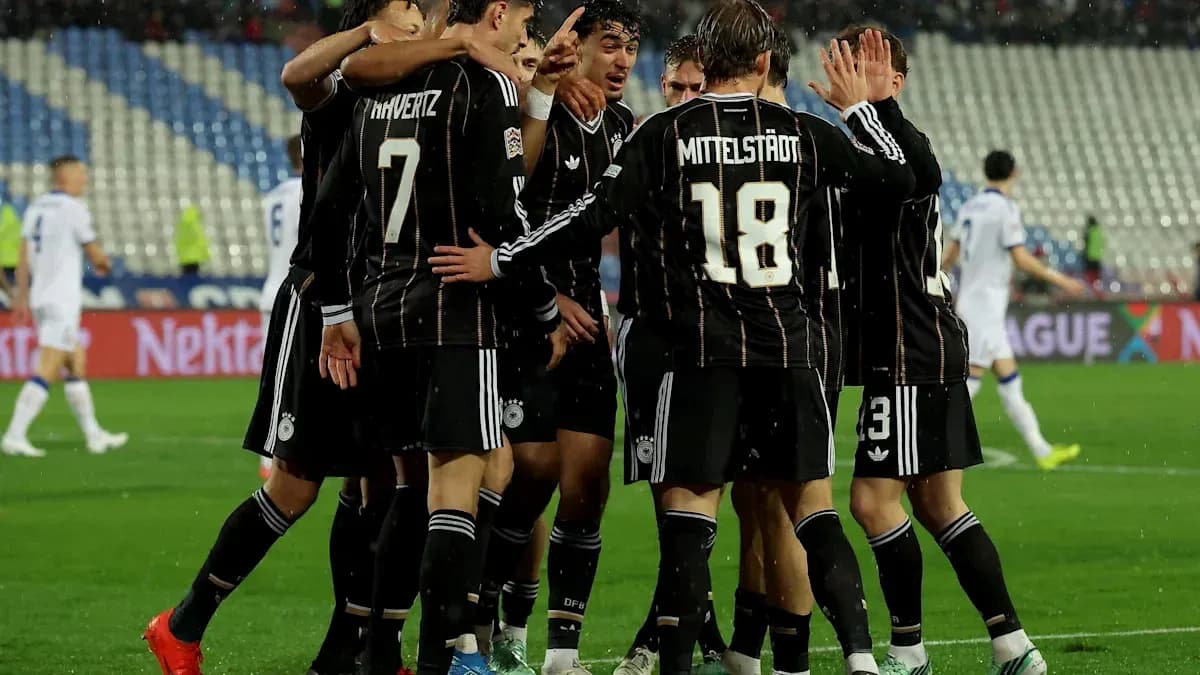
Germany walked into a half-empty Belgrade and made it sound like their own training ground. A 3–1 win over Serbia on Friday night did more than restore a touch of authority to their UEFA Nations League campaign – it quietly locked in a major advantage for the next European cycle.
Only 5,000 spectators were allowed inside, the crowd thinned by a UEFA ban that stripped the occasion of its usual Balkan edge. The atmosphere felt flat. Germany didn’t. They struck early, seized the ball, and never really let Serbia breathe.
The visitors jumped to a quick lead and then tightened their grip, circulating possession with ease against a Serbian side that looked beaten long before the final whistle. Serbia chased, Germany dictated. The scoreboard and the body language told the same story.
Serbia’s defeat confirmed the harsh mathematics of this group: last place in League A’s Group B is now theirs, with a game to spare. Relegation from the top tier of the Nations League is the price. Germany, by contrast, guaranteed something far more valuable than three points.
Even with this victory, Germany still walk into Monday knowing they need help elsewhere to be sure of a place in the Nations League knockout rounds. The job is not done in this competition. But the night delivered a different kind of progress – the kind that shapes tournaments years down the line.
By finishing in the top three of their League A group, Germany have secured a place in Pot 1 for the Euro 2028 qualifiers draw, scheduled for December 6. That single line on a seeding chart could change the path to the finals. Fewer giants in their way. Greater margin for error. A softer qualifying route, at least on paper.
They will not be alone at the top table. Italy, France, Belgium, Netherlands, Greece, Spain, England, and Portugal have already joined them in Pot 1, a familiar cast of European heavyweights with one notable outlier in Greece, rewarded for steady work in the current cycle.
The jostling is not over. Croatia need only a draw against Czechia to claim their own Pot 1 place. Behind them, Denmark, Wales, and Norway are locked in a tight fight for the remaining two spots in their group, knowing that falling out of the top pot can turn a qualifying campaign into a minefield.
For Germany, though, Belgrade brought clarity. One game, three goals, and a quieter stadium than usual – yet a loud statement about where they intend to sit in the European hierarchy when the road to Euro 2028 officially begins.





